


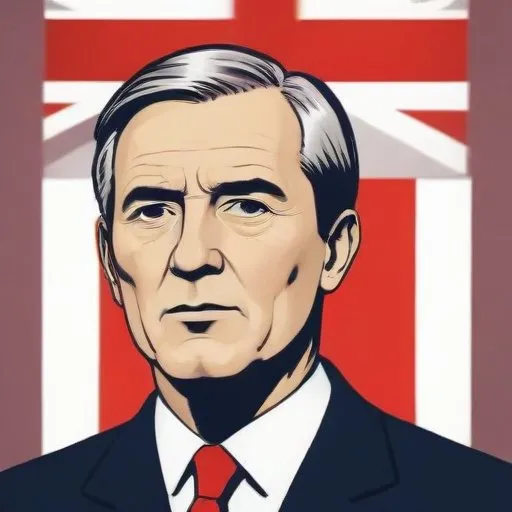
Labour Party politician who served as a Member of Parliament for Liverpool Walton from 1991 to 2010, and held various ministerial positions, including Under-Secretary of State for Defence.
Peter Kilfoyle, born on 9 June 1946, is a British Labour Party politician who has made a significant impact on British politics, particularly in the Liverpool region. As the Member of Parliament (MP) for Liverpool Walton from 1991 to 2010, Kilfoyle has been a vocal advocate for social justice and a strong representative of his constituency.
Kilfoyle was born into an Irish Catholic family on Merseyside, one of fourteen children. After losing his father at the tender age of 10, he was educated by the Irish Christian Brothers at St. Edward's College in Liverpool. He excelled in his studies, obtaining 4 A-levels, and later attended the University of Durham, although he left after a year. Kilfoyle then worked as a labourer for five years before qualifying as a teacher at Christs College in Liverpool.
From 1975 to 1985, Kilfoyle worked as a teacher, which laid the foundation for his later role as a labour organiser. During this period, he developed a deep understanding of the needs and concerns of the working class, which would shape his political ideology.
In 1986, Kilfoyle became the North West Regional Organiser for the Labour Party, where he played a crucial role in dealing with the entryist tactics of the Militant group. This experience prepared him for his future role as an MP, where he would confront similar challenges.
In 1991, Kilfoyle became the Labour MP for Liverpool Walton, retaining the seat in a by-election following the death of the incumbent Eric Heffer. He was a strong supporter of Tony Blair's campaign for the Labour Party leadership in 1994 and played a key role in the party's election victory in 1997.
As a junior minister in the Ministry of Defence, Kilfoyle was a vocal critic of the government's military interventions. He famously resigned in 2000, citing the government's failure to address the concerns of Labour's heartlands. This move demonstrated his commitment to his constituents and his principles.
In 2003, Kilfoyle wrote and moved an amendment against the war in Iraq, a move that sparked heated debate and controversy. Although the amendment was defeated, it further solidified his reputation as a principled and courageous politician.
In 2005, Kilfoyle was accused of breaching the Official Secrets Act by passing on information related to then-US President George W. Bush's plan to bomb an Arabic TV station. While the allegations were never proven, they added to the controversy surrounding his career.
Peter Kilfoyle's dedication to social justice and his unwavering commitment to his constituents have earned him a reputation as a passionate and principled politician. Throughout his career, he has been a vocal advocate for the rights of the working class and a strong critic of government policies that neglect the needs of the most vulnerable.
As a Labour MP, Kilfoyle has left an indelible mark on British politics. His legacy serves as a reminder of the importance of standing up for one's beliefs, even in the face of adversity.
73 Years Old
The former Prime Minister of the United Kingdom who led the country through a transformative period, including the Iraq War, and is known for his charismatic leadership and controversial decisions.
75 Years Old
The Prime Minister of the United Kingdom from 2007 to 2010, known for his key role in shaping the country's economy and response to the 2008 global financial crisis.
88 Years Old
Deputy Prime Minister of the UK from 1997 to 2007, known for his strong personality and advocacy for social justice and environmental issues. He played a key role in shaping the country's climate change policies.
79 Years Old
A British Labour politician who served as Home Secretary from 2001 to 2004, known for his reform efforts and controversies surrounding his personal life.
80 Years Old
A British politician who served in various cabinet positions, including Foreign Secretary, and played a key role in shaping the country's foreign policy, particularly during the Iraq War.
80 Years Old
A Scottish educator and politician who served as the UK's Foreign Secretary, known for his strong stance against the Iraq War and his efforts to promote international cooperation. He resigned from the government in protest of the war, making him a respected figure in British politics.
77 Years Old
A pioneering female politician who played a crucial role in the Northern Ireland peace process, known for her charismatic leadership and innovative approach to conflict resolution.
89 Years Old
First Minister of Scotland, leading the country's devolution and establishing the Scottish Parliament, shaping the nation's governance and identity.
