


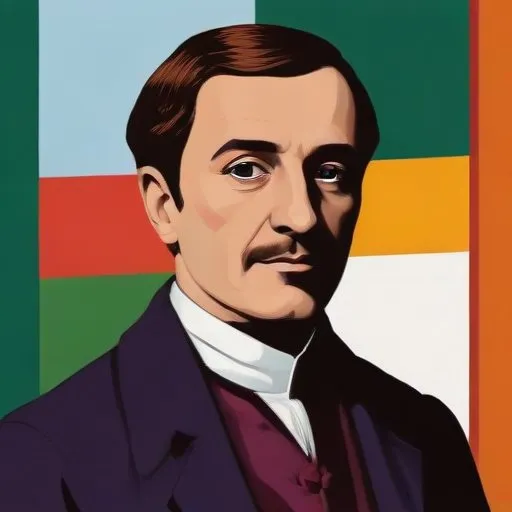
A Renaissance-era historian and author who wrote extensively on the New World, providing valuable insights into the early European exploration and colonization of the Americas.
Imagine being the first to chronicle the thrilling tales of European explorers venturing into the uncharted territories of Central and South America. Meet Peter Martyr d'Anghiera, the Italian historian who penned the earliest accounts of these expeditions, earning him the title "Father of Modern Geography."
Martyr's magnum opus, De Orbe Novo (On the New World), is a collection of letters and reports that detail the first encounters between Europeans and Native Americans, as well as the discovery of new lands. This monumental work, published in 1530, consists of ten chapters, known as "decades," which provide invaluable insights into the history of geography and discovery.
Born on February 2, 1457, in Arona, Piedmont, Martyr was destined for greatness. Under the guidance of Giovanni Borromeo, he honed his skills and later moved to Rome, where he rubbed shoulders with influential figures in the Catholic Church. His encounter with the Spanish ambassador in Rome led him to Zaragoza in 1487, marking the beginning of his illustrious career as a historian and scholar.
In 1492, Martyr became chaplain to the court of Ferdinand and Isabella, where his primary responsibility was educating young nobles. This position granted him access to the highest echelons of society, allowing him to gather information and garner support for his work. His diplomatic mission to Egypt in 1501, aimed at preventing the Sultan from retaliating against Christians, further demonstrated his resourcefulness and diplomatic prowess.
Martyr's writings reflect his humanist approach, emphasizing the importance of education, tolerance, and understanding between cultures. His accounts of Native American civilizations and the early European explorers' experiences provide a unique window into the complexities of cultural exchange and the clashes that often ensued.
Martyr's work has had a profound impact on our understanding of the world. His Decades of the New World inspired generations of explorers, cartographers, and historians, earning him recognition as one of the most influential figures of the Renaissance. Today, his legacy extends beyond the realm of geographical discovery, serving as a testament to the power of education, cultural exchange, and the human spirit of exploration.
As we delve into the fascinating life and works of Peter Martyr d'Anghiera, we are reminded of the boundless potential of human curiosity and the importance of preserving our collective cultural heritage. Martyr's remarkable legacy continues to inspire and educate, leaving an indelible mark on the world of geography, history, and beyond.
Born in 1451
Italian cartographer and explorer credited with recognizing the New World as a separate continent, leading to the naming of the Americas in his honor. He wrote vivid accounts of his voyages, providing valuable insights into the indigenous peoples and geography of the Americas.
Born in 1380
Unified the Crown of Aragon, ruling over a vast territory in eastern Spain, and sponsored the voyages of Christopher Columbus, leading to the discovery of the New World.
