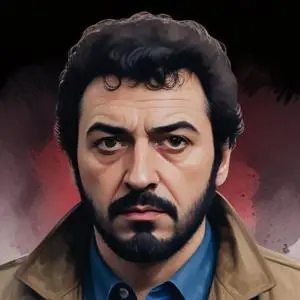
Peter Sutcliffe: The Notorious Yorkshire Ripper
Infamy and Conviction
Peter Sutcliffe, also known as Peter Coonan, is infamous for being one of the most prolific serial killers in British history, convicted of murdering thirteen women and attempting to murder seven others between 1975 and 1980. Dubbed the Yorkshire Ripper, an allusion to the Victorian serial killer Jack the Ripper, Sutcliffe was sentenced to twenty concurrent sentences of life imprisonment, which were later converted to a whole life order in 2010.
Early Life and Motivations
Born on June 2, 1946, Sutcliffe's early life was marked by instability and a dysfunctional family environment. His father was an abusive figure, and Sutcliffe's mother was reportedly subservient to her husband. This tumultuous upbringing may have contributed to Sutcliffe's distorted worldview and aberrant behavior. It is believed that Sutcliffe's hatred towards women was fueled by his feelings of inadequacy and perceived rejection by females.
The Murders and Modus Operandi
Sutcliffe's murderous rampage began in 1975, targeting women and girls in residential areas, often using a hammer to bludgeon his victims. He later shifted his focus to red-light districts, exploiting the vulnerability of prostitutes and the perceived ambivalence of police towards their safety. Sutcliffe's modus operandi was characterized by his use of a hammer, screwdriver, and knives to inflict brutal injuries on his victims.
Arrest and Trial
Sutcliffe was arrested in January 1981 for driving with false number plates in Sheffield. After being transferred to the custody of West Yorkshire Police, he was questioned about the killings and subsequently confessed to being the perpetrator. Sutcliffe claimed that the voice of God had sent him on a mission to kill prostitutes, citing a divine imperative to cleanse society of immoral women. At his trial, he pleaded not guilty to murder on grounds of diminished responsibility but was convicted on a majority verdict.
Impact and Legacy
The search for Sutcliffe was one of the largest and most expensive manhunts in British history, with West Yorkshire Police facing heavy criticism for their failure to catch him despite having interviewed him nine times during their five-year investigation. Sutcliffe's crimes had a profound impact on British society, sparking widespread fear and outrage. His case also raised questions about police procedures, forensic psychology, and the treatment of prostitutes.
Personal Life and Relationships
Sutcliffe married Sonia Szurma in 1974, and the couple remained together until his arrest in 1981. Szurma stood by her husband throughout his trial, claiming that he was innocent and that the real killer was still at large. The couple eventually divorced in 1994.
Later Life and Death
Sutcliffe spent the remainder of his life in prison, where he adopted his mother's maiden name, Coonan. He died on November 13, 2020, at the age of 74, while serving his sentence at HMP Frankland in County Durham.
Controversies and Public Perception
Sutcliffe's case has been shrouded in controversy, with many questioning whether he should have been granted parole or whether he was feigning mental illness to avoid accountability. The public perception of Sutcliffe is that of a calculating, sadistic killer who preyed on vulnerable women, perpetuating a climate of fear and mistrust.