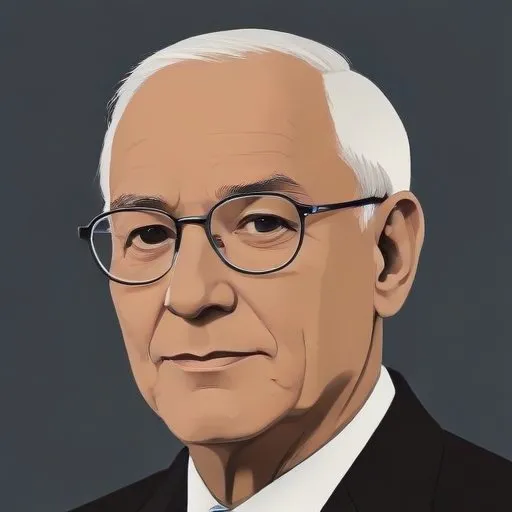
Phil Gramm: A Visionary Economist and Politician
A Legacy of Bipartisan Politics and Economic Expertise
Phil Gramm, a renowned American economist and politician, is best known for his distinguished career spanning over three decades, during which he represented Texas in both chambers of Congress. A stalwart advocate of fiscal responsibility and limited government intervention, Gramm has left an indelible mark on the American political landscape.
Early Life and Education
Gramm was born on July 8, 1942, in Fort Benning, Georgia, to a family that exemplified resilience and perseverance. His father, Kenneth Marsh Gramm, a career Army sergeant, suffered a stroke and partial paralysis when Phil was just an infant, forcing his mother, Florence, to work double shifts as a nurse to support the family. Despite these challenges, Gramm's parents instilled in him a strong work ethic and a passion for learning, which would propel him to academic excellence.
Gramm attended public schools and graduated in 1961 from the Georgia Military Academy (now Woodward Academy). He then went on to earn a bachelor's degree in 1964 from the University of Georgia, followed by a doctorate in economics from the University of Georgia's Terry College of Business in 1967.
Academic and Professional Pursuits
Before embarking on his political career, Gramm taught economics at Texas A&M University from 1967 to 1978. During this period, he also founded Gramm and Associates, an economic consulting firm that provided expert advice to various organizations.
Rise to Prominence in Congress
Gramm's entry into politics began in 1976, when he unsuccessfully challenged Texas Democratic Senator
Lloyd Bentsen in the party's senatorial primary. Undeterred by this initial setback, Gramm successfully ran as a Democrat for Representative from Texas's 6th congressional district in 1978, a seat he held until 1983. During this period, he established himself as a fiscal conservative, earning an average rating of 89 from the American Conservative Union.
The Gramm-Latta Budget and Party Switch
In 1981, Gramm co-sponsored the Gramm-Latta Budget, a landmark legislation that implemented President
Ronald Reagan's economic policies. This legislation's success marked a turning point in Gramm's political career, as he began to identify more closely with the Republican Party's principles. In 1983, he made the historic decision to switch parties, becoming one of the most prominent Democrats to do so.
United States Senate and Presidential Ambitions
Gramm's congressional career took a significant leap in 1984, when he was elected to the United States Senate, a seat he held until 2002. During his Senate tenure, Gramm played a crucial role in shaping the country's economic policies, earning a reputation as a principled and knowledgeable leader. In 1996, he made an unsuccessful bid for the Republican presidential nomination, ultimately losing to Bob Dole.
Legacy and Contributions
Throughout his distinguished career, Phil Gramm has made significant contributions to the fields of economics and politics. His advocacy for limited government intervention and fiscal responsibility has inspired generations of policymakers. As a testament to his enduring legacy, Gramm's name is synonymous with bipartisan cooperation and visionary leadership.
Milestones and Achievements
- Co-sponsor of the Gramm-Latta Budget (1981)
- Elected to the United States Senate (1984)
- Switched from the Democratic to the Republican Party (1983)
- Unsuccessful candidate in the 1996 Republican presidential primaries
Personal Milestones
- Born on July 8, 1942, in Fort Benning, Georgia
- Graduated from the Georgia Military Academy (1961)
- Received a doctorate in economics from the University of Georgia (1967)
Influence on Modern Society
Phil Gramm's commitment to fiscal responsibility and limited government intervention has influenced a generation of policymakers. His legacy continues to shape the country's economic policies, inspiring a new era of leaders to prioritize responsible governance and economic growth.
FAQ
What was Phil Gramms role in American politics?
Phil Gramm was an American economist and politician who served as a United States Senator from Texas and played a key role in shaping the countrys economic policy.
What were some of Phil Gramms notable contributions to economic policy?
Phil Gramm was a leading advocate for free trade and deregulation, and his work on the Gramm-Leach-Bliley Act helped to shape the financial services industry.
How did Phil Gramms background in economics inform his approach to politics?
Phil Gramms background in economics gave him a strong foundation in data-driven policy analysis, which he applied to his work in the Senate.
What were some of the challenges Phil Gramm faced during his political career?
Phil Gramm faced several challenges during his career, including opposition from Democrats and criticism from some Republicans, but he remained a strong advocate for his policy priorities.
How is Phil Gramm remembered in American politics?
Phil Gramm is remembered as a prominent and influential figure in American politics, known for his expertise on economic issues and his commitment to limited government and individual freedom.