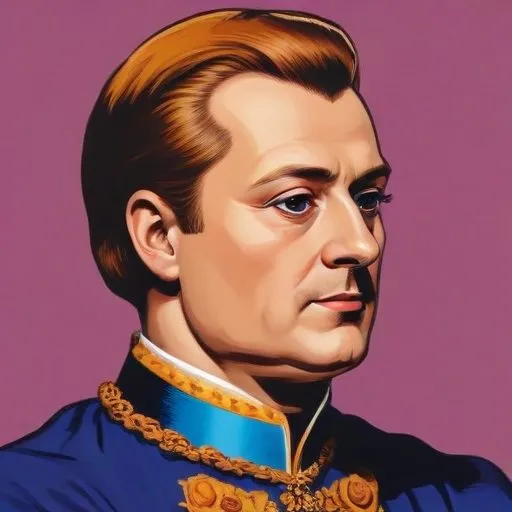
Philip I, Duke of Pomerania

Philip I, Duke of Pomerania

Philip I, Duke of Pomerania was born on July 14th, 1515

Full Name: Philip I, Duke of Pomerania
Place of Birth: Stettin, Pomerania
Profession: Duke of Pomerania
Nationality: German
Occupation: Ruler and Politician
Reign: 1531-1560
Birth Date: May 14, 1515
Death Date: February 14, 1560

Ruler of Pomerania from 1531 to 1560, known for his efforts to strengthen the duchy and promote the Protestant Reformation. He played a significant role in shaping the region's politics and religion.

Written by: Penelope Wildwood Penelope Wildwood

Philip I, Duke of Pomerania: A Pillar of Protestantism in the Renaissance

Philip I, Duke of Pomerania, is renowned for his instrumental role in introducing Protestantism in his realm, leaving an indelible mark on the religious and political landscape of 16th-century Europe. As the Duke of Pomerania-Wolgast, he played a pivotal role in shaping the course of the Reformation in his territories.

Early Life and Education

Born on May 14, 1515, in Stettin, Philip was the only surviving son of Duke George I and Amalie of the Palatinate. Following his mother's demise in 1525, he received his education at the court of his maternal grandfather in Heidelberg, where he developed a strong foundation in the humanities and politics.

Rise to Power and Political Turmoil

At just 16 years old, Philip took office in Stettin after the death of his father, inheriting a land beset by political and ecclesiastical turmoil. His primary task was to navigate the complex relationship with his stepmother, Margaret of Brandenburg, who was entitled to a significant portion of his country as her Wittum.

Philip's astute diplomacy led to a temporary resolution with his uncle Barnim IX, dividing Pomerania into Pomerania-Wolgast and Vorpommern in 1532. This division was initially limited to nine years but was reconfirmed in 1541.

Introduction of Protestantism

In 1543, Philip convened a parliament in Treptow an der Rega, where he introduced Protestantism in his realm, inviting esteemed guests such as Erasmus von Manteuffel-Arnhausen, the bishop of Cammin, and representatives of the estates, nobility, and cities. This watershed moment marked a significant turning point in the history of Pomerania.

Major Advisors and Confidants

Philip's trusted advisors included Jobst von Dewitz, Rdiger von Massow, and his Chancellor, Nikolaus Brun. His secretary, Thomas Kantzow, was a renowned chronicler who played a vital role in recording the events of Philip's reign.

Personal Milestones and Key Life Events

Legacy and Historical Context

Philip I's groundbreaking decision to introduce Protestantism in his realm had far-reaching consequences, shaping the religious and cultural identity of Pomerania for centuries to come. His legacy serves as a testament to his vision, courage, and statesmanship.

In conclusion, Philip I, Duke of Pomerania, was a visionary leader who navigated the complexities of his time with finesse, leaving an indelible mark on European history.

Timeline
1515
Born in Pomerania
Philip I, Duke of Pomerania, was born on July 14, 1515, in Pomerania, a region in modern-day Germany and Poland.
1531
Inherited the duchy
Philip inherited the Duchy of Pomerania from his father, George I.
1534
Conflict with the Holy Roman Empire
Philip engaged in a conflict with the Holy Roman Empire, seeking greater autonomy for Pomerania.
1541
Made peace with the Empire
Philip made peace with the Holy Roman Empire, securing a degree of independence for Pomerania.
1560
Died in Pomerania
Philip I, Duke of Pomerania, died on February 14, 1560, after a long and eventful reign.
Philip I, Duke of Pomerania

Philip I, Duke of Pomerania Quiz

What was Philip I, Duke of Pomerania known for?

Score: 0/5
FAQ
What was Philip I, Duke of Pomeranias role in the Protestant Reformation?
Philip I, Duke of Pomerania, was a Protestant and played a key role in the Protestant Reformation in Pomerania. He introduced the Lutheran faith in his duchy and supported the Protestant movement.
Who was Philip I, Duke of Pomerania?
Philip I, Duke of Pomerania, was a member of the House of Griffins and ruled Pomerania from 1531 to 1560. He was a prominent figure in the Protestant Reformation and was known for his military campaigns and diplomatic skills.
What were Philip I, Duke of Pomeranias achievements?
Philip I, Duke of Pomerania, was able to strengthen the economy of Pomerania through his policies and military campaigns. He also promoted trade and commerce, which led to the growth of cities in the duchy.
What was Philip I, Duke of Pomeranias family life like?
Philip I, Duke of Pomerania, was married to Maria of Saxony and had several children. His son, John Frederick, succeeded him as Duke of Pomerania after his death in 1560.
How did Philip I, Duke of Pomerania, die?
Philip I, Duke of Pomerania, died on 14 February 1560, after a long illness. He was succeeded by his son, John Frederick, who continued his policies and maintained the Protestant faith in Pomerania.

Related People:

John Frederick, Duke of Pomerania

Born in 1542

A Protestant bishop and duke who ruled Pomerania and played a key role in the Protestant Reformation in Germany. He's known for his efforts to establish Lutheranism in his territories.