


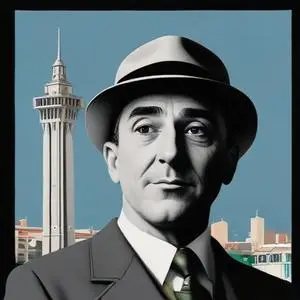
A renowned Italian architect and engineer, co-designer of iconic structures like the Pirelli Tower and Cathedral of Saint Mary of the Assumption, blending innovative engineering with artistic flair.
Pier Luigi Nervi, an Italian engineer and architect, is renowned for his groundbreaking use of reinforced concrete, particularly in the design of thin shell structures. His innovative approach to architecture and engineering has left an indelible mark on the world, with numerous notable structures worldwide bearing testament to his genius.
Born on June 21, 1891, in Sondrio, Italy, Nervi pursued his passion for engineering and architecture at the University of Bologna, graduating in 1913.
Nervi's professional journey began in 1923, and his early projects in the 1930s included several airplane hangars that showcased his innovative engineering skills. Two notable examples are the hangars in Orvieto (1935) and Orbetello and Torre del Lago (1939), which exemplified his ingenuity in using reinforced concrete and modular construction methods.
During the 1940s, Nervi's work played a significant role in the rebuilding of Western Europe, with his designs for reinforced concrete structures being instrumental in the reconstruction effort. He also designed and created a reinforced concrete boat hull, promoting the material's versatility and potential.
Nervi was a strong advocate for the importance of intuition in design, particularly when working with thin shell structures. He believed that mathematics and creativity should be balanced, allowing for innovative and aesthetically pleasing designs.
His design philosophy was deeply rooted in the principles of Roman and Renaissance architecture, with a focus on ribbing and vaulting to improve strength and eliminate columns. By combining simple geometry and prefabrication, Nervi was able to innovate design solutions that continue to inspire architects and engineers today.
Nervi's work has had a profound impact on modern architecture and engineering. His innovative use of reinforced concrete has influenced the design of numerous buildings, bridges, and other structures worldwide.
As a professor of engineering at Rome University (1946-1961) and Norton Professor at Harvard University (1961-1962), Nervi shared his knowledge and expertise with generations of engineers and architects, inspiring a new wave of innovators in the field.
In addition to his professional achievements, Nervi's personal life was marked by significant milestones, including his service in the Corps of Engineering of the Italian Army during World War I (1915-1918).
Nervi passed away on January 9, 1979, leaving behind a legacy that continues to inspire and influence architects, engineers, and designers worldwide.
Pier Luigi Nervi's innovative approach to engineering and architecture has secured his place in the annals of history. His work continues to inspire new generations of designers, engineers, and architects, ensuring that his legacy will endure for generations to come.
Born in 1891
A visionary Italian designer who merged art and industry, creating iconic furniture, buildings, and publications that continue to inspire modern design.
Born in 1887
A pioneer of modern architecture, famous for designing innovative, functional, and visually striking buildings that transformed urban landscapes. His works continue to inspire architects and designers worldwide.
Born in 1886
A pioneering architect who revolutionized modern skyscraper design with sleek, minimalist, and functional buildings that redefined urban landscapes. His iconic creations continue to inspire architects and influence city skylines.
Born in 1883
A pioneer of modernist architecture, he designed iconic buildings that blended functionality with aesthetics, including the John F. Kennedy Federal Building. His work continues to inspire architects and designers today.
Born in 1910
A Finnish-American architect and furniture designer who created iconic, futuristic structures and designs that blended art and functionality, including the iconic Gateway Arch.
Born in 1892
A pioneering architect who designed iconic buildings that blended seamlessly into their surroundings, revolutionizing modernist architecture with his sleek, functional, and elegant style.
Born in 1917
A renowned architect who designed iconic buildings that blend modernity with cultural sensitivity, leaving an indelible mark on the urban landscape.
