


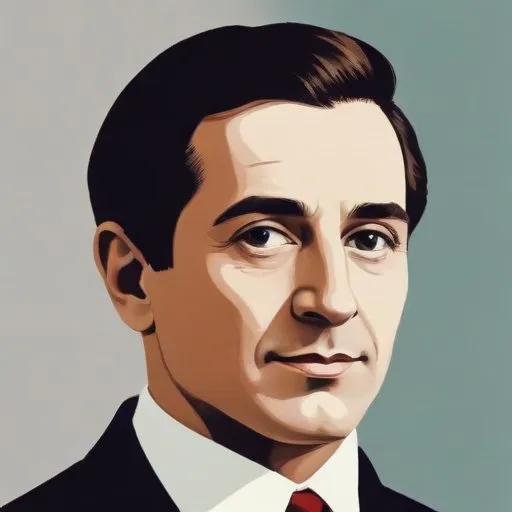
French Minister of Marine and the Colonies who oversaw the development of the French Navy and colonies during the late 18th and early 19th centuries, implementing significant reforms and modernizations. He's also known for his hydrographic work, creating detailed maps of the French coast.
Pierre-Alexandre-Laurent Forfait is renowned for his groundbreaking contributions to French naval engineering, hydrography, and politics. As a skilled engineer, hydrographer, and politician, he left an indelible mark on the development of the French Navy and maritime architecture during the late 18th century.
Forfait was born on April 21, 1752, in a family of wealthy merchants. He received his education at a Jesuit college in Rouen, where he excelled in mathematics and hydrography, earning prizes in both subjects upon graduation. This strong foundation in mathematics and hydrography laid the groundwork for his future accomplishments.
Forfait's career was marked by numerous achievements, including his service as an assistant naval engineer at Brest harbour and his role as an adjunct member of the Naval Academy. In 1777, he rose to subengineer under Antoine Groignard, cementing his position as a prominent figure in French naval engineering.
One of his most notable works is the "Trait de la mture," a comprehensive treatise on naval architecture that he authored at the request of Castries, the Secretary of State of the Navy. This work showcased his expertise in ship design and earned him recognition as a corresponding member of the Academy of Sciences.
Forfait's pioneering work in ship design and cargo management led to significant improvements in French naval architecture. He developed innovative techniques for optimizing cargo storage in ship holds, making French vessels more efficient and competitive. Additionally, his designs for fluyts, a type of ship, revolutionized maritime trade and commerce.
During his time as director of service at Le Havre harbour, Forfait introduced cutting-edge techniques to improve ship design and construction. His expertise was sought after by the British, and he was sent to England to study their shipbuilding methods, ultimately publishing his observations in "Observations sur la marine de d'Angleterre."
In 1791, Forfait was elected as a deputy for the Seine-Infrieure region, marking the beginning of his political career. He adopted moderate positions, earning him the nickname "Juste Milieu" (Middle of the Road), which he wore with pride.
Forfait's legacy extends beyond his technical contributions to the French Navy. He played a significant role in shaping the country's maritime infrastructure and contributed to the development of modern shipbuilding techniques. His work continues to inspire engineers, hydrographers, and politicians to this day.
April 21, 1752: Born in a family of wealthy merchants
1773: Admitted as an assistant member of Rouen Academy and assistant naval engineer
1777: Rose to subengineer under Antoine Groignard
1781: Became an adjunct member of the Naval Academy
1783: Embarked on the 110-gun Terrible, part of a Franco-Spanish fleet
1789: Appointed director of service at Le Havre harbour
1791: Elected as a deputy for the Seine-Infrieure region
November 8, 1807: Passed away, leaving behind a lasting legacy in French naval engineering and politics
Through his remarkable career, Pierre-Alexandre-Laurent Forfait demonstrated a relentless pursuit of innovation and excellence, leaving an indelible mark on French history and the development of modern naval architecture.
Born in 1769
A French military leader who rose to prominence during the French Revolution and became Emperor of France, known for his military conquests and reorganization of Europe. He is also famous for his Napoleonic Code, which remains a foundation of modern law.
Born in 1749
Developed nebular hypothesis of the origin of the solar system and formulated Laplace's equation, a fundamental concept in mathematics and physics. He's considered the founder of celestial mechanics.
Born in 1774
A French polymath who made significant contributions to the fields of physics, astronomy, and mathematics, particularly in the discovery of chromatic polarization and the Biot-Savart law.
Born in 1786
A mathematician and politician who made significant contributions to the development of electromagnetism and served as Prime Minister of France, advocating for social reform and education.
Born in 1752
Developed the theory of elliptic integrals, and his work on number theory laid the foundation for modern cryptography.
