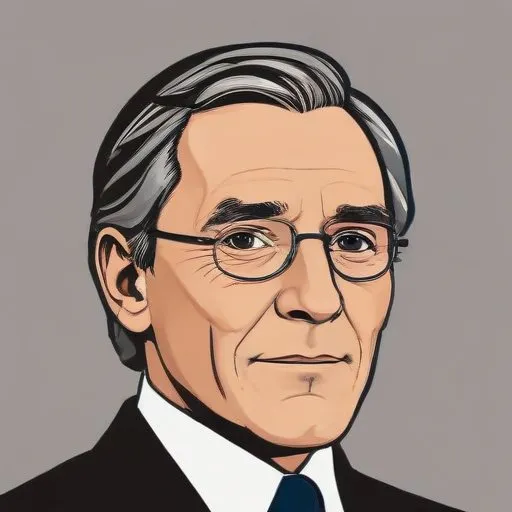
Pierre Aubert: The Swiss Politician and Human Rights Advocate
A Champion of Human Rights and Swiss Politics
Pierre Aubert is renowned for his remarkable career as a Swiss politician, lawyer, and member of the Swiss Federal Council, serving from 1978 to 1987. During his tenure, he zealously advocated for human rights, both domestically and internationally, earning him a prominent position in Swiss politics.
Early Life and Education
Born on March 3, 1927, in Switzerland, Aubert pursued a degree in law, which he obtained in 1953. He subsequently became an attorney-at-law and began his political career in the City Parliament of La Chaux-de-Fonds from 1960 to 1968.
Rise to Prominence
Aubert's political career gained momentum as he served in the Cantonal Parliament of Neuchâtel from 1961 to 1975. During this period, he held the prestigious position of President of the Cantonal Parliament from 1969 to 1970. In 1975, he was elected to the Council of States, a chamber of the Federal Parliament, where he remained until his election to the Federal Council in 1977.
Swiss Federal Council and Human Rights Advocacy
Aubert's election to the Swiss Federal Council marked a significant milestone in his career. He was appointed to the Political Department in 1978 and later became the head of the Federal Department of Foreign Affairs from 1979 to 1987. During this period, he twice held the position of President of the Confederation, in 1983 and 1987.
As a passionate advocate for human rights, Aubert led the charge in promoting Switzerland's active role in international human rights efforts. He undertook 55 foreign trips, 39 of which were official visits, to advance Switzerland's interests and promote human rights. Notably, he signed a declaration against apartheid in Nigeria in 1979 and was the first Swiss foreign minister to establish contacts with the PLO leadership in 1980.
Notable Achievements and Controversies
One of Aubert's most significant achievements was leading the campaign to join the United Nations in 1986. Although the bid was unsuccessful, with only 24% of the voters in favor, it demonstrated his commitment to international cooperation and human rights.
Aubert's tenure was not without controversy, however. His support for the Palestinian Liberation Organization (PLO) and his efforts to establish diplomatic relations with the organization sparked debate and criticism in Switzerland and abroad.
Legacy and Impact
Pierre Aubert's remarkable career has left an indelible mark on Swiss politics and human rights advocacy. His tireless efforts to promote human rights, both domestically and internationally, have inspired generations of politicians and human rights activists.
Through his work, Aubert has demonstrated the importance of active diplomacy, international cooperation, and human rights advocacy in shaping a more just and equitable world. His legacy continues to inspire and influence Swiss politics and human rights efforts to this day.
Personal Life and Milestones
Aubert served as the Chancellor of the University of Neuchâtel from 1971 to 1977. He was also a member of the Parliamentary Assembly of the Council of Europe from 1974 to 1977 and was rapporteur for the admission of Portugal.
After stepping down from the Federal Council in 1987, Aubert continued to be involved in politics and human rights advocacy. He passed away on June 8, 2016, leaving behind a rich legacy of public service and human rights advocacy.
FAQ
What is Pierre Auberts most notable achievement in politics?
Pierre Aubert served as a member of the Swiss Federal Council from 1952 to 1967, holding various ministerial positions and playing a key role in shaping Switzerlands foreign policy.
What was Pierre Auberts early life like?
Pierre Aubert was born in 1923 in Switzerland. He studied law and eventually became a lawyer, entering politics in the 1950s.
How did Pierre Aubert get started in politics?
Pierre Aubert began his political career as a member of the Swiss National Council, eventually joining the Swiss Federal Council in 1952. He served as Minister of Justice and Police, Minister of Foreign Affairs, and Minister of Defense.
What were Pierre Auberts key policies as a politician?
Pierre Aubert played a key role in shaping Switzerlands foreign policy, particularly during the Cold War era. He also worked to modernize the countrys justice system and improve its defense capabilities.
What is Pierre Auberts legacy in Swiss politics?
Pierre Aubert is remembered as a respected and influential figure in Swiss politics, known for his diplomatic skills and commitment to public service. He remains a significant figure in Swiss history.