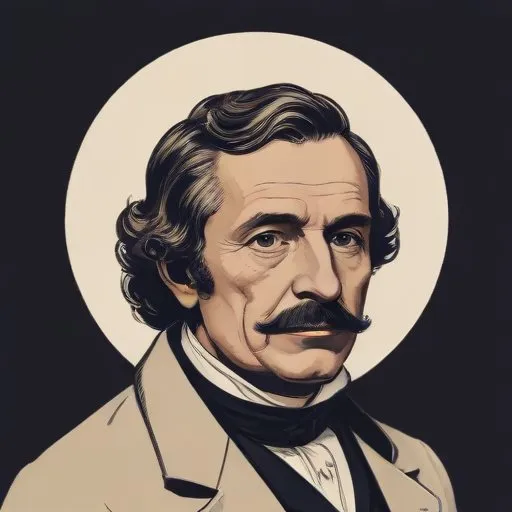
Pierre Charles Le Monnier: The French Astronomer Who Brought British Methods to France
The Early Years and Rise to Prominence
Pierre Charles Le Monnier, born on November 23, 1715, in Paris, France, was a renowned French astronomer who made significant contributions to the field, earning him recognition from the French Academy of Sciences at just 20 years old. His admission was facilitated by the presentation of an elaborate lunar map, showcasing his exceptional talent and dedication to astronomy.
A Geodetical Expedition and the Reform of French Practical Astronomy
In 1736, Le Monnier joined
Pierre Louis Maupertuis and
Alexis Clairaut on a geodetical expedition to Lapland, where they measured a meridian arc of approximately one degree in length. This experience had a profound impact on Le Monnier, who subsequently advocated for the adoption of British methods and instruments in French practical astronomy. His persistent recommendations led to a significant reform of French astronomy, making him a pioneer in his field.
Advancements and Innovations
Le Monnier introduced the use of the transit instrument at the Paris Observatory in 1741, a move that revolutionized astronomical observations in France. He was also the first to represent the effects of nutation in the solar tables and corresponded with prominent British astronomers, including James Bradley. His groundbreaking work earned him the favor of King Louis XV, who provided him with the necessary resources to procure the best instruments, many of which were made in Britain.
Terrestrial Magnetism and Atmospherics
Le Monnier's research extended beyond astronomy to terrestrial magnetism and atmospherics. He conducted extensive studies on these topics, providing valuable insights that contributed to a deeper understanding of the Earth's magnetic field and atmospheric phenomena.
International Recognition and Collaboration
In 1748, Le Monnier visited England, where he met with prominent astronomers and scientists, including the Earl of Morton and James Shore. He continued his journey to Scotland, where he observed the annular eclipse of July 25. This trip marked a significant milestone in his career, as it facilitated international collaboration and recognition.
Legacy and Impact
Le Monnier's contributions to astronomy and science have had a lasting impact on the development of these fields. He played a crucial role in introducing British methods to France, paving the way for future generations of astronomers. His work on terrestrial magnetism and atmospherics has also had a significant influence on our understanding of the Earth's natural phenomena.
Personal Milestones and Key Life Events
- Born on November 23, 1715, in Paris, France
- Admitted to the French Academy of Sciences at age 20 (1736)
- Participated in the geodetical expedition to Lapland (1736)
- Introduced the transit instrument at the Paris Observatory (1741)
- Visited England and Scotland (1748)
- Died on April 3, 1799, in Paris, France
Quotes and Memorable Sayings
While Le Monnier did not leave behind a collection of quotes or memorable sayings, his work speaks volumes about his dedication to the pursuit of scientific knowledge and his commitment to advancing the field of astronomy.
Historical Context and Legacy
Le Monnier's contributions to astronomy and science occurred during a time of significant scientific discovery and exploration. His work built upon the foundations laid by prominent astronomers such as John Flamsteed and James Bradley, and paved the way for future generations of scientists.
Career Highlights and Major Works
- Elaborate lunar map (1736)
- Geodetical expedition to Lapland (1736)
- Introduction of the transit instrument at the Paris Observatory (1741)
- Studies on terrestrial magnetism and atmospherics
- Correspondence with prominent British astronomers, including James Bradley
Influence on Modern Society
Le Monnier's contributions to astronomy and science have had a lasting impact on our understanding of the universe and the natural world. His work has inspired generations of scientists, and his legacy continues to influence contemporary research in these fields.
FAQ
What were Pierre Charles Le Monniers contributions to the field of astronomy?
Le Monnier made significant contributions to the field of astronomy, including his work on celestial mechanics and his discovery of several comets.
How did Pierre Charles Le Monniers work influence the development of astronomy?
Le Monniers research and findings helped to shape our understanding of the solar system and the behavior of celestial bodies.
What was Pierre Charles Le Monniers relationship with the French Academy of Sciences?
Le Monnier was a prominent member of the French Academy of Sciences, playing a key role in the academys development and promoting scientific inquiry.
What were Pierre Charles Le Monniers views on the nature of comets?
Le Monnier believed that comets were celestial bodies that followed elliptical orbits, rather than simply being atmospheric phenomena.
What is Pierre Charles Le Monniers legacy in modern astronomy?
Today, Le Monnier is recognized as a pioneering figure in astronomy, whose work laid the foundation for later discoveries and advancements in the field.