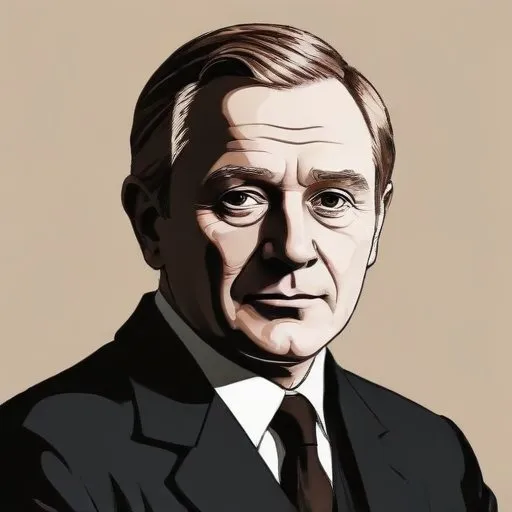
Poul Schlüter: The Conservative Prime Minister of Denmark
A Legacy of Leadership and Controversy
Poul Schlüter, the Danish politician who served as Prime Minister of Denmark from 1982 to 1993, is known for being the first and only member of the Conservative People's Party to hold the office. During his tenure, he navigated the country through significant political and economic changes, earning him the title of Nordic Politician of the Year in 1984.
Early Life and Education
Born on April 3, 1929, in Tønder, south Jutland, Schlüter's paternal grandfather was a bricklayer from Holstein who had moved to Tønder and married a Dane. This mixed heritage exposed him to the antagonisms between the Danish majority and the German minority in North Schleswig following the 1920 Schleswig plebiscites. Schlüter graduated from the University of Copenhagen in 1957 with a degree in law and joined the bar in 1960.
Rise to Power
Schlüter's political career began in 1964 when he was elected to the Folketing for the Conservative People's Party. He later became the leader of the Conservatives in 1974, defeating Erik Ninn-Hansen, but lost the position in 1977. He regained the leadership in 1981 and maintained it until 1993. In 1982, he constructed a four-party coalition and was appointed Prime Minister, succeeding
Anker Jørgensen.
Key Accomplishments and Controversies
During his time as Prime Minister, Schlüter's government implemented various reforms, including the introduction of a tax reform, the reduction of public expenditure, and the liberalization of the economy. However, his tenure was also marred by controversy, including the Tamil Case (Tamilsagen), an inquiry that found he had misinformed the Danish Parliament, leading to his eventual resignation in 1993.
Awards and Honors
Schlüter received numerous Danish and international awards and medals for his contributions to politics and diplomacy. Some notable awards include:
- Nordic Politician of the Year (1984)
- Honorary doctorate from the University of Copenhagen (1985)
- Grand Cross of the Order of the Dannebrog (1985)
Legacy and Impact
Poul Schlüter's legacy is complex and multifaceted. While he is remembered for his economic reforms and leadership, he is also criticized for his role in the Tamil Case and his conservative policies. Nevertheless, his impact on Danish politics and society is undeniable, and he remains an important figure in the country's history.
Personal Life and Milestones
Schlüter was married to Lisbeth Schlüter and had three children. He passed away on May 27, 2021, at the age of 92, leaving behind a legacy that continues to shape Denmark's political landscape.
FAQ
What was Poul Schlüters role in Danish politics?
Poul Schlüter was the 37th Prime Minister of Denmark, serving from 1982 to 1993. He was a prominent figure in Danish politics and leader of the Conservative Peoples Party.
What were Poul Schlüters key policy achievements?
Poul Schlüters government implemented significant economic reforms, including tax reductions, deregulation, and privatization. He also played a key role in shaping Denmarks European policy and relations with the European Community.
How did Poul Schlüter shape Denmarks European policy?
Poul Schlüter was a strong advocate for Denmarks membership in the European Community, which later became the European Union. He played a key role in negotiating the Maastricht Treaty and shaped Denmarks approach to European integration.
What was Poul Schlüters leadership style?
Poul Schlüter was known for his pragmatic and consensus-driven leadership style, which helped to build bridges between different political parties and factions. He was also known for his strong communication skills and ability to connect with ordinary Danes.
What is Poul Schlüters legacy in Danish politics?
Poul Schlüters legacy in Danish politics is one of reform, modernization, and European integration. He is remembered as a skilled and effective leader who played a significant role in shaping Denmarks economic and political development.