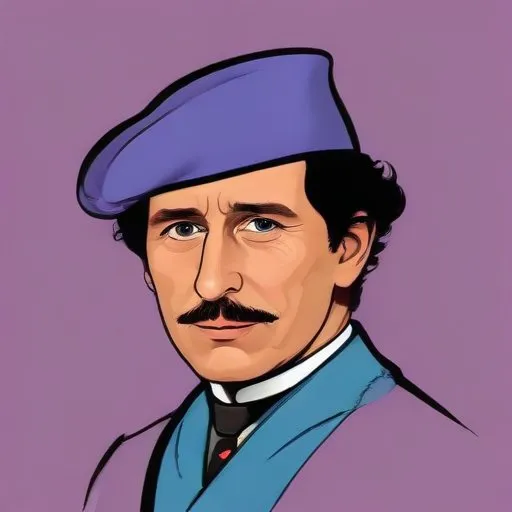
Prince Charles, Count of Flanders: The Regent of Belgium during World War II
Introduction
Prince Charles, Count of Flanders, is best known for serving as the regent of Belgium from 1944 to 1950, during a tumultuous period in the country's history. As the younger brother of King Leopold III, Charles took on the responsibility of leading the country while his brother's actions during World War II were investigated.
Early Life and Education
Born on October 10, 1903, in Brussels, Prince Charles was the second son of King
Albert I of Belgium and Duchess Elisabeth in Bavaria. During World War I, he was sent to the United Kingdom with his siblings, while his father remained in Belgium. Charles attended Wixenford School in Wokingham, Berkshire, and later the Royal Naval College, Osborne, and Dartmouth. In 1926, he received the honorary rank of sublieutenant in the British Royal Navy.
Regency and World War II
After the German occupation of Belgium ended in 1944, Prince Charles was appointed Regent of Belgium. His brother, King Leopold III, was under scrutiny for his alleged collaboration with the Nazis during the war. Charles' regency was marked by efforts to rebuild the war-torn country and deal with the aftermath of the German occupation.
The Controversy Surrounding King Leopold III
King Leopold III's decision to surrender to the Germans in 1940 and his subsequent collaboration with the Nazi regime sparked controversy and debate. Charles' role as regent was, in part, a response to the public's mistrust of his brother's actions during the war.
Personal Life and Later Years
Prince Charles was known as General du Boc during the war, a pseudonym used for security reasons. He had a close association with RAF Hullavington, where many top Allied officers were based.
After King Leopold III was allowed to return to Belgium, Charles' regency came to an end. Shortly after, Leopold abdicated in favor of his son, Baudouin.
Legacy
Prince Charles' regency played a crucial role in stabilizing Belgium during a period of great turmoil. His leadership helped to facilitate the country's transition from wartime occupation to peacetime rebuilding.
Historical Context
Charles' regency took place during a time of great upheaval in European history. The aftermath of World War II saw the rise of the Cold War, and Belgium's position in the Western Bloc was influenced by Charles' leadership during this period.
Trivia and Fun Facts
- Prince Charles was an honorary lieutenant in the British Royal Navy.
- He attended the Royal Military School of Brussels.
- Charles was known for his fluency in multiple languages, including English, French, and German.
FAQ
What was Prince Charles, Count of Flanders role in Belgian history?
Prince Charles, Count of Flanders was a member of the Belgian royal family and served as regent of Belgium from 1944 to 1950, playing a key role in the countrys reconstruction after World War II.
What was Prince Charles, Count of Flanders relationship like with King Leopold III?
Prince Charles, Count of Flanders was the brother of King Leopold III and served as his regent during World War II, although the two had disagreements over policy.
How did Prince Charles, Count of Flanders get his start in politics?
Prince Charles, Count of Flanders began his political career as governor of the province of East Flanders, eventually becoming regent of Belgium.
What was Prince Charles, Count of Flanders approach to politics?
Prince Charles, Count of Flanders was known for his pragmatic, conciliatory approach to politics, seeking to unite Belgians and promote national reconciliation.
What is Prince Charles, Count of Flanders legacy in Belgian history?
Prince Charles, Count of Flanders is remembered as a key figure in Belgian history, playing a crucial role in the countrys reconstruction and serving as a symbol of national unity.