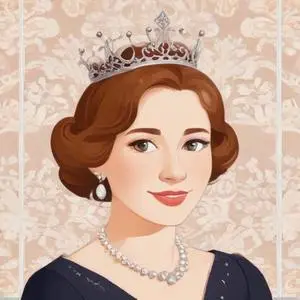
Princess Elizabeth of the United Kingdom: A Life of Artistic Expression and Royal Duty
A Royal Daughter and Landgravine of Hesse-Homburg
Princess Elizabeth of the United Kingdom, also known as Eliza, was the seventh child and third daughter of King George III and Queen Charlotte. Born on May 22, 1770, she would go on to lead a life marked by artistic pursuits, marriage, and royal duty as the Landgravine of Hesse-Homburg.
Early Life and Upbringing
Princess Elizabeth was born at Buckingham House, London, and christened at St. James's Palace on June 17, 1770. Her godparents were esteemed members of European royal families, including the Hereditary Prince of Hesse-Cassel, the Princess of Nassau-Weilburg, and the Crown Princess of Sweden. Growing up, Elizabeth was sheltered from the outside world, spending most of her time with her parents and sisters at court.
A Sheltered but Artistic Existence
Despite her sheltered upbringing, Princess Elizabeth found ways to express herself through art. She was a talented artist, producing several books of engravings to benefit various charities. Elizabeth also explored other creative outlets, including painting, printing techniques, and silhouette cutting.
A Private Residence and Independence
In 1812, Princess Elizabeth purchased The Priory at Old Windsor in Berkshire as her private residence. This marked a significant step towards independence, allowing her to escape the strict protocol of court life and pursue her interests freely.
Marriage and Life as Landgravine of Hesse-Homburg
Princess Elizabeth married Frederick VI, Landgrave of Hesse-Homburg, and took up permanent residence in Germany. As Landgravine, she fulfilled her royal duties while continuing to nurture her artistic passions.
Legacy and Impact
Princess Elizabeth's life serves as a testament to the power of creative expression and personal determination. Despite being born into a life of royal duty, she carved out her own path, pursuing her artistic interests and finding independence. Her story inspires us to find our own creative outlets, even in the midst of duty and responsibility.
Trivia and Fun Facts
- Princess Elizabeth's engravings were sold to benefit charities, showcasing her commitment to philanthropy.
- She was known for her optimistic attitude, despite facing the challenges of a sheltered existence.
- The Priory at Old Windsor, her private residence, remains a testament to her desire for independence.
Conclusion
Princess Elizabeth of the United Kingdom, Landgravine of Hesse-Homburg, led a life marked by artistic expression, royal duty, and personal determination. Through her story, we are reminded of the importance of pursuing our passions, even in the face of duty and responsibility.
FAQ
What is the early life of Princess Elizabeth of the United Kingdom?
Princess Elizabeth was born on August 4, 1770, to King George III and Queen Charlotte. She was the seventh child and third daughter of the royal couple, and grew up in a tumultuous era marked by the American Revolution and the French Revolution.
What were the interests of Princess Elizabeth of the United Kingdom?
Princess Elizabeth was known for her love of music, art, and literature. She was an accomplished pianist and enjoyed reading works by authors such as Laurence Sterne and Frances Burney.
Was Princess Elizabeth of the United Kingdom married?
Princess Elizabeth married Prince Frederick of Hesse-Homburg in 1818, and the couple had no children. The marriage was not a happy one, and they eventually separated.
What was the legacy of Princess Elizabeth of the United Kingdom?
Princess Elizabeths legacy is largely overshadowed by her more famous siblings, but she remains an important figure in British royal history. She was a patron of the arts and supported several charitable causes during her lifetime.
How did Princess Elizabeth of the United Kingdom die?
Princess Elizabeth died on January 10, 1840, at the age of 69, after a long illness. She was buried in the Royal Vault at St. Georges Chapel, Windsor Castle.