


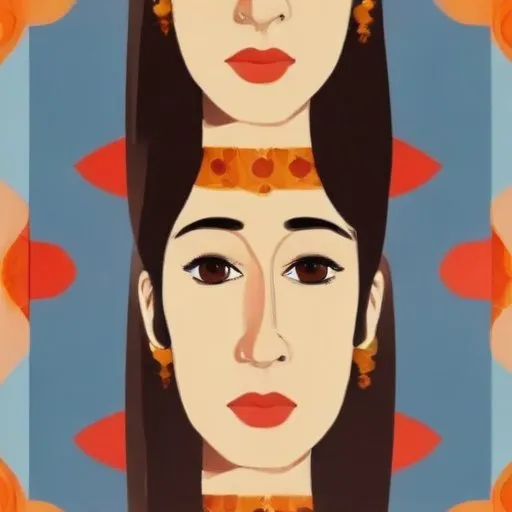
The last reining monarch of the Kingdom of Hawaii, who fought to preserve her nation's independence and culture, and is remembered for her humanitarian work and dedication to her people.
Queen Emma, also known as Emma Kalanikaumakaamano Kaleleonlani Naea Rooke, was the queen of Hawaii as the wife of King Kamehameha IV from 1856 to his death in 1863. She was a devoted wife, mother, and leader, known for her philanthropic efforts, her deep faith, and her dedication to the welfare of her people.
Emma was born on January 2, 1836, in Honolulu, Hawaii. She was born into a prominent Hawaiian family, the daughter of High Chief George Naea and High Chiefess Fanny Kekelaokalani Young. She was adopted by her childless maternal aunt, Chiefess Grace Kamaikui Young Rooke, and her husband, Dr. Thomas C. B. Rooke, under the traditional Hawaiian practice of hānai.
Emma's family was steeped in Hawaiian tradition and culture. Her father, Naea, was a high-ranking chief, and her mother was a member of the royal family. Her ancestors included prominent Hawaiian leaders, including King Kamehameha I and Queen Kepolani.
In 1856, Emma married King Kamehameha IV, and became the queen of Hawaii. The couple had one son, Prince Albert Edward Kamehameha Kalaninui Kaikaulaleokuanoa, who died at the age of four. Emma was devastated by her son's death, and her husband's health began to decline shortly after.
King Kamehameha IV passed away in 1863, and Emma was left to mourn the loss of her husband and son. She was later a candidate for the throne, but King Kalākaua was elected instead.
Emma was a devout member of the Anglican Church, and was baptized on October 21, 1862. She was known for her kindness and generosity, particularly towards the poor and the sick. She founded the St. Andrew's Priory School for Girls, which provided education and shelter for young women.
Emma was also a patron of the arts, and was known for her love of music and dance. She was particularly fond of the traditional Hawaiian dance, the hula, and was said to have been an accomplished dancer in her youth.
Queen Emma's legacy extends far beyond her royal title. She was a devoted wife, mother, and leader, who worked tirelessly to improve the lives of her people. She was a patron of the arts, a philanthropist, and a devout member of her community.
Today, Queen Emma is remembered as a symbol of Hawaiian culture and tradition. Her life and legacy continue to inspire and educate people around the world.
Queen Emma's life was one of devotion, kindness, and generosity. Her legacy continues to inspire and educate people around the world, and her memory is cherished as an important part of Hawaiian history and culture.
