


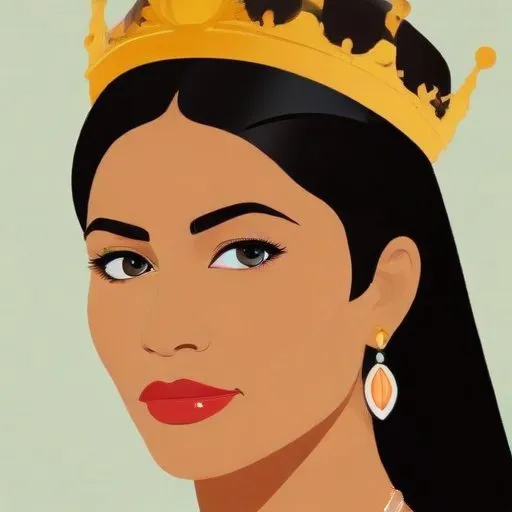
The last monarch of the Kingdom of Tahiti, ruling from 1815 to 1842, known for her attempts to maintain independence and resist French colonization. She played a crucial role in shaping Tahiti's history and cultural identity.
Renowned for being the last queen consort of the Kingdom of Tahiti, Queen Marau's life was a testament to the complexities of cultural identity, royal politics, and personal resilience. Her marriage to King Pōmare V, who ruled from 1877 to 1880, cemented her position as a pivotal figure in Tahitian history.
Born on April 24, 1860, to Alexander Salmon Solomon, an English Jewish merchant, and Princess Oehau, Queen Marau's destiny was intertwined with the royal families of Tahiti. Her mother, Princess Oehau, held the title of ari'i Taimai, and was the adoptive daughter of King Pōmare II's widow, making Queen Marau a direct descendant of Chief Amo and Queen Purea, who had received the first European explorer, Samuel Wallis, in 1767.
Queen Marau's education was a reflection of her family's cosmopolitan nature. She attended the Young Ladies College in Sydney, Australia, a private school operated by Miss Fallow, where she was exposed to European culture and ideas. This exposure would later influence her role as a queen consort, as she navigated the complexities of European-Tahitian relations.
In 1875, Queen Marau married King Pōmare V, solidifying the alliance between the Teva clan, her family's traditional rivals of the Pōmare family. However, her family life was not without turmoil. The death of her mother sparked a seven-year feud with her siblings over their mother's lands and possessions, a dispute that would eventually be resolved in 1904.
Queen Marau passed away on February 2, 1935, leaving behind a rich cultural heritage and a lasting impact on the history of Tahiti. Her story serves as a powerful reminder of the complex, multifaceted nature of cultural identity and the significant contributions women have made to the fabric of society.
