


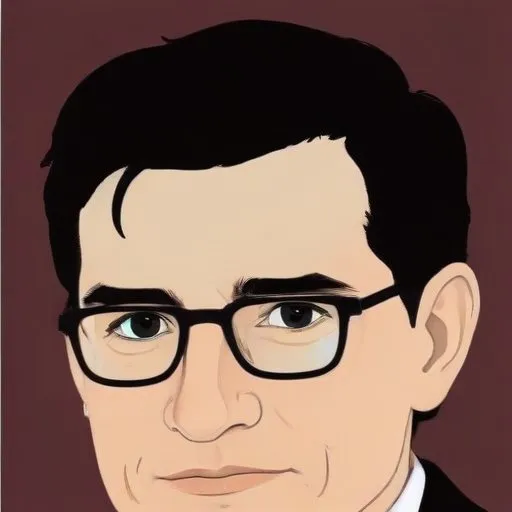
Fantastical and humorous science fiction and fantasy author, known for his unique, unconventional, and often surreal storytelling style.
R. A. Lafferty, an American science fiction and fantasy writer, is renowned for his unconventional use of language, metaphor, and narrative structure. His distinctive style has captivated readers and inspired authors, solidifying his position as a pioneer in the science fiction genre.
Born on November 7, 1914, in Neola, Iowa, Lafferty was raised in a devoutly Catholic family. His parents, Hugh David Lafferty and Julia Mary Burke, instilled in him a strong sense of morality and creative curiosity. After moving to Perry, Oklahoma, at the age of four, Lafferty developed a passion for learning, which led him to attend Cascia Hall and later pursue night school at the University of Tulsa, where he studied mathematics and German.
In 1942, Lafferty enlisted in the U.S. Army, serving in the South Pacific Area during World War II. After his honorable discharge in 1946, he worked for Clark Electric Co. in Tulsa, where he continued his education through the International Correspondence School. It wasn't until the 1950s that Lafferty began writing, eventually publishing his first story, "The Wagons," in the New Mexico Quarterly Review in 1959.
Lafferty's writing career spanned over three decades, during which he penned 32 novels and more than 200 short stories. His unique approach to science fiction and fantasy explored unconventional themes, such as mythology, history, and mysticism. Some of his notable works include:
Lafferty's contributions to science fiction and fantasy earned him numerous accolades, including:
R. A. Lafferty's innovative approach to science fiction and fantasy has inspired a generation of authors, including Ursula K. Le Guin, Gene Wolfe, and Neil Gaiman. His influence can be seen in the works of contemporary authors, such as China Miéville and Kij Johnson, who continue to push the boundaries of the genre.
Lafferty's legacy extends beyond his literary contributions, as his unique voice and perspective have encouraged authors to experiment with language and narrative structure. His impact on the science fiction and fantasy genre is undeniable, solidifying his position as one of the most important and influential authors of the 20th century.
Lafferty remained a private figure throughout his life, never marrying and living with his sister, Anna Lafferty, in Tulsa. He continued writing until his passing on March 18, 2002, leaving behind a body of work that continues to inspire and captivate readers.
96 Years Old
A celebrated author of fantasy and science fiction, crafting imaginative worlds and exploring complex social themes, particularly in the Earthsea series and The Left Hand of Darkness.
89 Years Old
Fantastical author of iconic science fiction and fantasy novels, blending mythology and psychology, with a poetic touch. Creator of the beloved Amber series.
92 Years Old
Prolific writer of science fiction, fantasy, and horror, creating iconic works like "A Boy and His Dog" and "I Have No Mouth, and I Must Scream", influencing generations of writers and filmmakers.
97 Years Old
Pioneering science fiction author and philosopher who explored the nature of reality, identity, and humanity through thought-provoking novels and short stories. His works often delved into the consequences of advanced technology and alternate realities.
Born in 1920
A renowned science fiction author and biochemistry professor who wrote or edited more than 500 books and an estimated 90,000 letters and postcards throughout his lifetime.
Born in 1920
Prolific author of poetic and imaginative science fiction, exploring the human condition through fantastical worlds and characters, with works adapted into films and TV shows.
Born in 1919
Pioneering science fiction author and journalist, known for exploring complex social and philosophical themes in his works, including the award-winning novel "Gateway".
Born in 1913
A renowned sinologist and science fiction author, best known for blending Eastern and Western cultural elements in his imaginative and philosophical stories. His works explore the intersection of technology, humanity, and morality.
