


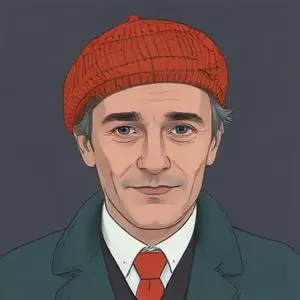
A Scottish psychiatrist and author who challenged traditional psychiatry, arguing that mental illness is a sane response to an insane world, and wrote influential books on the human condition.
Ronald David Laing, commonly referred to as R. D. Laing, was a Scottish psychiatrist who revolutionized the field of psychotherapy by questioning the conventional wisdom on mental illness, particularly psychosis and schizophrenia. He is best known for his iconic book, The Divided Self, which offered a radically different perspective on the causes and treatment of mental health disorders.
Laing's work was heavily influenced by existential philosophy, which led him to reject the traditional biochemical approach to psychiatry. Instead, he emphasized the importance of understanding the individual's subjective experience and the role of societal factors in shaping their mental health.
He believed that mental illness was not solely a product of individual defect or malfunction, but rather a natural response to a dysfunctional social context. This perspective led him to critique the dominant psychiatric practices of his time, including the over-reliance on medication and electroconvulsive therapy.
Laing was born on October 7, 1927, in Govanhill, Glasgow, Scotland, to a civil engineer father and a mother who was a homemaker. He was an only child and described his parents as demanding and somewhat antisocial.
He pursued his medical degree at the University of Glasgow, where he developed a strong interest in philosophy, particularly existentialism. This philosophical bent would later inform his approach to psychiatry.
In the 1950s, Laing worked as a psychiatrist in the British Army and later at the Tavistock Clinic in London, where he developed his unconventional approach to psychotherapy.
Laing's most influential work, The Divided Self, was published in 1960 and challenged the traditional views on schizophrenia. He argued that the condition was not a discrete entity, but rather a way of experiencing the world that was shaped by societal and cultural factors.
His subsequent books, including The Self and Others and Knots, further solidified his reputation as a maverick thinker in the field of psychiatry.
Laing's work has had a significant impact on modern society, influencing the development of anti-psychiatry movement and shaping the way we think about mental health and its relationship to societal norms.
Laing's unconventional approach to psychiatry and his critiques of the medical establishment made him a controversial figure in his lifetime. He was often at odds with his peers and was portrayed as a radical and a rebel.
Despite the controversies, Laing remained a popular figure, and his ideas continue to inspire and challenge psychiatrists, philosophers, and social theorists to this day.
Laing was married twice and had five children. He was known for his charismatic personality and was a talented musician, being an Associate of the Royal College of Music.
In the 1960s and 1970s, Laing became a countercultural icon, attracting a devoted following of young people who saw him as a visionary and a revolutionary thinker.
In 2017, David Tennant portrayed Laing in the film Mad to Be Normal, which dramatized his life and work.
Laing's ideas have influenced a wide range of fields, from literature to music to social theory. His critique of psychiatry and his emphasis on the importance of understanding the individual's subjective experience continue to resonate with contemporary issues and debates.
As a writer, thinker, and iconic figure, R. D. Laing's impact on modern society is undeniable. His work continues to inspire and challenge us, offering a radically different perspective on the complexities of the human experience.
Born in 1917
A pioneer in quantum mechanics and consciousness, he explored the intersection of physics, philosophy, and psychology, proposing innovative theories on reality and human thought.
