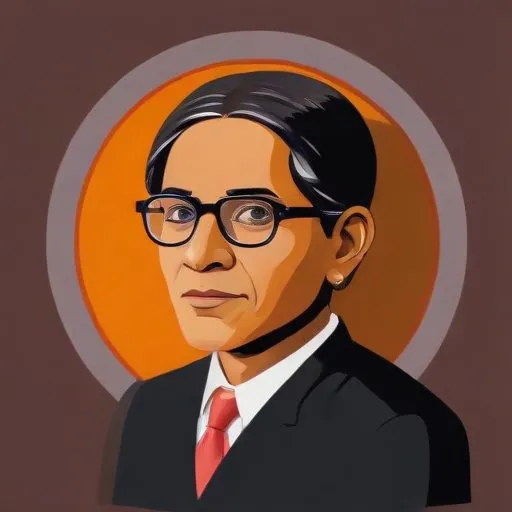
Radhabinod Pal: The Lone Dissenter of the Tokyo Trials
A Life of Judicial Excellence and Controversy
Radhabinod Pal is best known for being the sole dissenting judge in the Tokyo Trials, a landmark international tribunal that prosecuted Japanese war crimes committed during World War II. His bold and controversial judgment, which declared all defendants not guilty, continues to be a topic of discussion and debate among historians and legal scholars.
Early Life and Education
Born on January 27, 1886, in Salimpur, Kushtia District, Bengal Presidency, British India (now Bangladesh), Radhabinod Pal showed academic brilliance from an early age. He passed the Entrance Examination in 1903 and F.A. Examination in 1905 from Rajshahi College with distinctions. Pal then went on to earn his BA (Honors) in 1907 and MA in 1908 in Mathematics from the prestigious Presidency College, Calcutta.
Rise to Judicial Prominence
Pal's career in law began as a clerk at the Allahabad Accountant General Office, after which he earned his BL degree in 1911. He later served as a lecturer in Mathematics at the Ananda Mohan College, Mymensingh, and practiced law at the Mymensingh Bar. Pal further enhanced his legal credentials by obtaining an LLM degree from Calcutta University in 1920, where he stood first in the first class.
Judicial Career and Contributions
Pal's judicial career spanned over two decades, during which he made significant contributions to Indian law. He was a key figure in the formulation of the Indian Income Tax Act of 1922 and served as a legal advisor to the British Government of India in 1927. Pal was a professor at the Law College of the University of Calcutta from 1923 to 1936 and later became a judge of the Calcutta High Court in 1941. He was also the Vice-Chancellor of the University of Calcutta from 1944 to 1946.
The Tokyo Trials and the Lone Dissent
In 1946, Pal was appointed as one of the three Asian judges to the International Military Tribunal for the Far East, commonly known as the Tokyo Trials. The tribunal was established to prosecute Japanese war crimes committed during World War II. Pal's judgment, which declared all defendants not guilty, was a significant departure from the majority judgment. He argued that the tribunal lacked jurisdiction and that the charges against the defendants were not based on established international law.
Legacy and Impact
Radhabinod Pal's legacy is complex and multifaceted. While his dissenting judgment in the Tokyo Trials continues to be a topic of debate, his contributions to Indian law and education are undeniable. He is remembered as a pioneering figure in the field of international law and a champion of judicial independence. The Yasukuni Shrine and the Kyoto Ryozen Gokoku Shrine have monuments dedicated to his memory, a testament to his impact on Japanese society.
Influence on Modern Society
Pal's life and career serve as an inspiration to many in the legal fraternity. His commitment to upholding the principles of justice and his courage in challenging the majority opinion continue to inspire generations of lawyers and judges. His legacy extends beyond the legal community, serving as a reminder of the importance of critical thinking and intellectual honesty.
Personal Milestones and Key Life Events
- Born on January 27, 1886, in Salimpur, Kushtia District, Bengal Presidency, British India (now Bangladesh)
- Passed the Entrance Examination in 1903 and F.A. Examination in 1905 from Rajshahi College with distinctions
- Earned BA (Honors) in 1907 and MA in 1908 in Mathematics from Presidency College, Calcutta
- Obtained BL degree in 1911 and LLM degree from Calcutta University in 1920, standing first in the first class
- Appointed as a judge of the Calcutta High Court in 1941 and Vice-Chancellor of the University of Calcutta from 1944 to 1946
- Participated in the Tokyo Trials as one of the three Asian judges in 1946
- Died on January 10, 1967
Quotes and Memorable Sayings
"I do not see how any tribunal can justify the trial of its vanquished foes, on the charge of having committed crimes, when the victors have themselves indulged in similar crimes on a large scale."
This quote, taken from Pal's judgment in the Tokyo Trials, reflects his commitment to upholding the principles of justice and his skepticism towards victor's justice.
FAQ
What was Radhabinod Pals role in the Tokyo War Crimes Tribunal?
Radhabinod Pal was a judge at the Tokyo War Crimes Tribunal, where he dissented from the majority opinion, arguing that the tribunal had no jurisdiction to try Japanese leaders for crimes against peace.
What were Radhabinod Pals views on international law?
Radhabinod Pal believed that international law should prioritize national sovereignty and non-interference in internal affairs, which influenced his decisions at the Tokyo War Crimes Tribunal.
What was Radhabinod Pals education and career background?
Radhabinod Pal was educated at the University of Calcutta and worked as a lawyer, judge, and academic before being appointed to the Tokyo War Crimes Tribunal.
How did Radhabinod Pals dissenting opinion influence subsequent international law developments?
Radhabinod Pals dissenting opinion at the Tokyo War Crimes Tribunal influenced subsequent international law developments by highlighting the need for clear definitions of aggression and crimes against peace.
What is Radhabinod Pals legacy in international law?
Radhabinod Pals legacy in international law lies in his commitment to upholding national sovereignty and his critiques of international legal systems, which continue to influence legal debates today.