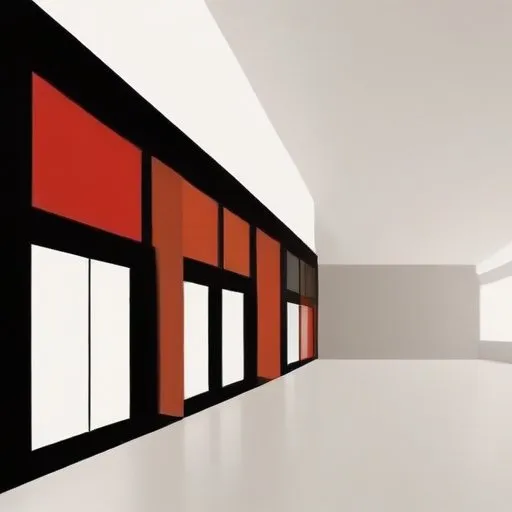
Raimund Abraham: The Visionary Architect Who Redefined Structural Boundaries
A Life of Innovative Design and Poetic Vision
Raimund Abraham, a renowned Austrian architect, is best known for his avant-garde approach to structural design, which pushed the boundaries of modern architecture. Throughout his 40-year career, Abraham created visionary projects in Europe and the United States, earning him a reputation as a true innovator in his field.
Early Life and Education
Born on July 23, 1933, in Lienz, East Tyrol, Austria, Abraham was drawn to the world of architecture from a young age. He studied at the Graz University of Technology from 1952 to 1958, laying the foundation for his future success.
A New Era in Architecture
Abraham's first book,
Elementare Architektur, published in 1965, marked a significant turning point in his career. This influential volume explored the concept of elemental structures, stripping architecture of aesthetic speculation and instead focusing on the builder's knowledge and desires. This radical approach set Abraham apart from his contemporaries and solidified his position as a leading voice in modern architecture.
The American Chapter
In 1964, Abraham emigrated to the United States, where he became an integral part of the New York avant-garde scene. His poetic architectural vision, influenced by the Viennese tradition and the philosophical ideas of
Ernst Mach, continued to evolve and inspire.
Critique of Mainstream Architecture
Abraham was a vocal critic of mainstream architecture, dismissing its preoccupation with style and indifference to history. He challenged the rigid definition of Modernism, calling for a more nuanced and context-sensitive approach to design.
Select Projects and Collaborations
- In 1958, Abraham collaborated with Friedrich St. Florian, placing third in an international competition to design the Pan Arabian University of Saudi Arabia.
- In 1959, he placed second in a competition to design the Democratic Republic of the Congo Cultural Center in Lopoldville.
A Legacy of Creative Tension
Abraham's architecture is characterized by a constant state of creative tension, striving to balance human needs with structural innovation. His enigmatic designs, often described as avant-garde and visionary, continue to inspire architects and artists today.
Awards and Honors
Throughout his illustrious career, Abraham received numerous awards and honors for his contributions to architecture and design.
Personal Milestones and Key Life Events
- Established a studio in Vienna in 1959, where he explored the depths and boundaries of architecture through building, drawing, and montage.
- Emigrated to the United States in 1964, becoming an integral part of the New York avant-garde scene.
A Lasting Impact on Modern Architecture
Raimund Abraham's life's work serves as a testament to his innovative spirit and his unwavering commitment to pushing the boundaries of architecture. As a true visionary, he continues to inspire generations of architects, designers, and artists, leaving behind a legacy of creative tension and poetic vision.
FAQ
What is Raimund Abrahams most famous architectural design?
Raimund Abraham is best known for designing the Austrian Cultural Forum in New York City, a striking example of modern architecture that has become a landmark in the city.
What are Raimund Abrahams design principles?
Raimund Abrahams design principles emphasize functional simplicity, clean lines, and a focus on the user experience. His buildings are often characterized by their use of natural light and ventilation.
How did Raimund Abrahams background influence his architecture?
Raimund Abrahams Austrian heritage and training had a significant impact on his architecture, which often reflects a European modernist aesthetic.
What awards has Raimund Abraham won for his architecture?
Raimund Abraham has won several awards for his architecture, including the NYC Design Award and the Austrian Decoration for Science and Art.
How has Raimund Abrahams work influenced modern architecture?
Raimund Abrahams work has had a significant impact on modern architecture, influencing a generation of architects and designers with his innovative and forward-thinking approach.