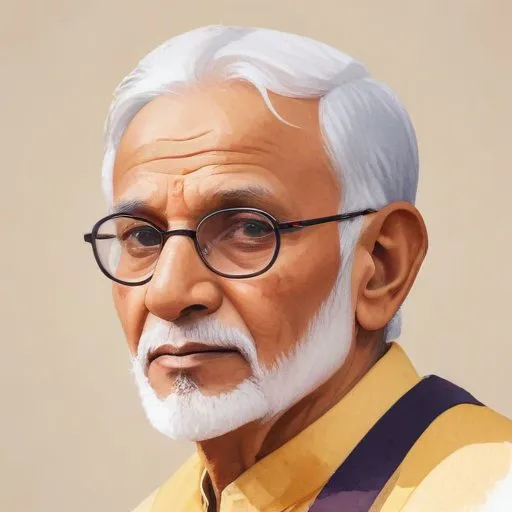
Ram Sharan Sharma

Ram Sharan Sharma

Ram Sharan Sharma was born on November 26th, 1919

Place of Birth: Barahiya
Nationality: Indian
Profession: Historian, Academic
Full Name: Ram Sharan Sharma
Field of Study: Ancient India
Notable Work: Aspects of Political Ideas
Field: History
Awards: Padma Bhushan

A renowned Indian historian and academic who specialized in ancient and medieval Indian history, particularly the Mauryan and Gupta periods, and was known for his Marxist approach to historical analysis.

Written by: Isabel Sanchez Isabel Sanchez

Unraveling the Life and Legacy of Ram Sharan Sharma: A Pioneering Indian Historian

Ram Sharan Sharma, a stalwart in the field of Indian history, left an indelible mark on the world of academia with his profound contributions to the understanding of Ancient and early Medieval India. His vast array of works, spanning over 115 books in 15 languages, speaks volumes about his dedication to unraveling the mysteries of India's rich past.

A Life of Scholarship and Service

Sharma's academic journey was nothing short of remarkable. He taught at esteemed institutions like Patna University and Delhi University, and even had a stint as visiting faculty at the University of Toronto. His tenure as the dean of Delhi University's History Department saw massive expansion, with the creation of numerous positions in the department, a testament to his visionary leadership.

Trailblazing Contributions to Indian History

A Life of Humble Beginnings

Ram Sharan Sharma was born on November 26, 1919, in Barauni, Begusarai, Bihar. His early life was marked by financial struggles, with his father sponsoring his education only till matriculation. However, Sharma's determination and perseverance earned him scholarships, and he even took up private tuition to support his education.

Awards and Honors

Sharma's contributions to Indian history did not go unnoticed. He was honored with a University Grants Commission National Fellowship from 1958 to 1981 and served as the president of the Indian History Congress in 1975.

A Lasting Legacy

Ram Sharan Sharma's influence on Indian history is immeasurable. His work continues to inspire generations of historians, scholars, and researchers. As a pioneering figure in the field, his legacy serves as a beacon of excellence, guiding future generations to explore and understand India's rich cultural heritage.

Through his life's work, Ram Sharan Sharma has left an enduring mark on the world of Indian history, cementing his place as one of the most exemplary historians of our time.

Timeline
1919
Born in India
Ram Sharan Sharma was born on November 26, 1919, in Barauni, India. He would go on to become a historian and academic.
1943
Started Teaching
Sharma started teaching in 1943, working as a professor of history at Patna University.
1958
Founded Indian History Congress
Sharma co-founded the Indian History Congress in 1958, a professional organization for historians.
1970
Published Indian Feudalism
Sharma published his influential book Indian Feudalism in 1970, which challenged traditional views of Indian history.
2011
Passes Away
Ram Sharan Sharma passed away on October 20, 2011, at the age of 91.
Ram Sharan Sharma

Ram Sharan Sharma Quiz

What was Ram Sharan Sharma's approach to historical analysis?

Score: 0/5
FAQ
What was Ram Sharan Sharmas contribution to Indian historiography?
Ram Sharan Sharma was a prominent Indian historian and academic, known for his research on ancient and medieval India, particularly his work on the decline of the Gupta Empire and the rise of feudalism.
How did Ram Sharan Sharmas work challenge traditional Indian historiography?
Sharmas scholarship questioned prevailing narratives, offering a more nuanced understanding of Indias past, and highlighting the complexities of caste, class, and regional identities.
What was Ram Sharan Sharmas approach to understanding Indian feudalism?
Sharmas research demonstrated that Indian feudalism was distinct from its European counterpart, emphasizing the role of local elites, agrarian structures, and the interplay between caste and class.
How did Ram Sharan Sharmas work influence Indian historical research?
Sharmas insights have shaped the research agendas of subsequent historians, encouraging interdisciplinary approaches, and fostering a more critical and evidence-based understanding of Indias complex history.
What legacy did Ram Sharan Sharma leave in Indian academia?
Sharmas scholarship and pedagogy have inspired generations of Indian historians, anthropologists, and archaeologists, cementing his reputation as one of the most important Indian historians of the 20th century.