


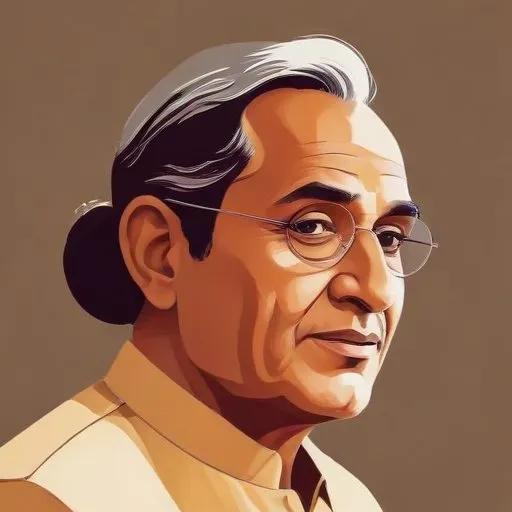
An Indian scholar who made significant contributions to the fields of archaeology and history, particularly in the discovery and documentation of ancient Indian artifacts and inscriptions.
Ramaprasad Chanda, born on August 15, 1873, in present-day Bangladesh, left an indelible mark on the fields of anthropology, history, and archaeology in South Asia. He is renowned for establishing the Varendra Research Museum in Rajshahi, Bangladesh, a premier institution dedicated to researching the history of Bengal.
Chanda's fascination with history and anthropology began during his time as a private tutor, when he would spend spare moments studying at the library. He eventually secured a position as a history teacher at Hindu School, Kolkata, before being transferred to Rajshahi Collegiate School in eastern Bengal in 1905.
Chanda gained recognition for challenging Herbert Risley's controversial theory on the origin of Bengalis in the early 1900s. He conducted anthropometric measurements and studied ancient texts to present an alternate thesis supporting a stronger Aryan lineage among Indians.
Chanda collaborated with Sarat Kumar Ray and Akshay Kumar Maitreya on archaeological expeditions in 1910, leading to the establishment of the Varendra Research Museum. This museum became a hub for research on the history of Bengal, earning Chanda a reputation as a pioneering anthropologist.
Chanda was the first head of the Department of Anthropology at the University of Calcutta from 1920 to 1921. He also worked as a professional archaeologist with the Archaeological Survey of India. Additionally, he was one of the founders of the Indian Anthropological Institute and served as its president from 1938 to 1942.
Chanda's work gained international recognition when he represented India at the first International Congress of Anthropology held in London in 1934. This milestone cemented his position as a leading figure in the field of anthropology.
Ramaprasad Chanda's contributions to anthropology, history, and archaeology have left a lasting impact on modern society. His work has inspired generations of scholars and researchers, earning him a place among the most influential Indians of the 20th century.
Chanda's work challenged traditional theories on Indian races, promoting a more nuanced understanding of Indian populations. His research emphasized the importance of interdisciplinary approaches to understanding human cultures and societies.
Ramaprasad Chanda's legacy extends beyond the academic realm, influencing the way we understand and appreciate Indian history and culture. His work has inspired a new generation of scholars, researchers, and enthusiasts to explore the rich cultural heritage of South Asia.
Born in 1799
Deciphered ancient Indian scripts, including the Brahmi and Kharoshthi scripts, making significant contributions to the field of epigraphy.
Born in 1755
The 4th Chief Justice of the United States Supreme Court, a leading figure in shaping the country's judiciary system and interpreting its Constitution, is renowned for establishing the principle of judicial review. This legacy has had a lasting impact on American law and politics.
Born in 1890
A renowned archaeologist and officer who led excavations in India and Pakistan, uncovering ancient civilizations like Mohenjo-Daro and Harappa. His discoveries greatly advanced our understanding of human history.
85 Years Old
Indian archaeologist who pioneered the development of archaeology in India, making significant contributions to the field through his excavations and research on ancient Indian cities and civilizations.
