


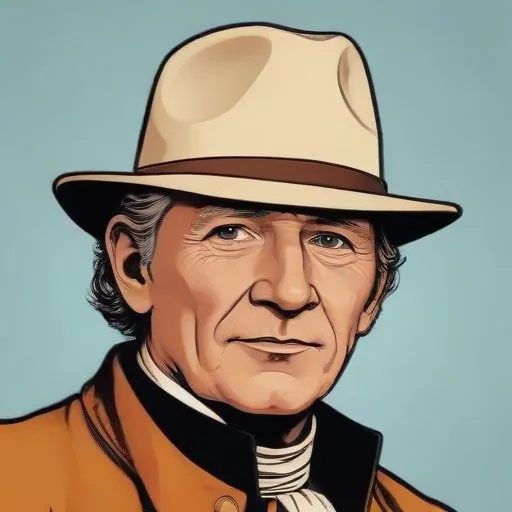
First teacher of English in Japan, introducing Western culture and language to the country in the 19th century.
Ranald MacDonald, a Scottish-Chinook fur trader's son, etched his name in history as the first native English speaker to teach the English language in Japan, a feat that would have far-reaching consequences. His journey, which began in the Pacific Northwest of North America, would take him to the shores of Japan, where he would play a pivotal role in facilitating communication between the East and the West.
Born on February 3, 1824, at Fort Astoria, Ranald MacDonald was the son of Archibald McDonald, a Scottish Hudson's Bay Company fur trader, and Koalexoa, a Chinook woman. His mother's untimely death shortly after his birth left him in the care of his maternal family. Later, his father married Jane Klyne, a Métis woman from Canada, and brought Ranald to Fort Vancouver, the headquarters of the Hudson's Bay Company.
In 1834, three shipwrecked Japanese sailors arrived at Fort Vancouver, sparking MacDonald's fascination with Japan. This encounter, although brief, kindled a desire within him to learn more about the mysterious land and its people. As he grew older, his interest in Japan only deepened, leading him to speculate that it might be the home of his distant relatives.
In 1848, MacDonald set sail for Japan as part of the USS Saginaw's crew. Although the ship was bound for China, MacDonald jumped at the opportunity to make contact with the Japanese. On July 14, 1849, he arrived in Nagasaki, Japan, where he was initially met with suspicion and hostility. However, his determination and resourcefulness eventually won over the Japanese authorities, who allowed him to stay and teach English to a select group of interpreters.
One of MacDonald's most notable students was Einosuke Moriyama, who would go on to play a crucial role in facilitating communication between Commodore Perry and the Tokugawa Shogunate during the landmark Treaty of Kanagawa negotiations in 1854. MacDonald's legacy extended far beyond his time in Japan, as he paved the way for future generations of English language instructors and diplomats.
MacDonald returned to the United States in 1852, where he settled in Oregon. He went on to work as a farmer, trader, and even served as a gold prospector during the California Gold Rush. Throughout his life, MacDonald remained proud of his mixed heritage, often referring to himself as a "half-breed." He passed away on August 24, 1894, leaving behind a legacy that continues to inspire and fascinate people to this day.
Ranald MacDonald's trailblazing efforts not only opened the doors to cultural exchange between Japan and the West but also paved the way for future generations of diplomats, scholars, and language instructors. His remarkable journey serves as a testament to the power of curiosity, determination, and cross-cultural understanding.
Born in 1763
A German-American mogul who built a fur trading empire and invested in real estate, amassing a vast fortune, which he later used to support the arts and education.
Born in 1755
American captain and explorer who led the first American expedition to navigate the Columbia River and discovered the Columbia River's mouth in 1792. He is credited with establishing American trade and exploration in the Pacific Northwest.
Born in 1774
Led the Corps of Discovery expedition with William Clark, mapping the western United States and establishing trade with Native American tribes. Known for his bravery, leadership, and contributions to American exploration and expansion.
75 Years Old
A renowned blues harmonica virtuoso, known for his soulful, expressive playing style and influential recordings that helped shape the sound of Chicago blues.
84 Years Old
A pioneering jazz-fusion guitarist and composer, known for his virtuosic playing style and influential work with the Mahavishnu Orchestra.
Born in 1776
Fur trader and explorer who mapped much of British Columbia and opened up the region to European settlement, leading to significant cultural and economic changes.
Born in 1770
Mapped vast regions of North America, including the Columbia River, and created highly accurate maps that helped shape the continent's geography.
