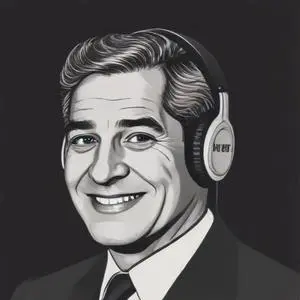
Ray Dolby: The Maestro of Sound
The Pioneer of Noise Reduction
Ray Dolby, the American engineer and inventor, revolutionized the audio industry with his groundbreaking noise reduction system, known as Dolby NR. This innovative technology transformed the way we experience sound, and his legacy continues to resonate in the world of music, film, and beyond.
A Life of Innovation
Born on January 18, 1933, in Portland, Oregon, Dolby was destined for greatness. His early life was filled with curiosity and a passion for invention, much like his father, Earl Milton Dolby, an inventor himself. Growing up in Redwood City, California, Dolby attended Sequoia High School and later studied electrical engineering at San Jose State College and Stanford University.
The Early Years: Ampex and the Birth of Videotape
During his teenage years, Dolby worked part-time and summer jobs at Ampex, where he was introduced to the world of audio tape recording. In 1949, he contributed to the development of the first audio tape recorder. His work with Alexander M. Poniatoff and Charlie Ginsburg led to the creation of early video tape recorder prototypes.
The Cambridge Connection
In 1957, Dolby received his Bachelor of Science in electrical engineering from Stanford University. He then went on to earn a Ph.D. in physics from the University of Cambridge, England, in 1961, where he was a Research Fellow at Pembroke College. This period marked a significant milestone in his life, as he was awarded a Marshall Scholarship.
Dolby Laboratories and the Birth of Noise Reduction
In 1965, Dolby founded Dolby Laboratories in London, starting with a team of just four staff members. This marked the beginning of his most iconic invention – the Dolby noise reduction system. This revolutionary technology compresses and expands audio signals, reducing background noise and hiss, and has since become an industry standard.
Awards and Honors
Throughout his illustrious career, Dolby received numerous awards and honors for his contributions to the field of audio engineering. He was awarded several patents, including his first U.S. patent in 1969. He was also appointed an Honorary Officer of the Order of the British Empire (OBE) in 1987 and an Honorary Fellow of the Royal Academy of Engineering (FREng) in 2004.
Legacy and Impact
Ray Dolby's impact on modern society cannot be overstated. His innovative spirit and dedication to improving audio quality have left an indelible mark on the music and film industries. From the iconic Dolby Surround sound system to the noise reduction technology used in countless music recordings, his legacy continues to inspire and influence generations of audio engineers, musicians, and filmmakers.
Personal Milestones and Key Life Events
- 1933: Born in Portland, Oregon
- 1951: Graduated from Sequoia High School, Redwood City, California
- 1957: Received Bachelor of Science in electrical engineering from Stanford University
- 1961: Received Ph.D. in physics from the University of Cambridge, England
- 1965: Founded Dolby Laboratories in London
- 1969: Awarded first U.S. patent for noise reduction system
- 1987: Appointed Honorary Officer of the Order of the British Empire (OBE)
- 2004: Appointed Honorary Fellow of the Royal Academy of Engineering (FREng)
- 2013: Passed away on September 12, at the age of 80
Trivia and Fun Facts
- Dolby's noise reduction system was first used by Decca Records in the UK.
- He held over 50 patents in his name.
- Dolby Laboratories developed the first digital audio compression format, Dolby AC-2, in 1991.
In Conclusion
Ray Dolby's remarkable journey is a testament to innovation, perseverance, and passion. His groundbreaking work in noise reduction has left an enduring legacy in the world of audio engineering. As we continue to push the boundaries of sound and technology, we honor the memory of this exceptional individual, who will forever be remembered as the maestro of sound.
FAQ
What is Ray Dolbys most significant contribution to audio technology?
Ray Dolby is best known for inventing the Dolby noise reduction system, which revolutionized the audio industry by eliminating background hiss and hum in recordings.
How did Ray Dolbys work in audio technology influence the music industry?
Dolbys work had a profound impact on the music industry, enabling the production of high-quality recordings with improved sound clarity and fidelity. His technology has been widely adopted in studios and playback systems worldwide.
What is the significance of Dolby Laboratories role in cinematic sound?
Dolby Laboratories has played a crucial role in shaping cinematic sound, developing innovative surround sound technologies that have transformed the movie-going experience.
How did Ray Dolbys background in engineering inform his approach to audio innovation?
Dolbys engineering background equipped him with a strong analytical approach to problem-solving, enabling him to tackle complex audio challenges and develop innovative solutions.
What is Ray Dolbys legacy in the world of audio technology?
Ray Dolby is remembered as a pioneer in audio technology, whose inventions and innovations have had a lasting impact on the music and film industries. His legacy continues to inspire new generations of audio engineers and innovators.