


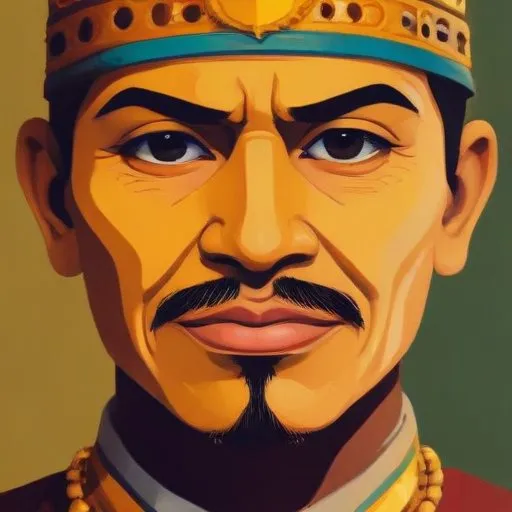
The founder of the Hanthawaddy Kingdom, a powerful monarch who unified the Mon people and established a strong, prosperous state in southern Burma (Myanmar) during the 14th century. He's known for his military campaigns and administrative reforms.
Razadarit, also spelled Yazadarit, is remembered as one of the most iconic kings in Burmese history, celebrated for his military prowess, administrative genius, and complex personality. He ruled Hanthawaddy, a Mon-speaking kingdom in modern-day Myanmar, from 1384 to 1421, leaving an indelible mark on the region's politics, culture, and identity.
Born on January 28, 1368, to Queen Thiri Maya Dewi and King Binnya U of Martaban, Razadarit's early life was marked by turmoil. His father's reign was plagued by internal conflict and external threats, setting the stage for Razadarit's eventual rise to power at just 16 years old.
After a successful rebellion against his father, Razadarit inherited a fragmented kingdom, barely controlling the Pegu province. Undeterred, he demonstrated exceptional leadership and military skills, defeating Ava's initial wave of invasions between 1385 and 1391 and gradually unifying his kingdom.
Razadarit's most notable achievement was his victory in the Forty Years War against the Ava Kingdom, fending off multiple assaults and emerging as the dominant power in the region. His military campaigns took him to Lower Burma, Upper Burma, and Arakan, where he clashed with Ava's King Minkhaung I and Crown Prince Minye Kyawswa.
To strengthen his position, Razadarit forged alliances with neighboring kingdoms, including Hsenwi and Ming China. These strategic alliances enabled him to counter Ava's fierce counterattacks and maintain Hanthawaddy's independence.
Razadarit's administrative reforms had a lasting impact on Hanthawaddy's governance. He instituted a system that integrated the provinces, creating a more centralized and efficient administration. This legacy continued to shape the kingdom's politics long after his reign.
His life is chronicled in the classic chronicle, Razadarit Ayedawbon, which portrays him as a complex figure: a brilliant military leader, an able administrator, and a ruthless, paranoid individual who drove many close to him to death.
Razadarit's battles against Minkhaung and Minye Kyawswa continue to be retold in Burmese popular culture, cementing his status as a legendary figure in the country's history. His legacy extends beyond the realm of politics, influencing the nation's identity, literature, and art.
Today, Razadarit is remembered as a mighty king who protected Hanthawaddy's independence, fostered regional prosperity, and left an indelible mark on Burmese history. His remarkable life and achievements serve as a testament to the power of visionary leadership, strategic diplomacy, and unwavering determination.
Razadarit's reign coincided with a period of significant turmoil in Southeast Asian history, marked by the rise and fall of rival kingdoms, dynasties, and empires. His ability to navigate these treacherous waters and emerge victorious has earned him a revered place in the annals of Burmese history.
As a testament to his enduring legacy, Razadarit's name continues to inspire generations of Burmese leaders, policymakers, and citizens, serving as a symbol of national pride, resilience, and determination.
