


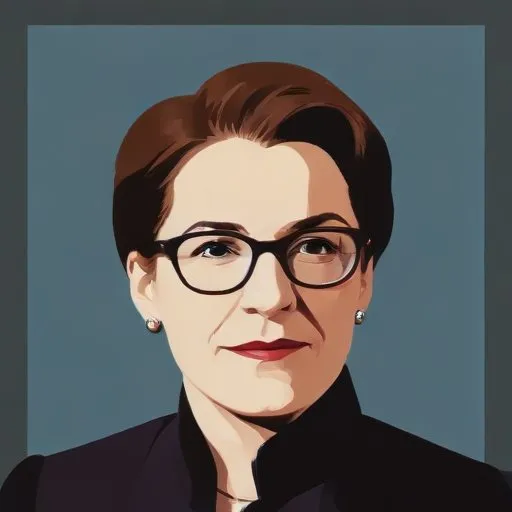
A pioneering educator and politician who fought for women's rights and education, becoming the first woman to serve in the US Senate in 1922.
Rebecca Latimer Felton was a pioneering American politician, writer, and women's rights advocate who made history by becoming the first woman to serve in the United States Senate, albeit for only one day. However, her legacy is marred by her outspoken support for white supremacy and lynching of African Americans, making her a complex and controversial figure in American history.
Felton was born on June 10, 1835, in Decatur, Georgia, to Charles Latimer, a prosperous planter, merchant, and general store owner, and Eleanor Swift Latimer. She was the oldest of four children and grew up in a wealthy household that owned slaves.
Felton was a woman of many talents, and her intellectual pursuits knew no bounds. She was a writer, politician, and education reformer who championed women's suffrage, prison reform, and equal pay for equal work. Her husband, William Harrell Felton, served in both the United States House of Representatives and the Georgia House of Representatives, and she played a significant role in organizing his political campaigns.
Felton was a prominent figure in the first wave of American feminism, advocating for women's rights and education reform. She believed that women should have equal access to education and employment opportunities, and she worked tirelessly to promote these causes.
In 1922, at the age of 87, Felton was appointed to the United States Senate, making her the first woman to hold the seat. Although her tenure lasted only 24 hours, it was a symbolic victory for women's rights and paved the way for future generations of women in politics.
Felton's legacy, however, is tarnished by her outspoken support for white supremacy and lynching of African Americans. She believed that lynching was necessary to protect the sexual purity of white women, and she spoke vigorously in favor of it, often perpetuating false accusations of rape against African American men.
Felton's legacy is complex and multifaceted. While she was a trailblazer for women's rights and education reform, her support for white supremacy and lynching cannot be ignored. Her story serves as a reminder of the need to confront and address the darker aspects of American history, even as we celebrate the achievements of pioneering women like Felton.
Rebecca Latimer Felton was a woman of many contradictions – a champion of women's rights and a white supremacist, a writer and a politician. Her legacy is a testament to the complexities of human nature and the importance of nuanced understanding of historical figures. As we look back on her life and legacy, we are reminded of the power of individual agency and the importance of critically examining the past to build a better future.
Born in 1924
A naval officer turned politician who served as the 39th President of the United States, known for his commitment to human rights and social justice, and awarded the Nobel Peace Prize in 2002.
86 Years Old
The 52nd Speaker of the United States House of Representatives is a powerful politician who has played a crucial role in shaping the country's legislative agenda. They are known for their strong leadership and advocacy on issues like healthcare and women's rights.
79 Years Old
A highly influential American politician and diplomat who served as Secretary of State and First Lady, known for her advocacy on women's rights and international diplomacy.
65 Years Old
The first African American to hold the office, he served two terms as President of the United States, earning a Nobel Peace Prize for his efforts to strengthen international diplomacy and cooperation. He's known for his charismatic leadership and commitment to progressive values.
93 Years Old
A pioneering Supreme Court Justice and women's rights advocate who championed gender equality and became a cultural icon.
Born in 1924
A trailblazing African American congresswoman who broke racial and gender barriers, advocating for education, women's rights, and the poor. She was the first woman to run for the Democratic presidential nomination in 1972.
Born in 1920
A pioneering feminist and civil rights advocate who fought for social justice and equality, particularly for women's rights, in the US Congress and beyond.
91 Years Old
First female Vice Presidential candidate in a major party, advocating for women's rights and breaking political barriers.
