


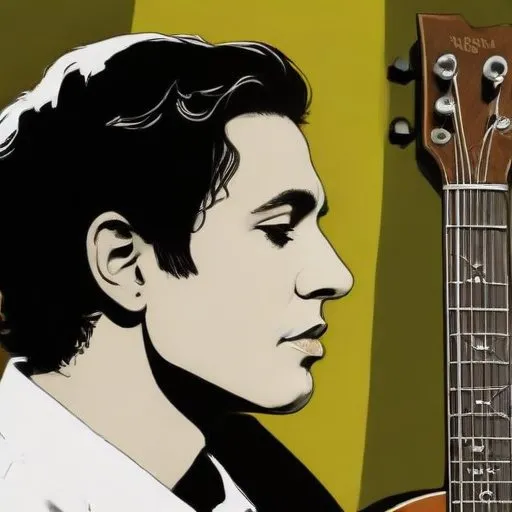
Renato Russo, born Renato Manfredini Jr., was a Brazilian rock musician, singer, songwriter, and lyricist, best known as the lead vocalist of the iconic Brazilian pop rock band Legião Urbana. With a career spanning over two decades, Russo left an indelible mark on the Brazilian music scene, leaving behind a legacy of iconic songs, rebellious ideals, and a devoted fan base.
Born on March 27, 1960, in Rio de Janeiro, Brazil, Russo's early life was marked by frequent relocations, thanks to his father's executive role at Banco do Brasil. His family moved to Forest Hills, Queens, New York in 1967, before returning to Rio de Janeiro and eventually settling in Brasília, Distrito Federal. This nomadic upbringing would later influence his music, infusing it with a sense of restlessness and rebellion.
In 1975, at the age of 15, Russo was diagnosed with epiphysiolysis, a bone disease that left him bedridden for six months. During this period, he developed an extensive and eclectic record collection, which would shape his musical tastes and sensibilities. This period of convalescence became a catalyst for his future musical career, as he devoted himself to listening to music, learning to play the bass guitar, and writing lyrics.
In 1978, Russo co-founded the punk rock band Aborto Elétrico (Electric Abortion), which although short-lived, laid the groundwork for Legião Urbana. The band's debut album, "Legião Urbana" (1985), was a critical and commercial success, marking the beginning of Russo's rise to fame. Throughout the 1980s and 1990s, Legião Urbana released a string of hit albums, including "Dois" (1986), "Que País É Este" (1987), and "As Quatro Estações" (1989).
In 1988, Russo publicly declared his bisexuality through the song "Meninos e Meninas" (Boys and Girls), a bold move in a country where LGBTQ+ rights were still limited. This openness earned him both admiration and criticism, but Russo remained unapologetic, using his platform to advocate for social justice and individual freedom.
Russo's impact on Brazilian rock music is still felt today. His poetic lyrics, often laced with social commentary, have inspired generations of musicians and fans alike. In 2013, a biographical film, "Somos Tão Jovens" (We Are So Young), chronicled his life and career. Russo's legacy extends beyond music; he remains an icon for individuality, freedom of expression, and the power of art to challenge societal norms.
Russo's music and philosophy were deeply intertwined. He believed in the transformative power of art, seeing it as a means to challenge authority, question norms, and inspire change. His lyrics often explored themes of love, freedom, and social justice, reflecting his steadfast commitment to individuality and creative expression.
Russo's unapologetic approach to his art and personal life often led to controversy. His bisexuality, in particular, sparked both support and criticism. Despite this, he remained resolute, using his platform to challenge societal norms and promote acceptance.
Russo's legacy continues to inspire new generations of musicians, artists, and social activists. His unwavering commitment to individuality, creative expression, and social justice has made him an enduring figure in Brazilian popular culture.
Russo's life was cut short on October 11, 1996, but his music, philosophy, and spirit continue to resonate with audiences, ensuring his place as one of Brazil's most beloved and enduring rock icons.
84 Years Old
A Brazilian cultural icon, he's a master of Tropicalia, a genre that blends traditional Brazilian music with psychedelic rock and folk, and is known for his poetic lyrics and soothing voice.
84 Years Old
A Brazilian music legend and politician who blended traditional styles with modern sounds, promoting cultural diversity and social justice through his music and public service.
82 Years Old
A Brazilian cultural icon, renowned for his soulful voice, poignant lyrics, and literary works that capture the essence of Brazilian identity and social commentary.
81 Years Old
A Brazilian tropicalia icon, known for blending traditional Brazilian music with psychedelic rock and folk elements, creating a unique sound that defined a generation.
84 Years Old
A legendary Brazilian musician celebrated for his soaring vocals and genre-bending fusion of folk, rock, and jazz, creating a unique sound that transcends borders. He's a national treasure in Brazil, inspiring generations of musicians.
95 Years Old
A pioneer of bossa nova, a genre that combines samba rhythms with jazz harmonies, known for his smooth, intimate vocals and innovative guitar playing.
99 Years Old
Brazilian singer-songwriter and pianist who blended jazz and samba to create a unique sound, composing iconic songs like "The Girl from Ipanema" and "Insensatez".
