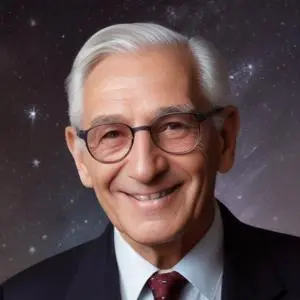
Riccardo Giacconi: The Pioneer of X-ray Astronomy
A New Frontier in Astrophysics
Riccardo Giacconi is renowned for laying the foundations of X-ray astronomy, a field that has revolutionized our understanding of the universe. His pioneering work has led to the discovery of cosmic X-ray sources, earning him a share of the Nobel Prize in Physics in 2002.
Early Life and Education
Born on October 6, 1931, in Genoa, Italy, Giacconi received his Laurea from the Physics Department of the University of Milan. He later moved to the United States to pursue a career in astrophysics research, where he collaborated with physics professor R.W. Thompson at Indiana University in 1956.
Pioneering X-ray Astronomy
Giacconi's research focused on the instrumentation for X-ray astronomy, which required space-based telescopes to overcome the Earth's atmosphere's absorption of cosmic X-ray radiation. In the late 1950s and early 1960s, he worked on rocket-borne detectors, paving the way for the development of Uhuru, the first orbiting X-ray astronomy satellite, in the 1970s.
Major Contributions
- Einstein Observatory (1978): The first fully imaging X-ray telescope put into space, which marked a significant milestone in X-ray astronomy.
- Chandra X-ray Observatory (1999): A space-based telescope that is still in operation, providing unprecedented insights into the universe.
Leadership and Legacy
Giacconi's expertise extended beyond X-ray astronomy, as he held prominent positions in various institutions:
- Space Telescope Science Institute (1981-1993): As the first permanent director, he oversaw the science operations center for the Hubble Space Telescope.
- Associated Universities, Inc. (1999-2004): As President, he managed the early years of the ALMA array.
Awards and Honors
Giacconi's groundbreaking contributions have been recognized with numerous awards, including:
- Nobel Prize in Physics (2002): Shared with Masatoshi Koshiba and Raymond Davis, Jr. for pioneering contributions to astrophysics.
Lasting Impact
Riccardo Giacconi's work has not only expanded our understanding of the universe but has also paved the way for future generations of astronomers and astrophysicists. His legacy continues to inspire and influence modern astronomy, solidifying his place as a true pioneer in the field.
FAQ
What was Riccardo Giacconis most significant contribution to astronomy?
Riccardo Giacconis most significant contribution to astronomy was the discovery of the first extrasolar X-ray source, Scorpius X-1, using a rocket-borne X-ray detector.
How did Riccardo Giacconi make his discovery?
Riccardo Giacconi made his discovery using a combination of innovative instrumentation and rigorous scientific methodology, including the development of the first X-ray telescope.
What was Riccardo Giacconis experience like working at NASA?
Riccardo Giacconis experience working at NASA was marked by a sense of excitement and discovery, as he was involved in several groundbreaking projects, including the development of the Chandra X-ray Observatory.
Did Riccardo Giacconi win any awards for his work in astronomy?
Riccardo Giacconi won several awards for his work in astronomy, including the Nobel Prize in Physics in 2002.
What was Riccardo Giacconis legacy in the field of astronomy?
Riccardo Giacconis legacy in the field of astronomy is one of innovation, perseverance, and groundbreaking discovery, inspiring future generations of astronomers and astrophysicists.