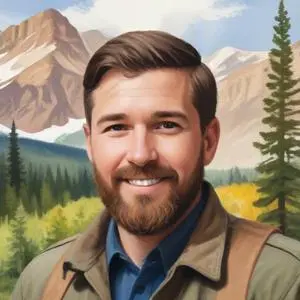
The Self-Sufficient Naturalist: The Inspiring Story of Richard Proenneke
A Life of Solitude in the Alaskan Wilderness
Richard Proenneke is famously known for living alone in the mountains of Alaska for nearly thirty years, from 1968 to 1998. During this remarkable journey, he built a log cabin by hand, hunted, fished, and gathered his own food, and documented his experiences in journals and on film.
Early Life and Naval Career
Born on May 4, 1916, in Primrose, Iowa, Richard Proenneke grew up in a family of seven children. His father, William Christian Proenneke, was a house painter, carpenter, and well driller, and his mother, Laura, was a homemaker and gardener. After completing primary school, Proenneke left high school after two years and worked on farms in Iowa until 1939. He enlisted in the United States Navy the day after the attack on Pearl Harbor and served as a carpenter during World War II.
A Passion for Nature and Conservation
Proenneke's love for nature and conservation led him to become a self-educated naturalist, conservationist, writer, and wildlife photographer. He was driven by a desire to live in harmony with the natural world, and his experiences in Alaska allowed him to do just that. He hunted and fished to sustain himself, and also raised and gathered his own food. Proenneke's journals and films documented his daily life, including his interactions with wildlife, and provided valuable insights into the natural world.
A Legacy of Conservation and Inspiration
Proenneke's remarkable story has inspired generations of nature lovers, conservationists, and adventure seekers. Upon his death in 2003, he bequeathed his cabin to the National Park Service, which was later included in the National Register of Historic Places in 2007. Today, the cabin is a popular attraction in Lake Clark National Park, Alaska. Proenneke's legacy extends beyond his remarkable story; his work has also contributed significantly to our understanding of the natural world and the importance of conservation.
Quotes and Memorable Sayings
- "I wanted to do something that nobody else had done, to live off the land, and not have to rely on anyone else."
- "I wanted to find out if I could be self-sufficient, if I could take care of myself, and live off the land."
Personal Milestones and Key Life Events
- May 4, 1916: Born in Primrose, Iowa
- 1939: Left Iowa to pursue a life of adventure
- 1941: Enlisted in the United States Navy
- 1968: Built a log cabin in Alaska and began his thirty-year journey of living in solitude
- 1998: Left Alaska and returned to civilization
- April 20, 2003: Passed away at the age of 86
Influence on Modern Society
Proenneke's remarkable story has inspired a new generation of conservationists, naturalists, and adventure seekers. His work has also contributed to a greater understanding of the importance of living in harmony with the natural world. Today, his cabin in Alaska stands as a testament to his remarkable journey and a reminder of the importance of preserving our natural heritage.
FAQ
What is Richard Proennekes most notable achievement?
Richard Proenneke is best known for building a cabin in Alaskas Twin Lakes region and living there for over 30 years, documenting his life in a series of films and journals.
What is Richard Proennekes background in the military?
Richard Proenneke served in the US Navy during World War II and later worked as a carpenter and meteorologist before moving to Alaska.
What awards did Richard Proenneke receive for his documentary films?
Richard Proennekes documentary films, including Alone in the Wilderness, have received numerous awards, including the National Educational Media Network Gold Apple Award and the Chicago International Film Festival Award.
What is Richard Proennekes approach to simple living?
Richard Proennekes approach to simple living emphasizes self-sufficiency, resourcefulness, and a deep connection with nature, and has inspired many people to reevaluate their own relationship with the natural world.
What is Richard Proennekes legacy in environmentalism?
Richard Proennekes legacy in environmentalism is that of a pioneering figure who demonstrated the possibility of living in harmony with nature while also promoting sustainable living and conservation practices.