


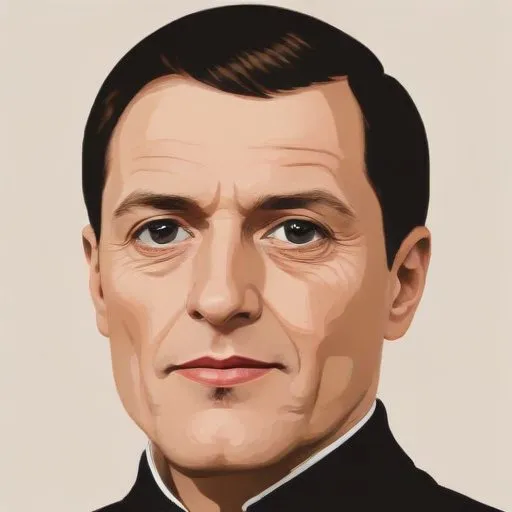
Notorious for his brutal methods, this English torturer was responsible for extracting confessions from Catholics and Puritans during the reign of Queen Elizabeth I. His cruel techniques sparked widespread outrage and calls for reform.
Richard Topcliffe, a name that sends shivers down the spine, was a ruthless priest hunter and practitioner of torture during the reign of Elizabeth I of England. He was the government's chief enforcer of the penal laws against the practice of Catholicism, earning him a reputation as one of the most feared men of his time.
Topcliffe was born on November 14, 1531, to Robert Topcliffe of Somerby, Lincolnshire, and his wife, Margaret, daughter of Thomas Burgh, 1st Baron Burgh of Gainsborough. His uncle Edward Burgh was Queen Katherine Parr's first husband, making Topcliffe extremely well-connected. After his father's death in 1544, he became the ward of his uncle, Sir Anthony Neville.
Topcliffe entered the service of the Queen in 1557, a year before her accession to the throne, and soon became a trusted agent of the English government's determination to eradicate Catholicism. He armed a troop of thirty horses at his own expense during the Northern Rebellion of 1569 and later served the 6th Earl of Shrewsbury and the Earl of Leicester. Topcliffe represented Beverley in Parliament in 1572 and later returned as MP for Old Sarum in 1584 and 1586.
Topcliffe worked independently, financing his own operations and maintaining his own squadron of instruments, as he called them. He worked closely with Lord Burghley and Sir Francis Walsingham, but considered himself the Queen's personal servant and friend. This unique position allowed him to operate with relative autonomy, making him a formidable force in the government's efforts to suppress Catholicism.
Topcliffe's brutal methods and unwavering dedication to the government's cause earned him a reputation as a ruthless and feared figure. His exploits were often shrouded in secrecy, adding to the air of mystery and terror surrounding his name. While some saw him as a loyal servant of the crown, others viewed him as a merciless torturer and persecutor of innocent Catholics.
Richard Topcliffe's legacy is a complex and controversial one, reflecting the tumultuous and divisive nature of the Elizabethan era. His actions, though brutal and often inhumane, were driven by a zealous loyalty to the crown and a deep-seated antipathy towards Catholicism. As such, he remains a fascinating, if disturbing, figure in English history.
Topcliffe's story serves as a powerful reminder of the dangers of unchecked power and the darker aspects of human nature. His reign of terror, though eventually brought to an end, left an indelible mark on the lives of countless Catholics and non-conformists, making him one of the most infamous figures of the Elizabethan era.
Born in 1504
The Archbishop of Canterbury from 1559 to 1575, known for his role in shaping the Church of England and promoting a moderate Protestantism. He was a key figure in the English Reformation.
