


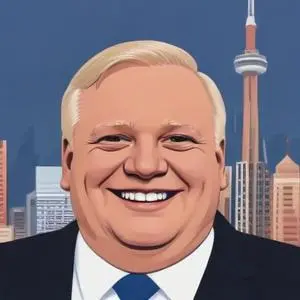
The controversial mayor of Toronto who made international headlines for his scandals and erratic behavior, particularly involving drug use and corruption.
Rob Ford, the 64th mayor of Toronto, is infamous for his tumultuous tenure in office, plagued by personal and professional controversies that dominated national headlines. From his vocal anti-government stance to his very public struggles with substance abuse, Ford's political career was a lightning rod for attention and criticism.
Ford was born on May 28, 1969, in Etobicoke, Ontario, Canada, to Ruth Diane and Douglas Bruce Ford. His father, Doug Ford, was a Progressive Conservative member of the Provincial Parliament (MPP) from 1995 to 1999 and co-founder of Deco Labels and Tags, a successful business with an estimated CA$100 million in annual sales.
Ford's political career began in 2000 when he was elected to Toronto City Council, representing Ward 2 Etobicoke North. He was re-elected to his council seat twice before running for mayor in 2010. Ford's populist, fiscally conservative platform resonated with many Toronto residents, and he won the mayoral election with a surprising 47% of the vote.
Ford's time in office was marked by numerous controversies, including a high-profile substance abuse scandal in 2013. Despite admitting to smoking crack cocaine, Ford refused to resign, but city council voted to strip him of certain mayoral powers and staff. He took a sabbatical to receive treatment for his addiction, but his political career never fully recovered.
In September 2014, Ford was hospitalized and diagnosed with an abdominal tumor. He withdrew from the mayoral election and instead ran for his old city council seat, which he won. Ford underwent treatment for his cancer, but it eventually took his life on March 22, 2016.
Ford's legacy is complex and multifaceted. While his populist appeal and fiscal conservatism resonated with many, his personal demons and scandals overshadowed his political achievements. Nevertheless, Ford's impact on Toronto politics cannot be ignored. He galvanized a new generation of conservative voters and brought attention to the city's fiscal woes.
"The gravy train is over, folks." - Rob Ford, on reducing government spending
"I'm not a perfect person, I've made mistakes." - Rob Ford, on his personal struggles
In many ways, Ford's populist, anti-establishment approach mirrors that of other controversial politicians, such as former Toronto mayor and Ontario premier, Mel Lastman. Both men tapped into a sense of disillusionment among voters, capitalizing on their outsider status to effect change.
Ford's legacy extends beyond Toronto politics. His populist appeal and challenges to the establishment have influenced a new generation of Canadian politicians, from federal Conservative Party leader Andrew Scheer to Ontario Premier Doug Ford (his brother). Love him or hate him, Rob Ford's impact on Canadian politics is undeniable.
53 Years Old
An American opera singer, celebrated for his powerful and expressive voice, particularly in Verdi and Puccini roles. He performed at major opera houses worldwide, including the Metropolitan Opera.
72 Years Old
The 65th Mayor of Toronto, a Canadian lawyer and politician, is known for his efforts to improve the city's infrastructure, transportation, and social services. He's also recognized for his moderate and collaborative approach to governance.
54 Years Old
The 23rd Prime Minister of Canada, known for his progressive policies and charismatic leadership, has been a prominent figure in Canadian politics since 2015. He has been a strong advocate for climate action, diversity, and inclusion.
67 Years Old
The 22nd Prime Minister of Canada, a conservative leader who served from 2006 to 2015, known for his fiscal policies and controversial stances on social issues. He led the country through the 2008 financial crisis and implemented significant changes to Canada's tax system.
76 Years Old
The Canadian Minister of Finance who served from 2006 to 2014, known for his role in navigating Canada through the 2008 global financial crisis. He implemented stimulus packages and tax cuts to stabilize the economy.
