


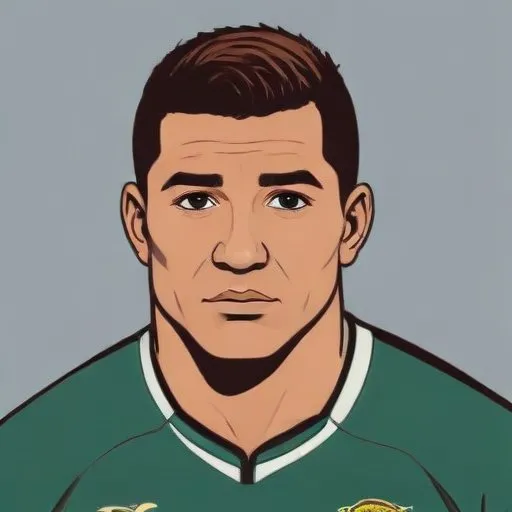
Australian rugby league player and coach who played for several teams and later coached the Papua New Guinea national team, known for his contributions to the sport in the Pacific Islands.
Robbie Mears is an Australian former professional rugby league footballer renowned for his exceptional hooking skills and unwavering dedication to the sport. Born on September 25, 1974, in Liverpool, New South Wales, Australia, Mears forged a remarkable career spanning over a decade, leaving an indelible mark on the rugby league landscape.
Mears' passion for rugby league was evident from a young age. He began playing for Ingleburn Bulldogs, Eaglevale St Andrews, Campbelltown City Kangaroos, and Austral Rams in the Western Suburbs District Junior League. During his time at Campbelltown's St. Gregorys College, Mears represented the Australian Schoolboys team in 1992, showcasing his promising talent.
In 1993, Mears joined the Eastern Suburbs Roosters, making his first-grade debut in Round 14 against the Parramatta Eels. Although he only made sporadic appearances for the Roosters over the next three seasons, Mears' determination and perseverance ultimately led him to seek new opportunities.
In 1997, Mears joined the Canterbury-Bankstown Bulldogs, initially starting in reserve grade. However, an injury to Jason Hetherington presented Mears with an opportunity to prove himself, and he soon became a regular in the reserve grade team. In 1998, he played a crucial role in the side that defeated the Parramatta Eels in the Grand Final.
After being released by the Bulldogs in 1999, Mears ventured into the bush, playing for the Ourimbah Magpies in the Country Rugby League Central Coast Division. His impressive form earned him a spot in the Country Firsts team for the curtain raiser to the ANZAC Test, where his performance caught the attention of several NRL clubs. Mears was subsequently signed by the Auckland Warriors in 1999, going on to play 40 first-grade games for the club over the next two seasons.
In 2001, Mears joined the Leeds Rhinos, although his time at the club was marked by a series of unfortunate events. Despite this, Mears' resilience and dedication to the sport remained unwavering. Throughout his career, he demonstrated an unrelenting passion for rugby league, earning the admiration of fans and peers alike.
Robbie Mears' enduring legacy lies in his unwavering commitment to the sport he loves. His remarkable career serves as an inspiration to aspiring rugby league players, demonstrating the importance of perseverance and dedication. As a testament to his contributions, Mears remains an integral part of Australian rugby league history, leaving behind a trail of achievements that continue to inspire future generations.
While Mears' rugby league career may have come to an end, his impact on the sport continues to resound. As a testament to his lasting legacy, Robbie Mears remains an iconic figure in Australian rugby league history, serving as a beacon of inspiration for generations to come.
66 Years Old
Australian rugby league legend and coach, renowned for leading the national team to numerous World Cup titles and earning a reputation as one of the greatest players and coaches in the sport's history.
76 Years Old
A legendary rugby league coach and former player, known for his unparalleled success and innovative tactics that transformed the sport. He led several teams to championship titles and was inducted into the Australian Rugby League Hall of Fame.
60 Years Old
Australian rugby league legend and coach, known for his exceptional playing career and innovative coaching style that transformed the sport.
43 Years Old
Australian rugby league legend and iconic halfback, known for his exceptional skills, clutch performances, and record-breaking career with the North Queensland Cowboys and Australian national team.
99 Years Old
A renowned defender who captained the English national team and won the 1966 World Cup, earning 84 caps and scoring 3 goals.
39 Years Old
A dominant centre and captain in the National Rugby League, known for his exceptional skill, power, and leadership on the field.
