


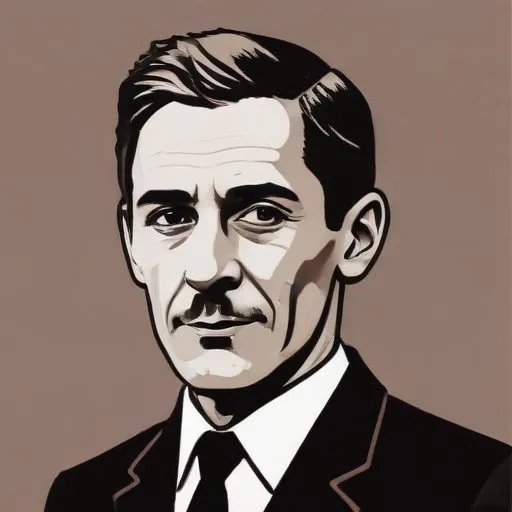
Developed innovative solutions for oil sands extraction and processing, revolutionizing the Canadian energy industry. His work significantly impacted the country's economy and environment.
As a trailblazing electric engineer and utility executive, Robert A. Boyd left an indelible mark on Quebec's hydroelectric landscape. Best known for his leadership in the construction of the James Bay hydroelectric project, a massive dam complex built in northern Quebec, Boyd's innovative vision and perseverance paved the way for Quebec's emergence as a global leader in hydroelectric power.
Born on June 21, 1918, in Sherbrooke, Quebec, Boyd grew up in a working-class family with a Scottish-Irish father and a French-Canadian mother. He pursued his passion for engineering at cole Polytechnique de Montral, graduating in 1943.
Boyd's 37-year career with Hydro-Qubec, Quebec's provincially owned utility company, was marked by significant milestones. As the first French-speaking engineer ever hired by the company, he broke down linguistic barriers, paving the way for future generations of engineers.
This ambitious project, dubbed "Le projet du siècle" (The Project of the Century), involved the construction of a network of dams, reservoirs, and three giant hydroelectric generating stations in a remote area 1,000 kilometers north of Montreal. Boyd's leadership and expertise were instrumental in overcoming the massive logistical challenges posed by this undertaking.
On October 27, 1979, Boyd, along with Premier René Lévesque, inaugurated the LG-2 generating station, a massive 5,616 MW underground powerhouse buried deep in the Canadian Shield.
Boyd's contributions to Quebec's hydroelectric sector have had a lasting impact on the province's energy landscape. His vision and leadership played a crucial role in establishing Quebec as a global leader in hydroelectric power, paving the way for future generations of engineers and energy professionals.
Through his remarkable career, Boyd demonstrated the importance of perseverance, innovative thinking, and collaboration. As we reflect on his legacy, we are reminded of the power of visionary leadership to shape the course of history.
Boyd's contributions to the field of engineering and hydroelectric power were recognized through various awards and honors, including the prestigious Prix du Québécois in 1985.
Boyd's personal life was marked by a strong sense of family and community. He was married to his wife, Madeleine, for over 50 years, and together they had three children.
Through his remarkable life and career, Robert A. Boyd left an indelible mark on Quebec's hydroelectric landscape, inspiring future generations of engineers, energy professionals, and leaders to pursue their passions with courage, perseverance, and vision.
74 Years Old
The 10th United States Secretary of Energy, serving from 2001 to 2005, is most known for shaping the country's energy policy and advocating for nuclear power. They also served as a US Senator from Michigan from 1995 to 2001.
76 Years Old
A 17th-century Anglican bishop who played a key role in the English Civil War and was a strong advocate for the Church of England. He's also known for his writings on theology and ecclesiastical history.
91 Years Old
A prominent philosopher and academic who has written extensively on topics such as just war theory, political obligation, and pluralism, and is known for his work on the ethics of war and political philosophy.
