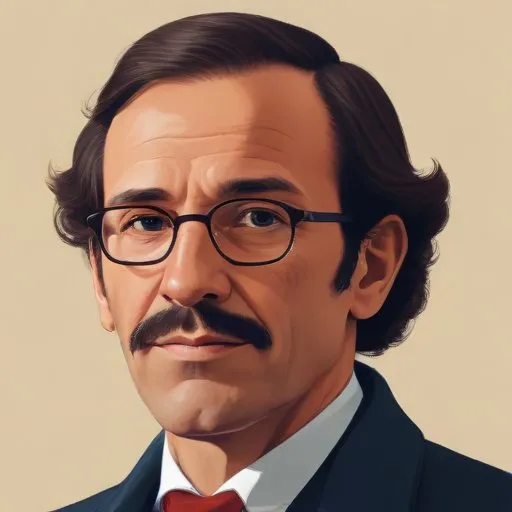
Robert Berner: The Pioneer of Carbon Cycle Modeling
A Legacy Etched in Sedimentary Rocks
Robert Berner, a renowned American scientist, is celebrated for his groundbreaking contributions to the modeling of the carbon cycle. His work on sedimentary rocks led to the co-founding of the BLAG model of atmospheric carbon dioxide, a revolutionary concept that takes into account both geochemical and biological contributions to the carbon cycle.
Early Life and Academic Pursuits
Born on November 25, 1935, in Erie, Pennsylvania, Berner was encouraged to develop an interest in geology by his older brother, Paul, a geologist. He pursued his passion at Purdue University, later transferring to the University of Michigan, where he earned his bachelor's degree in 1958 and master's degree in 1959. Berner then moved to Harvard University, where he earned his Ph.D. in Geology in 1962.
Academic Career and Research
Berner's academic journey took him to the Scripps Institute of Oceanography in San Diego, California, where he was awarded a fellowship to conduct research in 1962. He then joined the University of Chicago as an assistant professor from 1963 to 1965. In 1965, Berner began his long-standing tenure at Yale University, where he became the Alan M. Bateman Professor in 1987, a position he held until his retirement in 2007.
Groundbreaking Research and Contributions
Berner's research focused on the application of chemical thermodynamics and kinetics to sediments and sedimentary rocks. His work led to the publication of
Principles of Chemical Sedimentology in 1971. His 1980 book,
Early Diagenesis: A Theoretical Approach, was quoted so frequently that it was declared a Science Citation Classic by the Institute for Scientific Information. In 1983, Berner, along with Tony Lasaga and Bob Garrels, developed the BLAG model of the carbon cycle, a pioneering concept that has had a lasting impact on our understanding of the earth's carbon cycle.
Legacy and Impact
Berner's work has had a profound influence on our understanding of the carbon cycle and its role in shaping the earth's climate. His research has been instrumental in shaping our understanding of the complex interactions between the earth's atmosphere, oceans, and land. Through his contributions, Berner has left an indelible mark on the field of geology and beyond.
Awards and Honors
- Member of the National Academy of Sciences (1984)
- Fellow of the American Association for the Advancement of Science (1985)
- Recipient of the Alfred E. Treibs Award (1995)
Personal Milestones and Key Life Events
- Married to his wife, Louise, for over 50 years
- Father of two children, David and Kathryn
- Professor Emeritus at Yale University (2007-2015)
Influence on Modern Society
Berner's work has had a profound impact on our understanding of the carbon cycle and its role in shaping the earth's climate. His research has informed policy decisions and has contributed to our understanding of the complex interactions between human activities and the environment.
Remembering Robert Berner
Robert Berner passed away on January 10, 2015, leaving behind a legacy of groundbreaking research and contributions to the field of geology. His work continues to inspire new generations of scientists and scholars, and his influence will be felt for years to come.
FAQ
What are the contributions of Robert Berner to geology?
Robert Berner made significant contributions to the field of geology, particularly in the area of paleoclimatology. He developed the GEOCARB model, which predicts the levels of carbon dioxide in the Earths atmosphere over the past 570 million years.
What awards did Robert Berner receive for his work?
Robert Berner received several awards for his work, including the National Medal of Science, the Penrose Medal, and the Alfred E. Treibs Award. These awards recognized his contributions to the field of geology and his impact on our understanding of the Earths climate.
How did Robert Berners work impact our understanding of climate change?
Robert Berners work on paleoclimatology and geochemistry has significantly advanced our understanding of climate change. His research has helped scientists understand the Earths carbon cycle and the factors that influence climate change.
What is Robert Berners most famous work?
Robert Berners most famous work is the GEOCARB model, which is a mathematical model that predicts the levels of carbon dioxide in the Earths atmosphere over the past 570 million years. This model has been widely used by scientists to study the Earths climate and predict future climate change.
What is Robert Berners legacy in the field of geology?
Robert Berners legacy in the field of geology is one of significant contributions to our understanding of the Earths climate and the carbon cycle. His work has paved the way for future research and has inspired a new generation of geologists and climate scientists.