


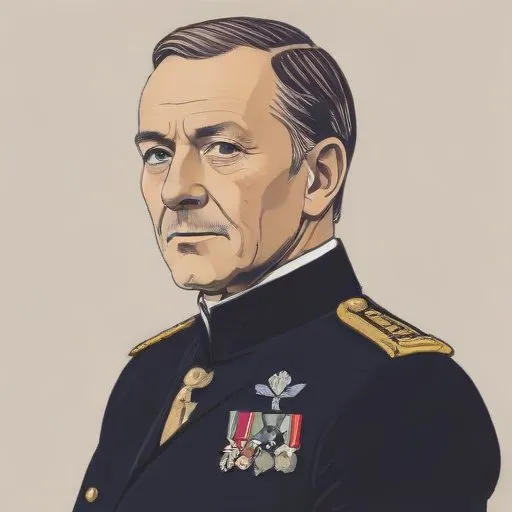
A British Army general who led the Light Division during the Peninsular War, known for his bravery and tactical genius. He was also a Member of Parliament for several constituencies.
Known as "Black Bob" for his strict discipline and volatile temper, Major General Robert Craufurd was a formidable force on the battlefield, leading the elite Light Division during the Napoleonic Peninsular War under the Duke of Wellington.
Born on May 5, 1764, in Newark, Ayrshire, Scotland, Robert Craufurd was the third son of Sir Alexander Craufurd, 1st Baronet. His family originated from Ayrshire, with a long history of military service, including his older brother, Sir Charles Craufurd, who also served in the British Army.
Craufurd entered the Army at just 15 years old, enlisting as an ensign with the 25th Foot in 1779. By 19, he was already a company commander, demonstrating his rapid rise through the ranks. He spent time studying the tactics of the Prussian army in Berlin, translating the official Prussian treatise on the Art of War into English.
In 1787, he became a captain in the 75th Regiment, serving under Lord Cornwallis in India against Tippoo Sahib from 1790 to 1792. His distinguished service earned him seniority in captaincies, paving the way for his future command.
In 1810, Craufurd was given command of the Light Division, an elite force comprising the best foot soldiers in the army. Under the Duke of Wellington, he played a crucial role in the Napoleonic Peninsular War, demonstrating his bravery and tactical prowess in several battles.
Despite his reputation for being hot-headed and prone to violent mood swings, Craufurd's soldiers respected and feared him, dubbing him "Black Bob." His strict discipline and unwavering dedication to duty inspired loyalty and admiration from his troops.
On January 19, 1812, Craufurd was mortally wounded while storming the lesser breach during the Siege of Ciudad Rodrigo. He died four days later, leaving behind a legacy as one of the most feared and respected commanders of the Napoleonic Wars.
Robert Craufurd's military career spanned over three decades, taking him from India to the Netherlands and eventually to the Iberian Peninsula. His leadership during the Peninsular War played a significant role in the ultimate defeat of Napoleon's forces.
While his temper and discipline earned him a fearsome reputation, Craufurd's bravery, tactical genius, and dedication to duty have cemented his place as one of the most celebrated commanders in British military history.
Born in 1620
A 17th-century Lord Mayor of London who played a significant role in the city's financial and economic development, particularly in the rebuilding of London after the Great Fire of 1666.
Born in 1805
A Scottish chemist and academic who developed the modern theory of diffusion, formulated Graham's law of diffusion, and made significant contributions to the field of chemistry. He is also known for his work on dialysis and the discovery of colloids.
Born in 1822
Union general during the American Civil War, known for his disastrous defeat at the Second Battle of Bull Run. He was relieved of his command and later served in the Indian Wars.
Born in 1772
A Scottish general and politician who served as Secretary of State for War and the Colonies, known for his military campaigns and colonial administration. He played a significant role in shaping British foreign policy during the late 18th century.
