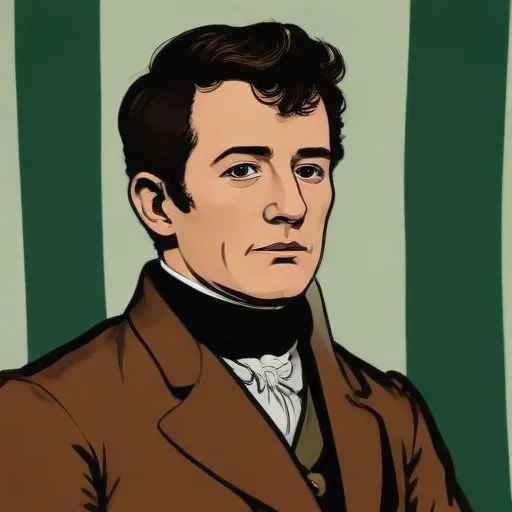
Robert Emmet

Robert Emmet

Robert Emmet was born on March 4th, 1778

Full Name: Robert Emmet
Born: March 4, 1778
Place of Birth: Dublin, Ireland
Occupation: Irish Republican
Nationality: Irish
Known For: Leader of the 1803 Irish Rebellion
Died: September 20, 1803
Executed: By hanging, drawing, and quartering

Leader of the 1803 Irish rebellion against British rule, known for his passionate speeches and tragic execution at age 25.

Written by: Oliver Wren Oliver Wren

Robert Emmet: The Infamous Irish Republican Rebel

The Legacy of a Sacrificial Leader

Robert Emmet, a trailblazing Irish Republican, orator, and rebel leader, is renowned for his audacious attempts to overthrow the British Crown and Protestant Ascendancy in Ireland, and establish a nationally representative government.

A Precursor to Irish Independence

Emmet's ill-fated rebellion in 1803 may have ended in defeat, but his bravery and convictions inspired later generations of Irish republicans, including Patrick Pearse, who in 1916 would again proclaim a provisional government in Dublin.

Early Life and Influences

Emmet was born on 4 March 1778, in Dublin, to Dr. Robert Emmet, a physician to the Lord Lieutenant, and his wife, Elizabeth Mason. The Emmets were a financially comfortable family, members of the Protestant Ascendancy, with a house at St. Stephens Green and a country residence near Milltown.

Their home was a hub for intellectuals and patriots, with visitors such as Theobald Wolfe Tone, a friend of Emmet's elder brother, Thomas Addis Emmet, and Dr. William Drennan, the original proposer of the benevolent conspiracy. These influences would shape Emmet's thinking and fuel his passion for Irish independence.

Education and Radicalization

In 1793, Emmet entered Trinity College Dublin as a precocious 15-year-old, where he excelled academically and became increasingly radicalized. He was drawn to the ideals of the French Revolution and the works of Thomas Paine, which further solidified his commitment to Irish independence.

Rise to Prominence

Following the suppression of the United Irish uprising in 1798, Emmet sought to organize a renewed attempt to overthrow the British Crown. He traveled to France, hoping to secure military assistance, but ultimately returned to Ireland without French support.

In 1803, Emmet launched a rebellion in Dublin, but it proved abortive. Despite the failure, his Proclamation of the Provisional Government to the People of Ireland and his Speech from the Dock, delivered before his execution, would become iconic statements of Irish republicanism.

Legacy and Impact

Emmet's sacrificial death on the gallows, aged just 25, cemented his place in Irish history. His bravery and convictions inspired future generations of Irish republicans, earning him a revered position in the pantheon of Irish heroes.

Patrick Pearse, who would later lead the 1916 Easter Rising, declared Emmet's attempt "not a failure, but a triumph for that deathless thing we call Irish Nationality."

Personal Milestones and Key Life Events

Quotes and Memorable Sayings

"Let no man write my epitaph; for as no man knows where I will rest, so let my tombstone be the hearts of my comrades."

Historical Context and Legacy

Emmet's rebellion, although unsuccessful, marked a significant shift in the Irish struggle for independence. His sacrifice and convictions paved the way for future movements, ultimately contributing to the establishment of an independent Irish state in 1922.

Timeline
1778
Born in Ireland
Robert Emmet was born on March 4, 1778, in Ireland. He would go on to become a prominent Irish republican and patriot.
1798
Joins United Irishmen
Emmet joined the United Irishmen, a secret society that sought to establish an independent Irish republic.
1803
Leads July Rebellion
Emmet led the July Rebellion, a failed uprising against British rule in Ireland.
1803
Executed for treason
Robert Emmet was captured, tried, and executed for treason on September 20, 1803, becoming a martyr for the Irish independence movement.
Robert Emmet

Robert Emmet Quiz

What was Robert Emmet's occupation before leading the Irish rebellion?

Score: 0/5
FAQ
What was Robert Emmets role in the Irish rebellion of 1803?
Robert Emmet was a leader of the Irish rebellion of 1803, which aimed to overthrow British rule in Ireland. He was the commander-in-chief of the rebellion and played a key role in planning and executing the uprising.
What were Robert Emmets political beliefs?
Robert Emmet was a strong advocate for Irish independence and democracy. He believed in the principles of liberty, equality, and fraternity, and saw the Irish rebellion as a means of achieving these goals.
How did Robert Emmets rebellion end?
Robert Emmets rebellion ended in defeat, with British forces crushing the uprising and capturing Emmet. He was subsequently tried, convicted, and executed for treason in September 1803.
What is Robert Emmets legacy in Irish history?
Robert Emmets legacy in Irish history is significant. He is remembered as a hero and a martyr for the cause of Irish independence, and his rebellion is seen as a turning point in the struggle for Irish self-determination.
Is Robert Emmets legacy still celebrated today?
Yes, Robert Emmets legacy is still celebrated today. He is remembered as a national hero in Ireland, and his rebellion is commemorated in monuments, songs, and stories.

Related People:

Wolfe Tone

Born in 1763

Leader of the 1798 Irish Rebellion, fighting for independence from British rule and advocating for Catholic emancipation. His legacy inspired future Irish independence movements.

James Howe

79 Years Old

Award-winning author of children's books, including the popular "Bunnicula" series, known for blending humor and horror elements in his stories.

Anne Devlin

74 Years Old

Noted for her poignant and provocative works that explore the complexities of Irish identity, politics, and human relationships, this playwright and screenwriter's writing often sparks critical discussions and emotional resonance.