


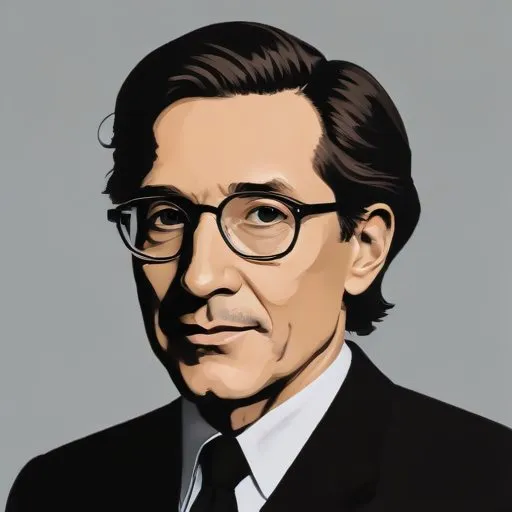
A prominent critic of pseudoscience, debunking paranormal claims and advocating for scientific skepticism. He's also known for his work on superconductivity and magnetism.
Robert L. Park, a renowned American physicist, is best known for his relentless criticism of alternative medicine and pseudoscience, as well as his advocacy for the proper representation of legitimate science in the media and public policy. Through his book Voodoo Science, Park shed light on the misconceptions and misrepresentations that plague the scientific community, earning him a reputation as a champion of scientific skepticism.
Born on January 16, 1931, in Kansas City, Missouri, Park's early life was marked by a strong academic inclination. His father, a lawyer and farmer in southern Texas, instilled in him a passion for learning. Initially intending to pursue law, Park's trajectory changed when he enlisted in the Air Force in 1951. During his service, he discovered his passion for physics at radar school, which led him to pursue higher education in the field.
Park earned his bachelor's and master's degrees in physics from the University of Texas at Austin in 1958 and 1960, respectively. He then went on to complete his Ph.D. in physics at Brown University in 1964, where he collaborated with physicist Harrison E. Farnsworth on several papers.
Park's illustrious academic career spanned over four decades, during which he held various positions at prestigious institutions. He worked as a member of the technical staff and later as the director of the Surface Physics Division at Sandia National Laboratories, a U.S. government weapons research laboratory, from 1964 to 1974.
In 1974, Park joined the University of Maryland's physics department, where he remained until his retirement. During his tenure, he served as the director of the Center of Materials Research from 1975 to 1978 and chairman of the Department of Physics and Astronomy from 1978 to 1982. Park's contributions to the field of physics earned him fellowships in the American Physical Society, the American Association for the Advancement of Science, and the American Vacuum Society.
Park's commitment to promoting scientific integrity led him to take on the role of director of public information at the Washington office of the American Physical Society from 1983 to 2006. In this capacity, he worked tirelessly to debunk pseudoscientific claims and promote evidence-based decision-making in public policy.
Through his writings and public appearances, Park became a vocal critic of the misuse of science in the media, politics, and popular culture. His book Voodoo Science remains a seminal work in the field, exposing the flaws and fallacies that underpin many pseudoscientific claims.
Park's philosophical stance on science and its role in society is deeply rooted in his commitment to skepticism and critical thinking. He believed that science should be free from ideological and political biases, and that scientists have a responsibility to communicate their findings accurately and honestly.
Throughout his career, Park advocated for a more nuanced understanding of science and its limitations, emphasizing the importance of peer review, empirical evidence, and the scientific method.
Robert L. Park's legacy extends far beyond his academic and professional achievements. As a champion of scientific skepticism, he inspired a generation of scientists, scholars, and critical thinkers to question assumptions and challenge misinformation.
Through his work, Park has left an indelible mark on the scientific community, reminding us of the importance of rigorous testing, skepticism, and critical thinking in the pursuit of knowledge.
Robert L. Park's life and work serve as a testament to the power of critical thinking, skepticism, and scientific rigor. As we continue to navigate the complexities of modern science and its applications, Park's legacy reminds us of the importance of staying vigilant and committed to the pursuit of truth.
Born in 1918
A brilliant physicist and engineer who pioneered quantum mechanics and famously explained complex concepts in simple terms, making science accessible to all.
84 Years Old
A brilliant mind who unraveled the mysteries of black holes and the universe, making complex physics accessible to all through bestselling books.
67 Years Old
Astrophysicist and science communicator who makes complex concepts accessible to the masses through engaging writing and hosting popular TV shows. He's a leading voice in promoting science education and critical thinking.
63 Years Old
Theoretical physicist and mathematician who has written extensively on string theory and its implications for our understanding of the universe, making complex concepts accessible to a broad audience.
46 Years Old
An Irish cricketer who played 12 Test matches for Ireland between 1948 and 1956, and is best known for being one of the country's earliest female cricket players.
64 Years Old
Theoretical physicist and cosmologist who has made groundbreaking contributions to our understanding of the universe, particularly in the areas of dark matter and extra dimensions.
59 Years Old
A Nobel Prize-winning astrophysicist who led the team that discovered the accelerating expansion of the universe, revolutionizing our understanding of space and time.
56 Years Old
A renowned astrophysicist and astronomer who led the team that discovered dark energy, a mysterious force driving the universe's accelerating expansion. He's also a Nobel Prize winner in Physics.
