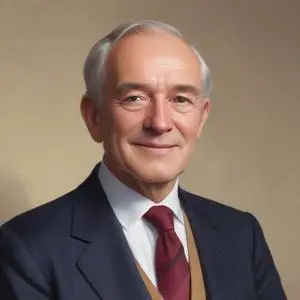
Robert May, Baron May of Oxford: A Life of Science and Service
A Legacy of Scientific Advancements
Robert May, Baron May of Oxford, was a renowned Australian scientist who made significant contributions to the fields of ecology, biology, and physics. As a leading figure in the scientific community, May served as the Chief Scientific Adviser to the UK Government, President of the Royal Society, and a professor at the University of Sydney and Princeton University.
Early Life and Education
Born on 8 January 1936 in Sydney, Australia, May was the son of lawyer Henry Wilkinson May and Kathleen Mitchell (née McCredie). His parents' divorce at the age of seven did not deter him from pursuing his passion for learning. May attended Sydney Boys High School and later enrolled at the University of Sydney, where he earned a BSc in chemical engineering and theoretical physics in 1956 and a PhD in theoretical physics in 1959.
Career Highlights and Major Works
May's academic career spanned over five decades, during which he made significant contributions to the field of ecology. His work on animal population dynamics and the relationship between complexity and stability in natural communities played a crucial role in the development of theoretical ecology. He applied mathematical techniques to study disease and biodiversity, further solidifying his reputation as a leading ecologist.
Some of his notable contributions include:
- Developing the concept of "chaos theory" in population biology, which challenged traditional views on population dynamics.
- Co-authoring the influential book "Theoretical Ecology: Principles and Applications" with Angela McLean.
- Publishing numerous papers on disease modeling, including the transmission dynamics of HIV and tuberculosis.
Awards and Honors
May's contributions to science were recognized with numerous awards and honors, including:
- The Crafoord Prize from the Royal Swedish Academy of Sciences (1996)
- The Balzan Prize for Ecological Sciences (1998)
- The Copley Medal from the Royal Society (2001)
- A life peerage as Baron May of Oxford (2001)
Public Service and Leadership
May's commitment to public service was evident in his roles as:
- Chief Scientific Adviser to the UK Government (1995-2000)
- President of the Royal Society (2000-2005)
- Member of the House of Lords (2001-2017)
Philosophical Contributions and Beliefs
May's work was guided by a deep understanding of the interconnectedness of human and natural systems. He believed that scientific knowledge should be used to inform policy decisions and promote sustainable development.
As he once said:
"The challenge of the 21st century is to develop a more sustainable relationship between human societies and the natural world."
Personal Milestones and Key Life Events
May's personal life was marked by a strong commitment to his family and a passion for the outdoors. He was married to Judith Feakes, and they had two daughters together. May was also an avid birdwatcher and enjoyed hiking in his free time.
Legacy and Impact
Robert May, Baron May of Oxford, left an indelible mark on the scientific community. His groundbreaking research, leadership, and commitment to public service have inspired generations of scientists and policymakers. As we continue to face the challenges of the 21st century, May's legacy serves as a reminder of the power of science to inform and improve our relationship with the natural world.
FAQ
What are Robert Mays most significant contributions to ecology and biology?
Robert Mays work has had a profound impact on our understanding of ecology, population biology, and conservation, including his development of the concept of chaos theory in biology.
How has Mays research influenced environmental policy and conservation?
Robert Mays research has informed and shaped environmental policy and conservation efforts, particularly in the areas of species extinction, ecosystem stability, and climate change.
What awards and honors has Robert May received for his work?
Robert May has received numerous awards and honors for his contributions to science, including the Crafoord Prize, the Balzan Prize, and the Blue Planet Prize.
What is Robert Mays role in the scientific community?
Robert May is a highly respected and influential figure in the scientific community, having served as chief scientific advisor to the UK government and holding various leadership positions in prominent scientific organizations.
How has Mays work been applied in real-world contexts?
Robert Mays research has been applied in various real-world contexts, including conservation efforts, fisheries management, and epidemiology, highlighting the importance of interdisciplinary approaches to complex problems.