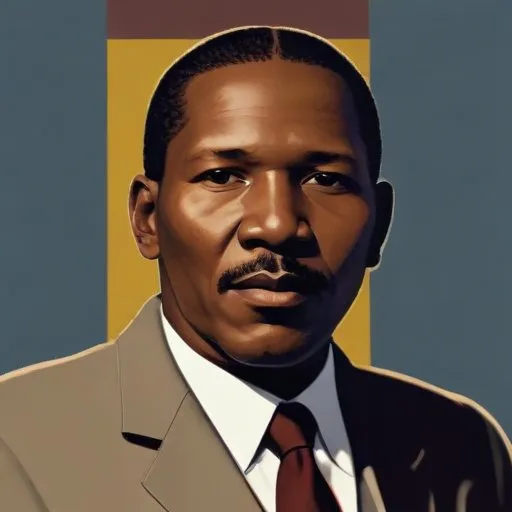
Robert Sobukwe: The Fearless Anti-Apartheid Revolutionary
The Face of Defiance Against Oppression
Robert Sobukwe, a renowned South African anti-apartheid revolutionary, is best known for his unwavering stance against the racist regime and his unrelenting fight for African independence. As the founding member and first president of the Pan Africanist Congress (PAC), Sobukwe's courageous leadership and vision for a united Africa inspired a generation of activists, earning him the title of "the father of Africanism" in South African politics.
A Strong Proponent of Africanism
Sobukwe's Africanist ideology was rooted in the belief that only Africans, defined as those who live in and pay allegiance to Africa, should have a say in the country's future. He vehemently opposed political collaboration with anyone other than Africans, advocating for African majority rule and the rejection of colonialism. This stance earned him both admiration and criticism, but Sobukwe remained resolute in his convictions.
The Non-Violent Protester
In March 1960, Sobukwe orchestrated a non-violent protest campaign against the pass laws, which restricted the movement of black people in South Africa. This courageous move led to his arrest and subsequent imprisonment for three years on grounds of incitement. However, Sobukwe's defiance did not end there. Despite being labeled a "terrorist" by the apartheid regime, he continued to advocate for peaceful resistance, inspiring a new wave of anti-apartheid activists.
The Sobukwe Clause and Solitary Confinement
In 1963, the apartheid government enacted the Sobukwe Clause, which allowed for the indefinite renewal of his prison sentence. As a result, Sobukwe was relocated to Robben Island, where he spent six years in solitary confinement. Despite the harsh conditions, Sobukwe remained steadfast in his convictions, earning the respect of his fellow prisoners, including Nelson Mandela.
Early Life and Education
Born on December 5, 1924, in Graaff-Reinet, Eastern Cape Province, Sobukwe grew up in a poor household with his Xhosa mother and Lesotho-born father. He received his primary education at a local Methodist mission and later attended the Healdtown Institute for secondary education. In 1947, Sobukwe enrolled at the South African Native College at Fort Hare, where he studied Native Administration and began to develop his interest in politics.
Awards and Honors
- Order of Mendi for Meritorious Service (OMSG)
- Reburied in the Heroes' Acre in Graaff-Reinet in 2009
Legacy and Impact
Robert Sobukwe's unwavering commitment to African independence and his courageous defiance against the apartheid regime have left an indelible mark on South African history. His legacy serves as a beacon of hope for future generations, inspiring them to fight for justice, equality, and human rights.
Quotes and Memorable Sayings
- "The Africans want a government which shall be responsible to the Africans..."
- "There is only one race, the human race..."
Tribute and Commemoration
In 2018, the South African government declared February 27 as Robert Sobukwe Day, a national commemoration of his life and legacy. Sobukwe's story has inspired numerous books, films, and artistic works, cementing his place as one of Africa's most iconic freedom fighters.
FAQ
What was Robert Sobukwes role in the anti-apartheid movement?
Robert Sobukwe was a prominent figure in the anti-apartheid movement in South Africa, leading the Pan Africanist Congress and advocating for African unity and independence.
What was Robert Sobukwes stance on apartheid?
Robert Sobukwe was a vocal opponent of apartheid, calling for its abolition and advocating for equal rights and opportunities for all South Africans.
What was Robert Sobukwes legacy?
Robert Sobukwes legacy is that of a champion for African liberation and unity, inspiring generations of activists and leaders in the fight against apartheid and racism.
How was Robert Sobukwe treated by the apartheid regime?
Robert Sobukwe was imprisoned and placed under house arrest for his activism, facing intense persecution and harassment from the apartheid regime.
What is Robert Sobukwes relationship with Nelson Mandela?
Robert Sobukwe and Nelson Mandela were both prominent anti-apartheid leaders, although they differed in their approaches, with Sobukwe advocating for a more radical and Africanist perspective.