


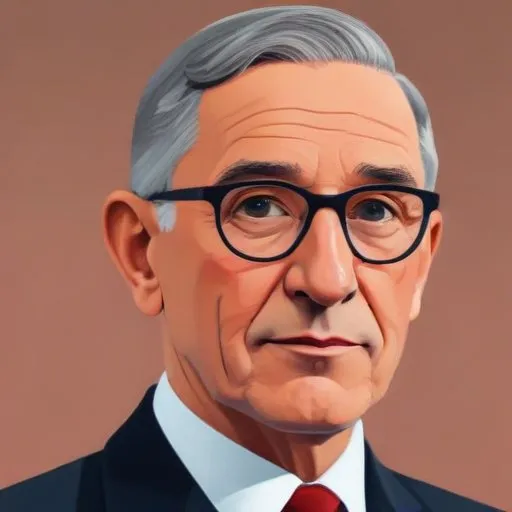
Canadian economist and politician who served as the 56th Secretary of State for Canada, known for his work in shaping the country's economic and social policies. He played a key role in promoting Canadian unity and bilingualism.
Robert de Cotret, a Canadian economist and politician, is renowned for his significant contributions to the country's economic and political landscape. As a prominent figure in the Progressive Conservative Party, he held various cabinet positions, shaping Canada's industrial and environmental policies.
Born on February 20, 1944, Robert de Cotret grew up in a French-Canadian family. He pursued higher education in economics, which laid the foundation for his future endeavors.
De Cotret's career took off when he became the President and CEO of the Conference Board of Canada from 1976 to 1978. This role showcased his exceptional leadership skills, paving the way for his entry into politics.
In 1978, de Cotret was elected to the House of Commons as the Member of Parliament for Ottawa Centre, becoming one of the few francophone MPs in the Tory caucus. Although he lost his seat in the 1979 general election, Prime Minister Joe Clark appointed him to the Senate of Canada and to Cabinet as Minister of Industry, Trade and Commerce.
In the 1980 election, de Cotret resigned his Senate seat to run for a seat in the House of Commons in the riding of Berthier-Maskinong, but was defeated. However, he bounced back in the 1984 election, winning a seat and becoming part of the Progressive Conservative majority government led by Brian Mulroney.
Throughout his cabinet positions, de Cotret played a crucial role in shaping Canada's economic and environmental policies. His tenure as Minister of the Environment saw significant reforms, underscoring his commitment to sustainable development.
Robert de Cotret's remarkable career spanned over two decades, leaving an indelible mark on Canadian politics and economy. His contributions continue to inspire future generations of politicians and economists.
De Cotret retired from Cabinet in January 1993 and did not run in the 1993 election. He passed away on July 9, 1999, leaving behind a legacy of dedication and service to Canada.
92 Years Old
The 20th Prime Minister of Canada, serving from 1993 to 2003, known for his leadership during the Quebec sovereignty movement and his role in shaping Canada's national unity. He implemented policies like the Clarity Act and the National Child Benefit.
45 Years Old
American professional ice hockey player who won two Stanley Cup championships and was a four-time NHL All-Star. Known for his rugged defensive play and physical presence on the ice.
96 Years Old
The 17th Prime Minister of Canada, serving from 1984 to 1985, is most known for his brief tenure and struggles to maintain party unity. He's also recognized for his prior role as Minister of Justice, where he introduced significant reforms.
87 Years Old
The 18th Prime Minister of Canada, a skilled lawyer and politician, led the country from 1984 to 1993, known for negotiating the Canada-US Free Trade Agreement and introducing the Goods and Services Tax.
79 Years Old
The first and only female Prime Minister of Canada, serving for a brief four months in 1993, known for her efforts to reform the country's justice system. She was also a strong advocate for women's rights and gender equality.
86 Years Old
The 16th Prime Minister of Canada, serving from 1979 to 1980, is known for being a Progressive Conservative and leading a brief but significant term in Canadian politics. He's also a journalist and politician who played a key role in shaping Canada's foreign policy.
Born in 1919
The charismatic leader who championed Canadian unity and implemented progressive policies, known for his iconic style and influential legacy in shaping modern Canada.
Born in 1897
A Canadian leader who served as Prime Minister and won the Nobel Peace Prize for resolving the Suez Canal Crisis, known for his diplomatic efforts and peacekeeping initiatives.
