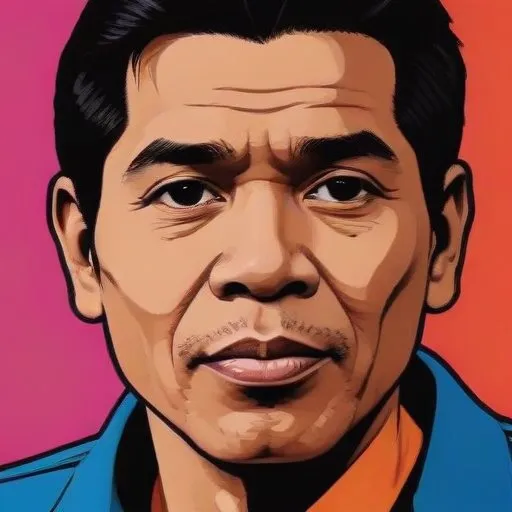
Roberto Chabet: The Father of Philippine Conceptual Art
A Pioneer of Unconventional Art
Roberto Chabet, widely recognized as the father of Philippine conceptual art, revolutionized the art scene in the Philippines with his innovative and thought-provoking works. Through his creations, Chabet challenged the traditional notions of art, focusing on the idea rather than the form, and thus, paved the way for a new generation of artists.
Early Life and Education
Born on March 29, 1937, in Manila, Philippines, Chabet's curiosity and creativity were evident from an early age. He pursued architecture at the University of Santo Tomas, graduating in 1961. This academic background laid the foundation for his conceptual approach to art, which often explored the intersections of space, memory, and meaning.
Curatorial Career and Mentorship
Chabet's curatorial career began at the Cultural Center of the Philippines, where he served as the founding museum director from 1967 to 1970. During this period, he initiated the 13 Artists Awards, a prestigious recognition that acknowledged young artists who were pushing the boundaries of contemporary art. This award not only launched the careers of many promising artists but also cemented Chabet's reputation as a champion of innovative art.
As a mentor, Chabet taught at the University of the Philippines College of Fine Arts for over three decades, inspiring generations of artists to experiment and challenge the status quo. His pedagogical approach emphasized the importance of idea over form, encouraging students to question and subvert traditional notions of art.
Artistic Style and Themes
Chabet's artistic practice was characterized by a constant pursuit of innovation and experimentation. His works, which spanned various mediums, including drawing, collage, sculpture, and installation, were often described as "creatures of memory." Through his art, Chabet probed the nature of modernity, exploring the tensions between space, memory, and the human experience.
His works often featured everyday objects, which he would displace, manipulate, and recontextualize to reveal new layers of meaning. This approach allowed Chabet to create complex, allegorical pieces that invited the viewer to engage with the artwork on a deeper level.
Legacy and Influence
Chabet's influence on Philippine art cannot be overstated. As a pioneer of conceptual art, he paved the way for a new generation of artists to experiment with unconventional forms and ideas. His commitment to promoting young talent through the 13 Artists Awards helped launch the careers of many prominent Filipino artists.
Through his teaching, curatorial work, and artistic practice, Chabet left an indelible mark on the Philippine art scene. Today, his works are held in high esteem,both nationally and internationally, and continue to inspire artists, curators, and art enthusiasts alike.
Awards and Recognition
Chabet's groundbreaking contributions to Philippine art were recognized through several prestigious awards, including the 1972 Republic Cultural Heritage Award and the 1972 Araw ng Maynila Award.
Selected Exhibitions and Collections
- 1961: First solo exhibition at the Luz Gallery
- 2004: "Selected Chabet Drawings 60s-70s" at Galleria Duemila
Chabet's works are part of the collections of the National Museum, Ateneo Art Gallery, Cultural Center of the Philippines, and several private collections.
A Legacy of Innovation
Roberto Chabet's creative genius, innovative spirit, and commitment to nurturing young talent have left an enduring legacy in the world of Philippine art. As a pioneer of conceptual art, he continues to inspire generations of artists to push the boundaries of creativity and challenge the conventional norms of artistic expression.
FAQ
What is Roberto Chabets contribution to Filipino art?
Roberto Chabet is a renowned Filipino painter and sculptor who made significant contributions to the countrys modern art movement. His work often explored themes of identity, culture, and social change.
What are Roberto Chabets most famous artworks?
Roberto Chabets most famous artworks include his abstract paintings, which often featured bold colors and geometric shapes. He also created several sculptures that explored themes of identity and cultural heritage.
How did Roberto Chabets experience as a teacher influence his art?
Roberto Chabets experience as a teacher at the University of the Philippines influenced his art, as he often incorporated elements of education and social activism into his work.
What is Roberto Chabets legacy in Filipino art?
Roberto Chabets legacy in Filipino art is that of a pioneering artist who helped to shape the countrys modern art movement. He remains a highly respected figure in Filipino art and a source of inspiration for future generations of artists.
What honors did Roberto Chabet receive for his contributions to art?
Roberto Chabet received numerous honors for his contributions to art, including the National Artist Award for Visual Arts in 2012. He was also recognized for his contributions to art education and his role as a mentor to young artists.