


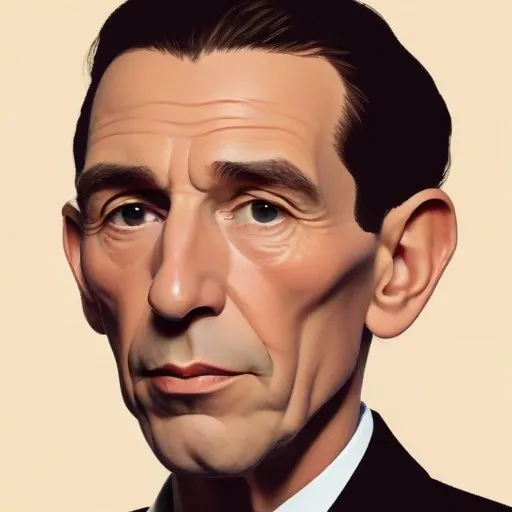
A 20th-century poet and philosopher who celebrated the beauty of nature and warned against humanity's destructive tendencies, known for his unique style and environmentalist themes.
Robinson Jeffers, the American poet, is renowned for his majestic and evocative works that immortalize the central California coast. His poetry, often written in narrative and epic form, breathes life into the rugged landscape, exploring the intersection of humanity and nature.
Born on January 10, 1887, in Allegheny, Pennsylvania, Jeffers' early life was marked by a deep fascination with the classics and languages. He was an exceptional student, fluent in German and French by the age of 12, and went on to attend Occidental College, where he earned his bachelor's degree at just 18.
In 1906, Jeffers met Una Call Kuster, a graduate student and wife of a Los Angeles attorney. The affair that ensued would change the course of his life. After being discovered by Ted Kuster, Jeffers abandoned his studies at the University of Southern California and enrolled as a forestry student at the University of Washington in Seattle. However, it was during this tumultuous period that Jeffers discovered his true calling – the California coast, which would become the backdrop for his most iconic works.
Jeffers' poetry and philosophy were deeply rooted in the concept of "inhumanism," which emphasized the need to transcend human concerns and conflicts by recognizing the supremacy of the natural world. This belief led him to oppose U.S. involvement in World War II, a stance that sparked controversy. Jeffers' vision was one of harmony between humanity and the environment, where the latter takes precedence.
Jeffers' work has had a profound impact on the environmental movement, inspiring generations of writers, artists, and activists. His poetry continues to be widely read and studied, offering a unique perspective on the human condition and our relationship with the natural world.
Through his life and work, Robinson Jeffers reminds us of the importance of respecting and preserving the beauty and power of the natural world. As we navigate the complexities of modern life, his poetry serves as a powerful reminder of the need for harmony and balance between humanity and the environment.
