


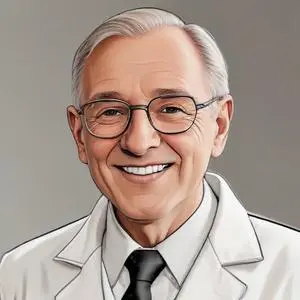
A Swiss immunologist and academic who discovered the major histocompatibility complex's role in immune response, earning a Nobel Prize in Physiology or Medicine in 1996. His work revolutionized understanding of the immune system and disease.
Rolf M. Zinkernagel is a renowned Swiss professor of experimental immunology who, alongside Peter C. Doherty, revolutionized our understanding of the immune system by discovering how it recognizes virus-infected cells. This groundbreaking finding earned them the 1996 Nobel Prize in Physiology or Medicine, cementing Zinkernagel's place as one of the most influential immunologists of our time.
Zinkernagel was born on January 6, 1944, and pursued his academic interests in medicine, receiving his MD degree from the University of Basel in 1970. He furthered his education by earning a PhD from the Australian National University in 1975.
Zinkernagel's illustrious career has been marked by numerous prestigious appointments, including his current position as a professor of experimental immunology at the University of Zurich. He is also a member of several esteemed organizations, such as the Cancer Research Institute Scientific Advisory Council, the American Academy of Arts and Sciences, and the National Academy of Sciences.
Zinkernagel's pioneering work, in collaboration with Peter C. Doherty, focused on understanding how the immune system recognizes and responds to virus-infected cells. Their research revealed that killer T-cells require the recognition of two molecules on the surface of infected cells – the virus antigen and a molecule of the major histocompatibility complex (MHC) – to destroy the infected cells and prevent viral replication.
Zinkernagel's work has far-reaching implications for our understanding of the immune system and its role in fighting diseases. His discovery has paved the way for the development of new treatments and therapies, particularly in the fields of cancer research and organ transplantation.
Zinkernagel's contributions to the field of immunology have also inspired future generations of scientists and researchers, solidifying his position as one of the most influential and respected figures in the scientific community.
Apart from his professional achievements, Zinkernagel's personal milestones are a testament to his dedication to his craft. He has been recognized for his outstanding contributions to the field of immunology, earning him numerous awards and honors.
Through his work, Zinkernagel has left an indelible mark on the scientific community, and his legacy continues to inspire and motivate future generations of scientists and researchers.
47 Years Old
A British rockstar known for his poetic lyrics and tumultuous personal life, leading the Libertines and Babyshambles to indie rock fame. His artistic expression spans music, literature, and visual art.
85 Years Old
A Luxembourgian-French biologist and academic who discovered the genetic mechanisms of innate immunity, leading to a deeper understanding of the human immune system and its response to infection.
75 Years Old
Australian physician and academic who discovered the bacterium Helicobacter pylori and its role in gastritis and peptic ulcer disease, revolutionizing the understanding and treatment of stomach ulcers.
89 Years Old
Australian pathologist and academic who discovered the bacterium Helicobacter pylori, revolutionizing the understanding and treatment of stomach ulcers and gastritis.
79 Years Old
A Nobel Prize-winning scientist who discovered the HIV virus and made significant contributions to the understanding of AIDS, paving the way for life-saving treatments.
94 Years Old
A Nobel Prize-winning scientist who discovered the HIV virus and made significant contributions to the understanding of its replication, leading to the development of antiretroviral treatments.
