


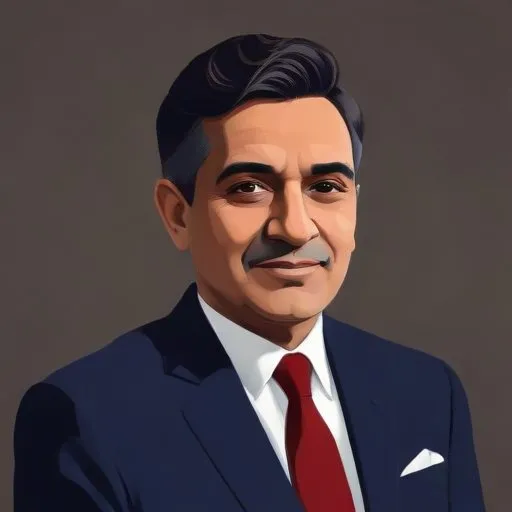
The 13th Foreign Secretary of India, a key diplomat who played a crucial role in shaping India's foreign policy and international relations during a pivotal period in the country's history.
Romesh Bhandari, an Indian diplomat and administrator, left an indelible mark on the country's foreign service and governance. Known for his exceptional diplomatic acumen, he served in various high-ranking positions, including Indian Foreign Secretary, Lieutenant Governor of Delhi, and Governor of several states, shaping the course of India's international relations and domestic politics.
Born on March 29, 1928, in Lahore, Punjab Province, British India (present-day Pakistan), Romesh Bhandari was the son of Amar Nath Bhandari, a Punjab High Court Judge who played a significant role in the Mahatma Gandhi Assassination case. This early exposure to the world of law and governance perhaps ignited a sense of public service in young Romesh.
In 1950, Bhandari joined the Indian Foreign Service (IFS) as the Vice-Consul at the consulate in New York, marking the beginning of his illustrious diplomatic career.
Bhandari's diplomatic prowess was evident in his successful negotiations, including the extradition of hijackers of Indian Airlines Flight 421 from Dubai in 1984.
During his tenure as Governor of Uttar Pradesh, Bhandari's recommendation to dismiss the Kalyan Singh-led Bharatiya Janata Party (BJP) government in the state in 1997 led to a significant crisis for the central government, ultimately resulting in the reinstatement of the BJP government.
Romesh Bhandari was married to Kumude, and their personal life remains largely private, overshadowed by his illustrious public career.
Romesh Bhandari's life was a testament to his unwavering commitment to public service, diplomacy, and governance. His contributions to India's international relations and domestic politics continue to inspire generations of diplomats and administrators. Though he passed away on September 7, 2013, his legacy endures, a reminder of the impact one individual can have on the course of a nation's history.
Born in 1889
India's first Prime Minister, a key figure in the country's struggle for independence from British rule, and a champion of democracy and secularism. He played a crucial role in shaping modern India's government and economy.
Born in 1917
The first female Prime Minister of India, serving from 1966 to 1977 and again from 1980 until her assassination in 1984, known for her strong leadership and economic reforms.
82 Years Old
The 6th Prime Minister of India, a key figure in Indian politics, known for introducing economic reforms and promoting technology in the country. He was also a strong advocate for social justice and equality.
94 Years Old
The 13th Prime Minister of India, a renowned economist who led the country through a period of rapid economic growth and liberalization, implementing reforms that transformed India's economy. He is credited with helping to lift millions of people out of poverty.
79 Years Old
The first female President of the Indian National Congress, leading the party to a landslide victory in 2004, and playing a crucial role in shaping India's political landscape.
56 Years Old
Indian National Congress leader and scion of the Nehru-Gandhi family, known for his efforts to revitalize the party and promote social justice.
90 Years Old
The 13th President of India, a seasoned politician and journalist, served as the head of state from 2012 to 2017, playing a key role in shaping the country's economy and foreign policy. He's known for his diplomatic skills and ability to build consensus.
