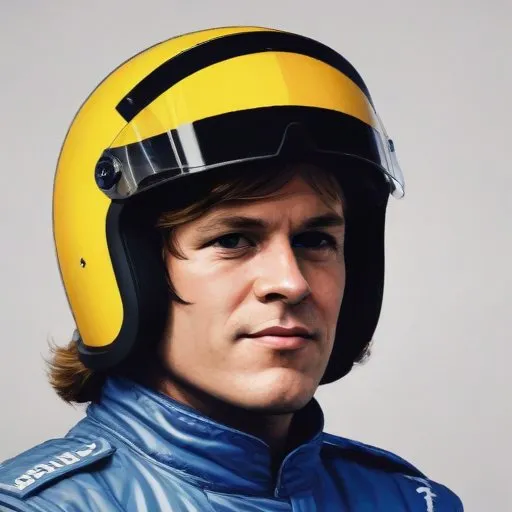
Ronnie Peterson: The Swedish Racing Sensation
The SuperSwede of Formula One
Known as the SuperSwede, Bengt Ronnie Peterson was a Swedish racing driver who left an indelible mark on the world of Formula One. With a career spanning over a decade, Peterson's impressive skills behind the wheel earned him two runner-up titles in the Formula One World Drivers' Championship.
Early Life and Karting Days
Born on February 14, 1944, in Örebro, Sweden, Peterson's passion for racing began at a young age. He developed his driving style competing in karting, where he rapidly rose through the ranks, winning numerous titles, including two Swedish championships in 1963 and 1964.
The Rise to Formula One
Peterson's success in karting paved the way for his transition to Formula Three. In 1969, he won the Monaco Grand Prix Formula Three support race and later claimed the FIA European Formula 3 Championship. This impressive feat caught the attention of the March factory team, who signed him to compete in Formula One.
Formula One Career Highlights
During his three-year stint with March, Peterson secured six podiums, with most of them coming in the 1971 Formula One season, where he finished as runner-up in the Drivers' Championship. His impressive performance earned him a seat with
Colin Chapman's Team Lotus in 1973, partnering with defending champion
Emerson Fittipaldi. With Lotus, Peterson scored seven victories, including a career-best 52 points in 1973.
A Multifaceted Career
After a brief stint with Tyrrell in 1977, Peterson returned to Lotus for the 1978 season as number two driver to
Mario Andretti. This marked a triumphant return, with Peterson scoring two wins at the South African and Austrian Grand Prix races.
Fatal Accident and Legacy
Tragically, Peterson's life was cut short in a fatal first-lap accident at the Italian Grand Prix in Monza on September 11, 1978. Despite his untimely death, Peterson's legacy lives on, with many regarding him as one of the greatest Formula One drivers of all time.
Awards and Honors
- Runner-up in the Formula One World Drivers' Championship (twice)
- FIA European Formula 3 Championship winner (1969)
- Monaco Grand Prix Formula Three support race winner (1969)
- Swedish Karting Championship winner (1963, 1964)
Philosophical Contributions and Beliefs
Peterson's approach to racing was built on his strong work ethic, dedication, and fearlessness behind the wheel. He believed in pushing himself to the limit, always striving for perfection. This mentality earned him the respect and admiration of his peers and fans alike.
Personal Milestones and Key Life Events
- Born on February 14, 1944, in Örebro, Sweden
- Began karting at a young age
- Won numerous karting titles, including two Swedish championships
- Moved to Formula Three and won the FIA European Formula 3 Championship
- Competed in Formula One, earning seven victories and finishing as runner-up in the Drivers' Championship twice
Impact on Modern Society
Peterson's impressive career has inspired generations of racing drivers and enthusiasts alike. His legacy continues to influence the world of Formula One, with many regarding him as a true racing legend.
FAQ
What was Ronnie Petersons career in Formula One like?
Ronnie Peterson had a successful Formula One career, winning 10 Grands Prix and achieving 26 podiums, making him one of the top drivers of the 1970s.
What was Ronnie Petersons most notable racing achievement?
Ronnie Petersons most notable achievement was winning the 1973 and 1974 Dutch Grands Prix, cementing his status as a top competitor in Formula One.
How did Ronnie Peterson die?
Ronnie Peterson died in 1978, following injuries sustained in a crash during the Italian Grand Prix at Monza, leaving behind a legacy as one of the greatest drivers in Formula One history.
What was Ronnie Petersons personality like?
Ronnie Peterson was known for his laid-back and charming personality, earning him the nickname SuperSwede among fans and fellow drivers alike.
What is Ronnie Petersons legacy in motorsports?
Ronnie Petersons legacy in motorsports includes inspiring future generations of drivers, and his iconic helmet design has become a symbol of Swedish motorsports excellence.