


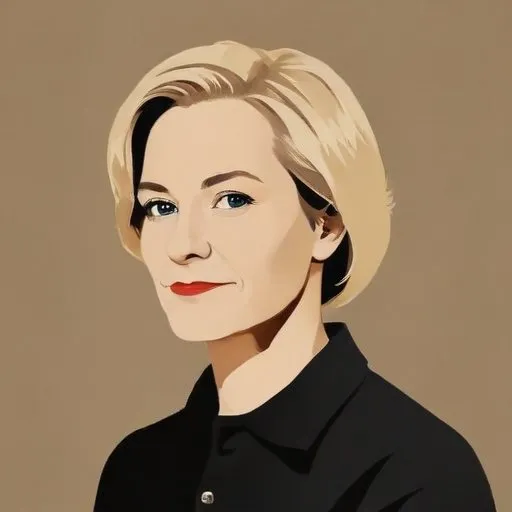
Co-founder of Affectiva, a pioneer in artificial emotional intelligence, developing technology to recognize and interpret human emotions from facial expressions and physiological signals.
Renowned for her groundbreaking work in the field of affective computing, Rosalind Picard is a trailblazing scholar and inventor who has revolutionized the way we understand and interact with technology. As the founder and director of the Affective Computing Research Group at MIT Media Lab, Picard has dedicated her career to exploring the intricacies of human emotions and developing innovative solutions that can recognize, interpret, and respond to emotional cues.
Rosalind Wright Picard was born on May 17, 1962. She earned her bachelor's degree in electrical engineering with highest honors and a certificate in computer engineering from the Georgia Institute of Technology.
In 1997, Picard published her seminal book, Affective Computing, which marked the beginning of a new era in computer science. This pioneering work emphasized the significance of emotion in intelligence, highlighting the crucial role of human emotion communication in relationships and the potential impact of emotion recognition by robots and wearable computers.
Picard's contributions to the field of affective computing have earned her numerous accolades, including:
Picard's work has far-reaching implications, extending beyond the realm of computer science to autism research and beyond. Her research has led to the development of devices that can help humans recognize nuances in human emotions, paving the way for more effective social interactions and improved relationships.
Picard is the cofounder of two startups, Affectiva and Empatica, which are dedicated to developing innovative solutions that can recognize and respond to human emotions. Her entrepreneurial spirit has led to the creation of cutting-edge technologies that are transforming the way we live and interact with technology.
Rosalind Picard's trailblazing work has left an indelible mark on the field of computer science, inspiring a new generation of researchers and innovators to explore the intersection of human emotions and technology. Her contributions will continue to shape the future of affective computing, improving the way we communicate, interact, and live.
50 Years Old
Co-founder of DeepMind, a leading AI research organization, and a pioneer in the field of artificial intelligence, particularly in developing AlphaGo, a computer program that defeated a human world champion in Go.
