


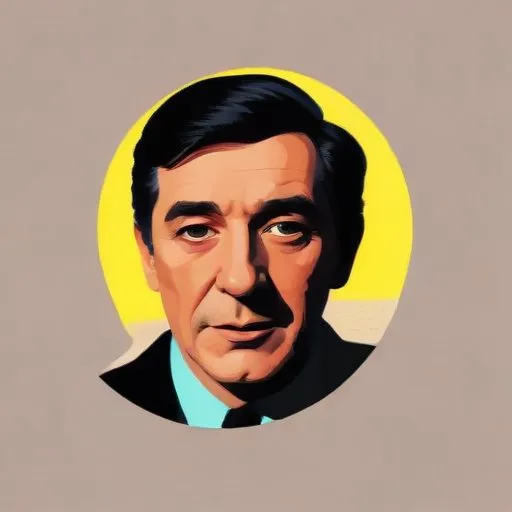
A British filmmaker behind classic comedies like "I'm All Right Jack" and "Private's Progress", known for his witty, satirical takes on British society.
Roy Boulting, a British film director, producer, and screenwriter, is best known for his collaborations with his twin brother John Boulting, which resulted in a string of critically acclaimed films that defined the essence of British cinema in the post-war era. With a career spanning over four decades, Roy Boulting's contributions to the industry are largely marked by his bold storytelling, biting satire, and an unwavering commitment to social commentary.
Roy Boulting was born on December 21, 1913, in Bray, Berkshire, to a family of modest means. Growing up in a creative environment, Roy and his twin brother John were encouraged to pursue their passion for filmmaking from a young age. The brothers began their career in the film industry as camera assistants, eventually graduating to directing and producing their own films.
The Boulting brothers' partnership yielded some of the most iconic films of the 1950s and 1960s, including Private's Progress (1956), Lucky Jim (1957), and I'm All Right Jack (1959). These films, often critically acclaimed and commercially successful, showcased the brothers' unique blend of wit, satire, and social commentary.
Roy Boulting's films not only reflected the changing landscape of post-war Britain but also contributed to the national conversation on social issues. His work, along with his brother's, helped shape the country's cinematic identity and paved the way for future generations of British filmmakers.
Roy Boulting's contributions to British cinema were recognized with numerous awards and nominations, including a BAFTA Award for Best Film and an Academy Award nomination for Best Original Screenplay.
Roy Boulting's legacy is deeply rooted in the golden age of British cinema, a period marked by innovative storytelling, social commentary, and a commitment to quality filmmaking. His work, along with his brother's, continues to influence contemporary British filmmakers and remains an integral part of the country's cinematic heritage.
Roy Boulting married twice and had two children. He passed away on November 5, 2001, at the age of 87, leaving behind a rich legacy that continues to inspire filmmakers and audiences alike.
Roy Boulting's contributions to British cinema are a testament to his boundless creativity, wit, and dedication to storytelling. As a pioneering filmmaker, he left an indelible mark on the industry, paving the way for future generations of British filmmakers to follow in his footsteps.
Born in 1913
A British filmmaker behind classic comedies like "I'm All Right Jack" and "Private's Progress", known for his witty, satirical take on British society.
Born in 1900
A Scottish-English actor and academic who brought iconic characters to life on screen, particularly in comedies, and taught drama at Oxford University.
Born in 1916
Acclaimed actor who won a posthumous Academy Award for his iconic portrayal of Howard Beale in the 1976 film "Network", leaving a lasting impact on the film industry.
Born in 1914
A renowned actor who brought iconic characters to life on screen, including Obi-Wan Kenobi in the Star Wars franchise.
Born in 1908
A renowned English actor, celebrated for his iconic performances in British cinema, particularly in war dramas and literary adaptations. He won an Academy Award for Best Actor for his portrayal of a disabled veteran in "Ryan's Daughter".
Born in 1908
A renowned stage and screen actress, best known for her iconic role in the 1945 film "Brief Encounter", which remains a timeless classic of British cinema.
Born in 1913
A renowned English actor, starring in iconic films like "Brief Encounter" and "The Third Man", bringing depth and nuance to his characters.
Born in 1908
Acclaimed filmmaker behind epic, visually stunning movies like "Lawrence of Arabia" and "Doctor Zhivago", known for his meticulous attention to detail and sweeping cinematography.
