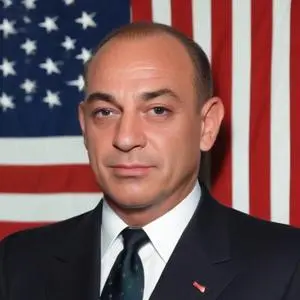
Roy Cohn: The Controversial Lawyer and Kingmaker
A Prominent Figure in American Politics and Law
Roy Cohn was a powerful and influential American lawyer, prosecutor, and kingmaker who left an indelible mark on American politics and law. He is best known for his role as Senator
Joseph McCarthy's chief counsel during the Army-McCarthy hearings in 1954, where he played a significant role in investigating suspected communists.
Early Life and Education
Born on February 20, 1927, in the Bronx, New York City, Cohn was the only child of Dora and Justice Albert C. Cohn. His father was an Assistant District Attorney of Bronx County and later a judge of the Appellate Division of the New York State Supreme Court. Cohn's maternal great-uncle was
Joshua Lionel Cowen, the founder and longtime owner of the Lionel Corporation, a manufacturer of toy trains.
Rise to Prominence
Cohn's career in law began when he graduated from Columbia University. He rose to prominence as a U.S. Department of Justice prosecutor during the espionage trial of Julius and
Ethel Rosenberg, where he successfully prosecuted the Rosenbergs, leading to their execution in 1953. This high-profile case catapulted Cohn to national attention and cemented his reputation as a formidable prosecutor.
The McCarthy Era and Beyond
Cohn's association with Senator Joseph McCarthy during the Army-McCarthy hearings in 1954 further solidified his position as a prominent figure in American politics. Although McCarthy's downfall in the late 1950s led to a decline in Cohn's reputation, he continued to operate as a behind-the-scenes kingmaker, influencing politics and business in New York City. During the late 1970s and 1980s, Cohn became a prominent political fixer, representing and mentoring influential figures, including real estate developer and future U.S. President
Donald Trump.
Personal Life and Controversies
Cohn's personal life was marked by controversy and scandal. He was known for his flamboyant and extravagant lifestyle, which often blurred the lines between his personal and professional life. In 1986, Cohn was disbarred by the Appellate Division of the New York State Supreme Court for unethical conduct, including attempting to defraud a dying client.
Legacy and Impact
Despite his controversial legacy, Cohn's impact on American politics and law cannot be overstated. He played a significant role in shaping the country's response to communism during the Cold War era and continued to influence politics and business in New York City until his death in 1986. Cohn's legacy serves as a reminder of the complex and often fraught relationship between politics, law, and power in America.
Quotes and Memorable Sayings
"Don't tell me what the law is. Tell me who the judge is."
Influence on Modern Society
Cohn's influence extends beyond the realm of politics and law to popular culture. He has been the subject of numerous books, films, and plays, including
Tony Kushner's play "Angels in America" and the film "Citizen Cohn." These works have helped to cement Cohn's place in the American cultural consciousness as a symbol of power, politics, and controversy.
Historical Context and Legacy
Cohn's life and career must be understood within the context of the Cold War era, a time marked by fear, paranoia, and political upheaval. His association with Senator Joseph McCarthy and his role in the Army-McCarthy hearings make him a significant figure in American political history. Despite his controversial legacy, Cohn's impact on American politics and law continues to be felt today.
Awards and Honors
Cohn was awarded the Department of Justice's Exceptional Service Award in 1951 for his work as a prosecutor in the Rosenberg case.
Personal Relationships and Anecdotes
Cohn's personal relationships were often marked by controversy and scandal. He was known for his close relationships with powerful figures, including Senator Joseph McCarthy and Donald Trump. Cohn's relationships with these figures have been the subject of much speculation and controversy.
Trivia and Fun Facts
- Cohn was a closeted gay man who refused to acknowledge his sexual orientation publicly.
- He was known for his extravagant lifestyle, which included a lavish apartment in New York City and a summer home in the Hamptons.
- Cohn was a frequent patron of the notorious Studio 54 nightclub in New York City.
Impact on His Field
Cohn's legacy continues to influence the fields of law and politics in America. His role in shaping the country's response to communism during the Cold War era remains a significant chapter in American political history. Despite his controversial legacy, Cohn's impact on American politics and law serves as a reminder of the complex and often fraught relationship between power, politics, and the law.