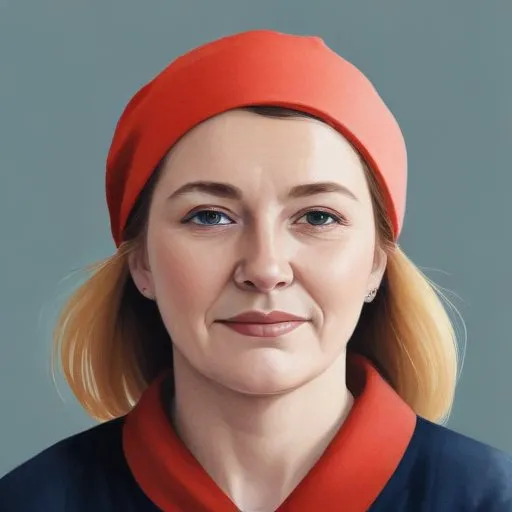
Ruth Smith: A Pioneer of Faroese Art
Early Life and Education
Ruth Smith, a renowned Faroese artist, was born on April 5, 1913, in Vágur, Faroe Islands. She is best known for her captivating landscapes and portraits that vividly capture the essence of the Faroese light.
Smith's artistic journey began in Denmark, where she attended the Bizzie Høj Art School and later enrolled at the Art Academy of Copenhagen. During her time in Denmark, she developed a deep understanding of colors and brushstrokes, which would later become the hallmark of her work.
Artistic Style and Influence
Ruth Smith's artistic style is characterized by her sensitive use of colors, often-inspired by the Impressionist movement. Her landscapes, in particular, have a unique vibrancy, with colors that seem to dance under the brushstrokes. This unique style has been compared to that of
Paul Cézanne, a French Post-Impressionist painter.
Smith's work is not only a reflection of her technical skill but also a testament to her deep connection with her native Faroe Islands. Her paintings often capture the rugged beauty of the Faroese landscape, with its rolling hills, crashing waves, and picturesque villages.
Personal Life and Legacy
In 1945, Smith married Poul Morell Nielsen, a Danish architect. The couple lived in Lemvig, Denmark, before returning to the Faroe Islands, where they settled in the small village of Nes. Tragically, Smith's life was cut short when she drowned while swimming in Vágsvír Fjord in 1958.
Despite her untimely death, Ruth Smith's legacy lives on through her remarkable body of work. Her paintings continue to inspire and captivate audiences, offering a unique window into the beauty and culture of the Faroe Islands.
Ruth Smith Art Museum
In honor of Ruth Smith's contributions to Faroese art, a museum was established in her hometown of Vágur. The Ruth Smith Art Museum (Ruth Smith Savni) is located in the Old School on Vágsvágur 101, which is the same school where Smith attended as a child.
The museum features a range of Smith's paintings and drawings, including her iconic self-portrait from 1941. This portrait is not only a testament to her technical skill but also a glimpse into her personality and character.
Impact on Faroese Art
Ruth Smith's influence on Faroese art cannot be overstated. Her work has inspired generations of Faroese artists, and her legacy continues to shape the country's artistic landscape.
In recognition of her contributions, Smith's two self-portraits from 1955 are considered the most important paintings in the Faroe Islands and are housed in the National Art Museum.
Conclusion
Ruth Smith's life may have been cut short, but her art continues to live on, inspiring and captivating audiences around the world. Her unique style, which blends Impressionist influences with a deep understanding of the Faroese landscape, has cemented her place as one of the most important Faroese artists of the 20th century.
FAQ
What style of art did Ruth Smith specialize in?
Ruth Smith specialized in modernist and expressionist art, and her work often explored themes of nature, landscape, and the human condition.
What is Ruth Smiths most famous work?
Ruth Smiths most famous work is her series of paintings of the Faroese landscape, which are considered some of the most important and influential works of Faroese art of the 20th century.
How did Ruth Smiths work reflect her experiences in the Faroe Islands?
Ruth Smiths work was deeply influenced by her experiences in the Faroe Islands, and she often incorporated themes of nature, culture, and community into her art.
What awards did Ruth Smith win for her art?
Ruth Smith won several awards for her art, including the prestigious Faroese Cultural Prize and the Nordic Councils Art Prize.
What is Ruth Smiths legacy in Faroese art?
Ruth Smiths legacy in Faroese art is immense, and she is widely regarded as one of the countrys most important and influential artists of the 20th century.