


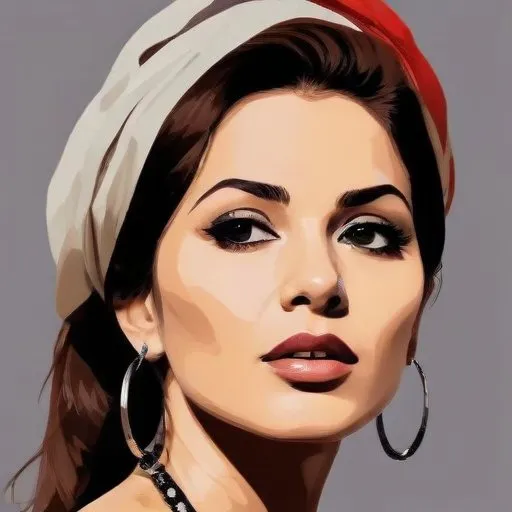
A Lebanese diva who ruled the Arab music scene with her powerful voice and captivating stage presence, known for her iconic songs and films that still charm audiences today.
Sabah, born Jeanette Gergis Feghali, was a Lebanese singer and actress renowned for her enchanting voice and captivating stage presence, specializing in the traditional Middle Eastern genre of mawwal. With a career spanning over six decades, she remains an iconic figure in the Arab music industry, earning the affectionate nicknames "Al-Shahroura" (The Songbird) and "Shahruret el-Wadi" (The Songbird of the Valley).
Sabah was born on November 10, 1927, in Bdadoun, Aley, to a Maronite Christian family. Despite facing childhood bullying from her father, who had hoped for a son, Sabah's passion for singing shone bright from an early age. She released her first song in Lebanon in 1940, at the tender age of 13, marking the beginning of her illustrious career.
In the early 1940s, Sabah was invited to Egypt by actress and producer Assia Dagher, where she acted alongside Dagher in her first movie, "El-Qalb Luh Wahid" (The Heart Has Its Reasons), released in 1945. This breakthrough role brought her regional fame, and she soon became widely known by her stage name, Sabah, which means "morning" in Arabic.
Sabah's filmography boasts an impressive array of popular movies, including "The Night is Ours" (1949), "My Father Deceived Me" (1951), "That's What Love Is" (1961), "Soft Hands" (1963), "Three Women" (1968), "Paris and Love" (1972), and "The Second Man" (1959), where she played a cabaret singer seeking to conquer the hearts of her audience. Her captivating performances on screen solidified her position as a prominent actress in the Arab cinema.
Sabah's music career was marked by her distinctive, powerful voice, which resonated with audiences across the Middle East. She released numerous hit songs and collaborated with prominent composers and musicians, leaving an indelible mark on the Arab music landscape. Her legacy extends beyond her own accomplishments, as she paved the way for future generations of female Arab artists.
Sabah's contributions to the world of music and cinema were recognized with numerous awards and honors, including the Lebanese Order of Merit, the Egyptian Order of the Republic, and the Arab Music Academy's Golden Award.
Despite facing personal challenges, including the tragic loss of her mother and the turmoil in her family, Sabah's unwavering dedication to her craft earned her a place in the hearts of her fans. She continued to perform and record music until her passing on November 26, 2014, leaving behind a rich cultural heritage that continues to inspire and delight audiences today.
Sabah's remarkable life and career serve as a testament to her boundless talent, perseverance, and passion for her craft. As a trailblazing female artist in a male-dominated industry, she inspired countless women to pursue careers in music and cinema. Her enduring legacy continues to captivate audiences, ensuring her place as one of the most beloved and celebrated artists in Arab cultural history.
42 Years Old
Egyptian professional footballer who played as a midfielder for various clubs, including Al Ahly and the Egyptian national team, winning several domestic and international titles.
Born in 1910
A Syrian actor and singer who dominated the Arabic music scene with his unique voice and charismatic on-screen presence, starring in over 30 films and producing numerous hit songs.
