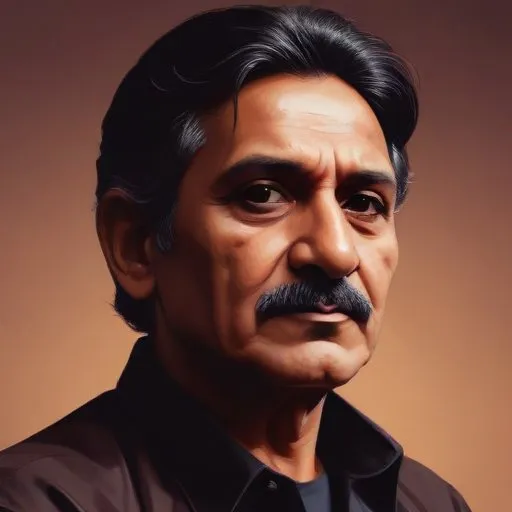
Saeed Akhtar Mirza: The Acclaimed Indian Screenwriter and Director
A Pioneer of Parallel Cinema
Saeed Akhtar Mirza is a renowned Indian screenwriter and director, best known for his groundbreaking work in parallel cinema, a film movement that emerged in the 1960s and 1970s, focusing on realistic, socially conscious storytelling. His films, often critical of the Indian middle class and the societal norms, have garnered widespread acclaim and earned him numerous awards and honors.
Early Life and Education
Born on June 30, 1943, in Mumbai, Maharashtra, to Akhtar Mirza, a noted screenwriter himself in the 1960s, Saeed Mirza grew up in an environment that fostered his creative inclinations. After working in advertising for some time, Mirza joined the prestigious Film and Television Institute of India (FTII), Pune, from where he graduated in 1976.
Career Highlights and Major Works
Mirza's directorial debut,
Arvind Desai Ki Ajeeb Dastaan (1978), a critically acclaimed film about the frustrations of an idealistic youth, won the Filmfare Critics Award for Best Movie. This was followed by
Albert Pinto Ko Gussa Kyoon Aata Hai (1980), a poignant portrayal of an angry youth searching for his class and ethnic identifications, which also won the Filmfare Critics Award for Best Movie.
His subsequent films, such as Mohan Joshi Hazir Ho (1984), a satire on the Indian judicial system, and Salim Langde Pe Mat Ro (1989), a powerful drama about the struggles of a young man from a minority community, further solidified his reputation as a masterful storyteller. Naseem (1995), a poignant drama about the aftermath of the 1993 Bombay riots, won two National Film Awards in 1996.
Television and Documentary Films
In addition to his work in feature films, Mirza has also made significant contributions to Indian television, directing popular serials such as
Nukkad (1986) and
Intezaar (1988). He has also produced numerous documentary films focusing on social welfare and cultural activism.
Awards and Honors
Mirza's outstanding contributions to Indian cinema have been recognized with numerous awards and honors, including the prestigious Lifetime Achievement Award at the International Cultural Artifact Film Festival (ICA) in 2020.
Philosophical Contributions and Beliefs
Through his work, Mirza has consistently raised questions about social inequality, communal harmony, and the need for reform in Indian society. His films often reflect his commitment to promoting empathy and understanding among different communities.
Influence on Modern Society
Mirza's work has had a profound impact on Indian popular culture, influencing a generation of filmmakers, writers, and artists. His films have sparked important conversations about social justice, equality, and human rights, contributing to a more informed and engaged citizenry.
Historical Context and Legacy
Saeed Akhtar Mirza's work is deeply rooted in the historical context of post-independence India, a period marked by social change, economic upheaval, and cultural transformation. His films serve as a commentary on the times, offering a nuanced understanding of the complexities of Indian society.
Personal Milestones and Key Life Events
Mirza's journey as a filmmaker and social activist has been marked by several personal milestones, including his tenure as chairman of the FTII, where he taught and mentored a new generation of filmmakers. He is also a trustee of ANHAD, a Delhi-based NGO working for communal harmony.
Trivia and Fun Facts
- Mirza's film Naseem (1995) was screened at the prestigious Locarno International Film Festival.
- He has been a member of the jury at several international film festivals, including the Berlin International Film Festival.
- Mirza's documentary films have been broadcast on national television, reaching a wide audience and sparking important conversations about social issues.
FAQ
What is Saeed Akhtar Mirzas filmography?
Saeed Akhtar Mirza is an Indian film director and screenwriter, known for films like Arvind Desai Ki Ajeeb Dastaan, Albert Pinto Ko Gussa Kyun Aata Hai, and Mohan Joshi Hazir Ho!, which often explored themes of social commentary and satire.
What awards did Saeed Akhtar Mirza win?
Saeed Akhtar Mirza has won several awards, including the Filmfare Best Director Award for Arvind Desai Ki Ajeeb Dastaan and the National Film Award for Best Feature Film in Hindi for Mohan Joshi Hazir Ho!
What is Saeed Akhtar Mirzas style of filmmaking?
Saeed Akhtar Mirzas films are known for their realistic and nuanced portrayal of Indian society, often using satire and irony to critique social and political issues.
How does Saeed Akhtar Mirzas work reflect Indian society?
Saeed Akhtar Mirzas films offer a mirror to Indian society, shedding light on issues like class struggles, social inequality, and the human condition, making him a significant voice in Indian cinema.
What is Saeed Akhtar Mirzas legacy in Indian cinema?
Saeed Akhtar Mirza is considered a pioneer of new wave cinema in India, influencing a generation of filmmakers and leaving a lasting impact on Indian film industry.