


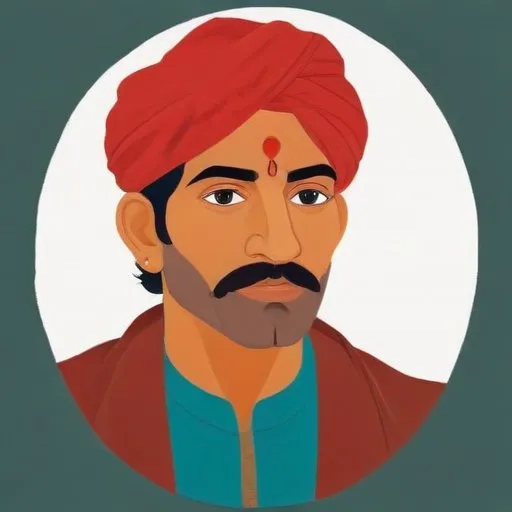
A prominent figure in the Progressive Writers' Movement, he was a key player in shaping Urdu literature and poetry, advocating for social change and justice through his works.
Sajjad Zaheer was a prominent Indian Urdu writer, Marxist ideologue, and radical revolutionary who left an indelible mark on the literary and political landscape of the Indian subcontinent. He is best known for his pioneering work in the Progressive Writers Movement and his contributions to the development of Urdu literature.
Born on November 5, 1905, in Lucknow, India, Zaheer was the fourth son of Syed Wazir Hasan, a judge at the High Court of Judicature at Allahabad. He received his BA degree from the University of Lucknow in 1924 and later pursued further studies at New College, Oxford. During his final year at Oxford, Zaheer contracted tuberculosis and was sent to a sanatorium in Switzerland, where he was exposed to Marxist ideology.
Zaheer's exposure to Marxist ideology had a profound impact on his life and work. He joined the Oxford Majlis and attended the second Congress of the League against Imperialism held in Frankfurt, where he met influential leaders like Viren Chattopadhyay, Saumyendranath Tagore, N. M. Jaisoorya, and Raja Mahendra Pratap. In 1930, he started the newspaper Bharat in England, which became a platform for promoting radical and progressive ideas.
Zaheer's literary career was marked by controversy and rebellion. His first book, Angarey, published in 1932, was met with outrage from both the religious and civil authorities in British India and was subsequently banned by the government. This incident only added to Zaheer's notoriety as a radical and a free thinker.
Zaheer's involvement in the Communist Party of India and the Progressive Writers Movement was instrumental in shaping his political ideology. He was a founding member of the Communist Party of Pakistan and played a key role in the development of the party's ideology. Zaheer's activism was not limited to politics; he was also involved in various cultural and literary movements, including the All-India Progressive Writers Association.
Zaheer's contributions to Urdu literature and Marxist ideology have had a lasting impact on the Indian subcontinent. His work has inspired generations of writers, intellectuals, and activists, including notable figures like Faiz Ahmed Faiz and Mulk Raj Anand. Zaheer's legacy extends beyond the literary world; he is also remembered as a pioneer of the Marxist movement in Pakistan.
Zaheer's radical ideas and activism often put him at odds with the establishment. He was frequently arrested and detained for his involvement in anti-colonial and communist activities. Despite the criticism and controversy, Zaheer remained committed to his ideals and continued to advocate for social and political change.
Zaheer's personal life was marked by strong relationships with fellow intellectuals and writers. His friendship with Mulk Raj Anand, a prominent Indian novelist, was particularly significant. Zaheer's relationships with women were also notable, including his marriage to Razia Sajjad Zaheer, who was a writer and activist in her own right.
Sajjad Zaheer's radical ideas and contributions to Urdu literature have left a lasting impact on the Indian subcontinent. His legacy continues to inspire writers, intellectuals, and activists today, and his work remains a testament to the power of radical thought and activism.
Born in 1915
A renowned journalist and author who penned numerous novels and essays, including the iconic "Train to Pakistan", which vividly captured India's Partition era. He's celebrated for his witty humor, satire, and poignant storytelling.
Born in 1911
A renowned poet and journalist who wrote about love, politics, and social issues, inspiring generations with his powerful and evocative words.
99 Years Old
A pioneering Urdu writer and critic, known for her novels that explored the Indian subcontinent's cultural heritage and the human experience.
